Counter-Swarm and Counter-Autonomy
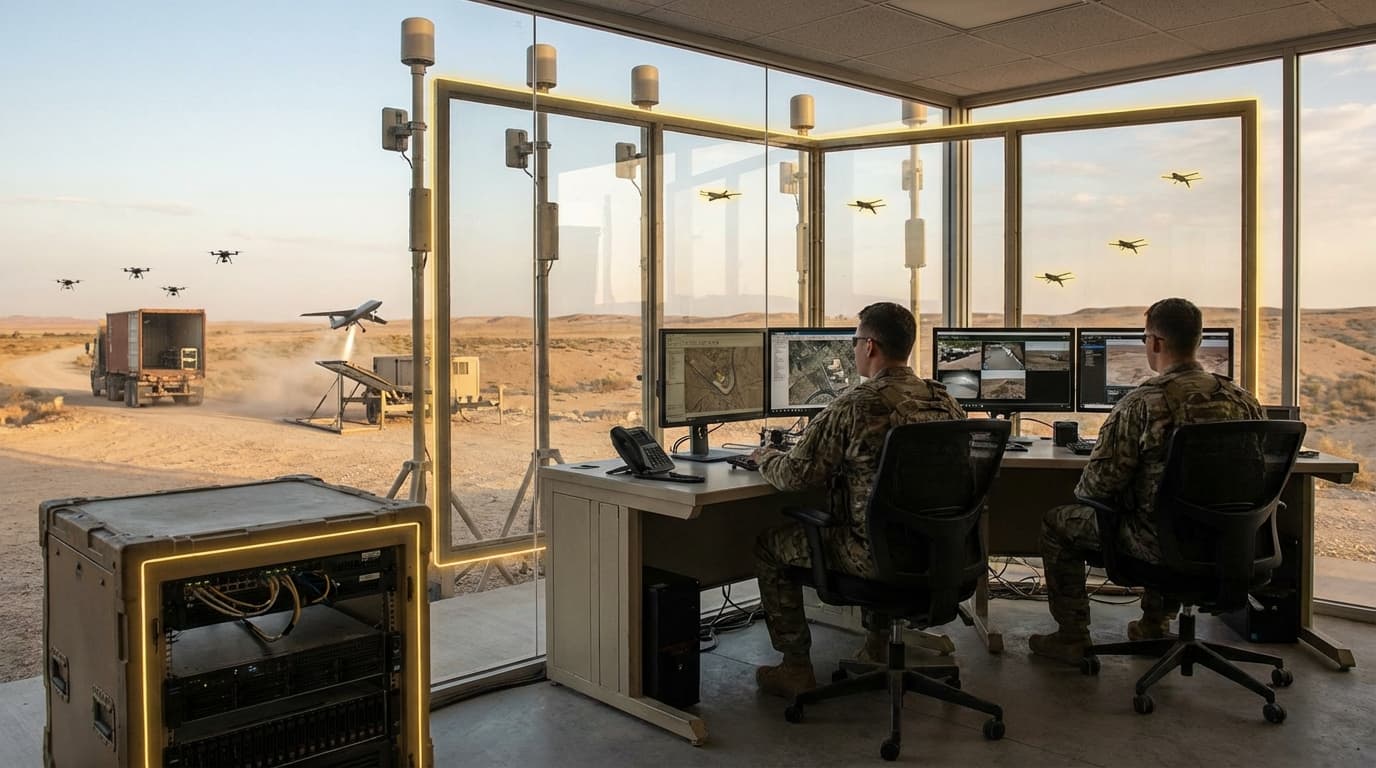
The proliferation of autonomous systems and drone swarms has introduced a new dimension to modern defense challenges, where traditional air defense mechanisms struggle to address the sheer volume, agility, and coordination of small unmanned aerial vehicles operating in coordinated groups. Counter-swarm and counter-autonomy technologies represent a specialized class of defensive systems designed to detect, identify, and neutralize these emerging threats through a combination of physical interceptors and sophisticated artificial intelligence. At the technical core, these systems employ multiple layers of defense: interceptor drones equipped with various payload options including kinetic projectiles, net-capture mechanisms, electromagnetic pulse devices, or directed-energy weapons such as high-powered lasers or microwave emitters. The AI component relies on behavioral fingerprinting algorithms that analyze flight patterns, communication signatures, and coordination behaviors to distinguish between authorized autonomous systems and potential threats. This pattern recognition extends beyond simple identification to predictive modeling, allowing defensive systems to anticipate swarm behaviors and optimal interception points based on observed movement dynamics and historical threat data.
The strategic imperative for counter-swarm capabilities has intensified as adversaries increasingly deploy low-cost drone swarms to overwhelm conventional defenses through sheer numbers, a tactic that exploits the economic asymmetry where defensive interceptors often cost significantly more than the threats they neutralize. These technologies address critical vulnerabilities in protecting high-value assets such as military installations, critical infrastructure, and public venues from coordinated autonomous attacks. The challenge extends beyond mere detection to the complex problem of attribution and rules of engagement in environments where commercial drones, hobbyist aircraft, and hostile systems may operate in proximity. Advanced counter-autonomy systems solve this through multi-sensor fusion combining radar, optical, acoustic, and radio-frequency detection to build comprehensive threat profiles. This capability enables defenders to respond proportionally and precisely, minimizing collateral damage while maintaining effective protection against both individual rogue drones and sophisticated swarm attacks that employ distributed intelligence and adaptive tactics.
Military forces and security agencies worldwide are actively deploying counter-swarm systems, with early implementations protecting forward operating bases, naval vessels, and critical infrastructure sites from reconnaissance and attack drones. Research suggests that future iterations will incorporate machine learning models capable of real-time adaptation to novel swarm behaviors, potentially employing defensive swarms that can autonomously coordinate counter-maneuvers against hostile formations. The integration of these systems into broader air defense networks represents a significant shift toward layered, multi-domain defense architectures where traditional anti-aircraft systems work in concert with specialized counter-UAS capabilities. As autonomous systems become more sophisticated and accessible, the arms race between swarm tactics and counter-swarm technologies will likely accelerate, driving innovation in areas such as swarm-versus-swarm engagement, autonomous decision-making under contested conditions, and the development of international norms governing the deployment of autonomous defensive systems in civilian airspace.
Related Organizations

Develops Lattice OS, an AI-powered operating system that fuses sensor data to automate command and control across autonomous systems.

Technology company developing power management and directed energy systems.

Provides airspace security solutions to detect and monitor other drones.

Provides AI-based detection and electronic warfare jamming guns (DroneGun) and fixed site protection.



Operates a dedicated Simulation & Training division providing gunnery and combat simulators.

Developing robotic arms for the Mars Sample Return program and the Lunar Gateway.


Manufactures SkyWall, a handheld and autonomous net-launching system for physical drone capture.
Supporting Evidence
Research this in Signals
Signals turns a topic into a sourced research record you can inspect and rerun. Your first scan is free, and this one starts with Counter-Swarm and Counter-Autonomy already loaded, so edit it or scan as is.