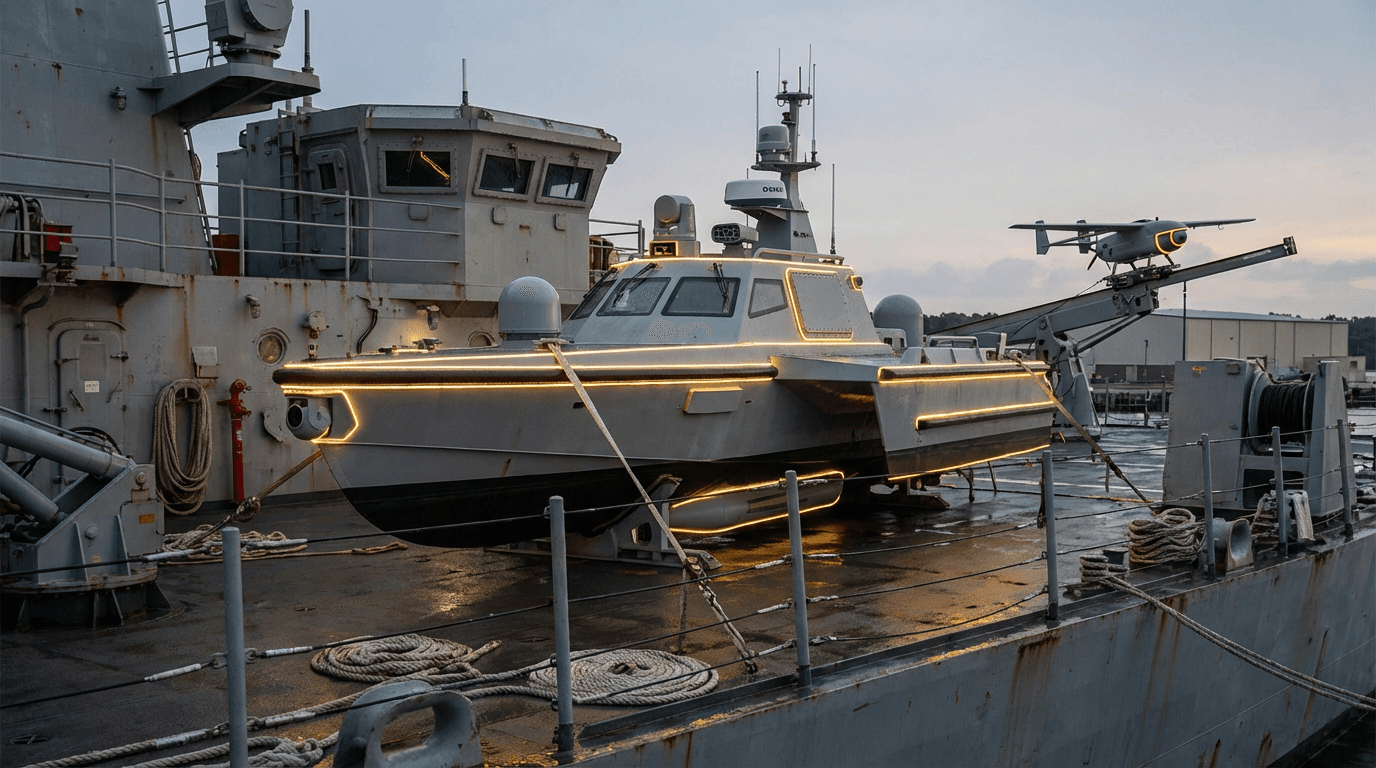
Autonomous Defense Platforms
Autonomous defense platforms are uncrewed aerial (air), surface (water), and subsurface (underwater) vehicles equipped with onboard sensor fusion (combining data from multiple sensors) and mission autonomy (ability to operate independently), creating robotic systems that can perform defense missions without direct human control. These platforms leverage low-observable drone swarms (groups of small, hard-to-detect drones) using distributed mesh networking (devices connecting directly to each other) instead of centralized control (no single point of control) to saturate adversarial defenses (overwhelm enemy defenses with many simultaneous threats), making them difficult to counter because there's no central command to attack and the swarm can adapt dynamically, representing a new paradigm in defense where autonomous systems work together in coordinated swarms.
This innovation addresses the need for defense systems that can operate in contested environments, where centralized control is vulnerable. By using distributed swarms, these platforms can be more resilient. Defense contractors and research institutions are developing these systems.
The technology is particularly significant for modern warfare, where autonomous swarms could provide new capabilities. As autonomy improves, these platforms become increasingly important. However, ensuring reliability, managing complexity, and addressing ethical concerns remain challenges. The technology represents an important evolution in defense systems, but requires continued development to achieve the reliability and safety needed for deployment. Success could enable new defense capabilities, but the technology must address reliability and ethical concerns. Autonomous defense platforms are an active area of development with significant military interest.
Related Organizations

Develops Lattice OS, an AI-powered operating system that fuses sensor data to automate command and control across autonomous systems.

Defense technology company building Hivemind, an AI pilot for autonomous drone swarms and aircraft operating without GPS or comms.

Produces the Switchblade loitering munition and Puma UAS, key assets for autonomous tactical reconnaissance and strike.

A technology company specializing in directed-energy weapons, unmanned systems, and satellite communications.

US drone manufacturer specializing in autonomous flight and 3D scan software.

Manufacturer of thermal imaging cameras and sensors used on monitoring drones.

Develops the Vision 60 Q-UGV, a durable quadruped robot focused on defense, homeland security, and enterprise inspection.

Manufactures and operates autonomous surface vehicles (USVs) powered by wind and solar for ocean data collection.

Develops highly mobile, dexterous industrial robots and exoskeletons like the Guardian XO.
Supporting Evidence
Research this in Signals
Signals turns a topic into a sourced research record you can inspect and rerun. Your first scan is free, and this one starts with Autonomous Defense Platforms already loaded, so edit it or scan as is.