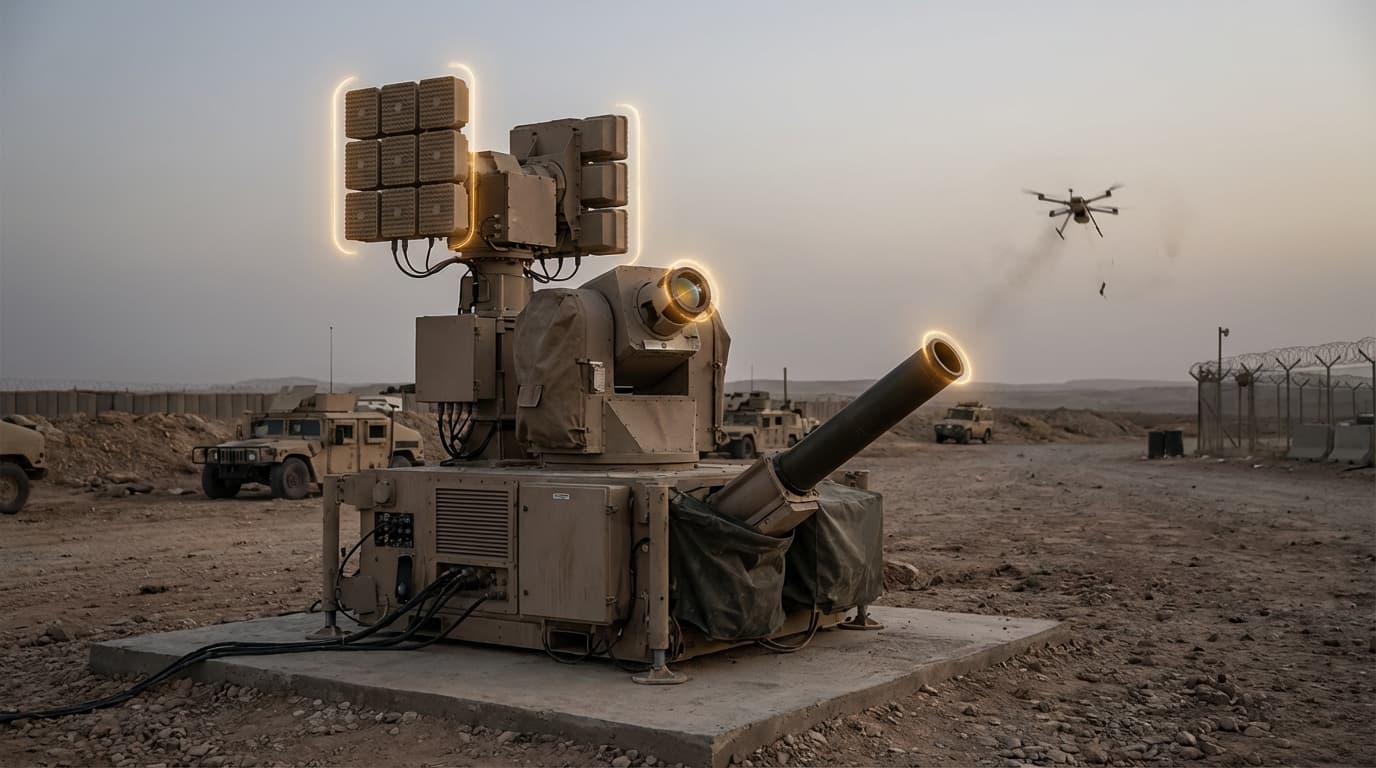
Counter-Drone Systems
Counter-drone systems are integrated counter-UAS (unmanned aerial systems) kits that combine RF jammers (radio frequency jammers that disrupt drone control signals), spoofers (devices that take control of drones), high-energy lasers (directed-energy weapons that destroy drones), and kinetic interceptors (projectiles that physically destroy drones) to protect bases and convoys from low-cost drone swarms (groups of inexpensive drones). Modular payloads (interchangeable components) let forces tailor engagement modes (how they attack drones) to airspace rules (regulations about using weapons) and collateral constraints (limitations on causing unintended damage), creating comprehensive defense systems that can detect, track, and neutralize drone threats using multiple methods, making them effective against various types of drone attacks while allowing operators to choose the most appropriate response for each situation.
This innovation addresses the growing threat from inexpensive drones, where traditional air defense is too expensive. By using multiple methods, these systems can counter various drone threats. Defense contractors are developing these systems.
The technology is particularly significant for base and convoy protection, where drone threats are growing. As drone technology improves, counter-drone systems become increasingly important. However, ensuring effectiveness, managing costs, and achieving comprehensive coverage remain challenges. The technology represents an important evolution in air defense, but requires continued development to keep pace with evolving threats. Success could protect critical assets from drone attacks, but the technology must continue to evolve. Counter-drone systems are an active area of development with many systems already deployed.
Related Organizations

Develops Lattice OS, an AI-powered operating system that fuses sensor data to automate command and control across autonomous systems.

Provides airspace security solutions to detect and monitor other drones.

Provides AI-based detection and electronic warfare jamming guns (DroneGun) and fixed site protection.


SRC Inc.
United States · Nonprofit
Not-for-profit research and development company.



C-UAS platform backed by Highlander Partners.
Supporting Evidence
Research this in Signals
Signals turns a topic into a sourced research record you can inspect and rerun. Your first scan is free, and this one starts with Counter-Drone Systems already loaded, so edit it or scan as is.