Deepfake Detection for Intelligence
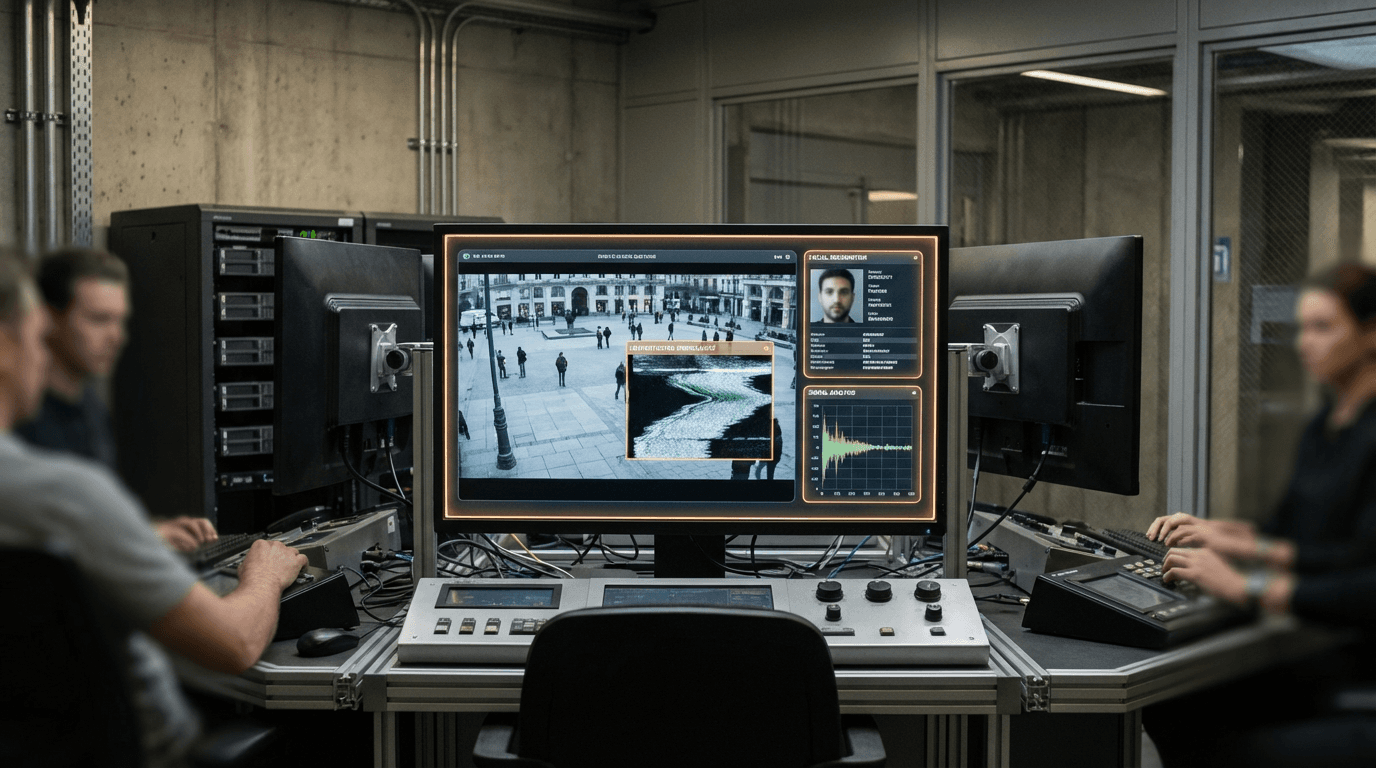
The proliferation of generative artificial intelligence has introduced a critical vulnerability into defense and intelligence operations: the ability to fabricate convincing multimedia evidence that can deceive even trained analysts. Deepfake detection systems represent a sophisticated countermeasure, employing multi-layered signal processing and machine learning pipelines to authenticate video, audio, and image feeds before they inform operational decisions. These systems operate by examining multiple forensic signatures simultaneously—analyzing pixel-level inconsistencies such as unnatural lighting gradients or facial micro-expression anomalies, scrutinizing radio frequency fingerprints that reveal the originating device's unique electromagnetic signature, and parsing metadata streams for temporal inconsistencies or manipulation traces. Advanced implementations combine convolutional neural networks trained on millions of authentic and synthetic samples with traditional digital forensics techniques, creating ensemble models that can detect artifacts invisible to human observers. The technical challenge lies in the adversarial nature of this domain: as detection methods improve, so do generation techniques, requiring continuous model retraining and the integration of novel forensic markers.
For military and intelligence organizations, the stakes of multimedia authentication extend far beyond simple verification. Adversaries increasingly deploy synthetic media as instruments of strategic deception—fabricating satellite imagery to conceal troop movements, generating false communications to trigger premature responses, or creating compromising footage to undermine allied relationships. Traditional intelligence workflows assumed that visual and audio evidence carried inherent credibility; deepfakes shatter this assumption, forcing a fundamental rethinking of evidentiary standards. Detection systems address this challenge by providing automated triage capabilities that flag suspicious content for human review, assigning confidence scores based on multiple forensic indicators, and maintaining audit trails that document the provenance of every piece of multimedia intelligence. This capability is particularly crucial in time-sensitive scenarios where commanders must make rapid decisions based on incoming feeds—a single undetected deepfake could trigger inappropriate military action or cause intelligence failures with strategic consequences.
Current deployments of deepfake detection technology span multiple operational contexts, from social media monitoring systems that identify influence campaigns targeting military personnel to real-time authentication layers embedded within secure communication networks. Intelligence agencies are integrating these tools into their standard analytic workflows, treating multimedia verification as a mandatory step comparable to traditional source validation. Research directions emphasize improving detection of increasingly sophisticated generation methods, including those that manipulate biometric signatures or exploit compression artifacts to hide synthetic markers. The technology is also evolving to address emerging threats such as real-time deepfake video calls and AI-generated satellite imagery. As adversarial AI capabilities mature, the defense sector recognizes that robust deepfake detection is not merely a technical safeguard but a foundational requirement for maintaining information superiority, ensuring that decision-makers can trust the evidence upon which they base critical operational judgments.
Related Organizations

A research and development agency of the United States Department of Defense.

Provides an enterprise platform for deepfake detection across audio, video, and image formats using multi-model analysis.

Develops both generative dubbing tools and deepfake detection algorithms for government use.

Offers an API and dashboard for detecting deepfakes and monitoring visual threat intelligence.

Specializes in voice security and authentication, actively developing liveness detection to stop audio deepfakes.

Focuses on image provenance and authentication, helping verify that media has not been altered (the inverse of detection).

Develops silicon spin qubits using advanced 300mm wafer manufacturing processes.

Through Copilot and the 'Recall' feature in Windows, Microsoft is integrating persistent memory and agentic capabilities directly into the operating system.
Supporting Evidence
Research this in Signals
Signals turns a topic into a sourced research record you can inspect and rerun. Your first scan is free, and this one starts with Deepfake Detection for Intelligence already loaded, so edit it or scan as is.