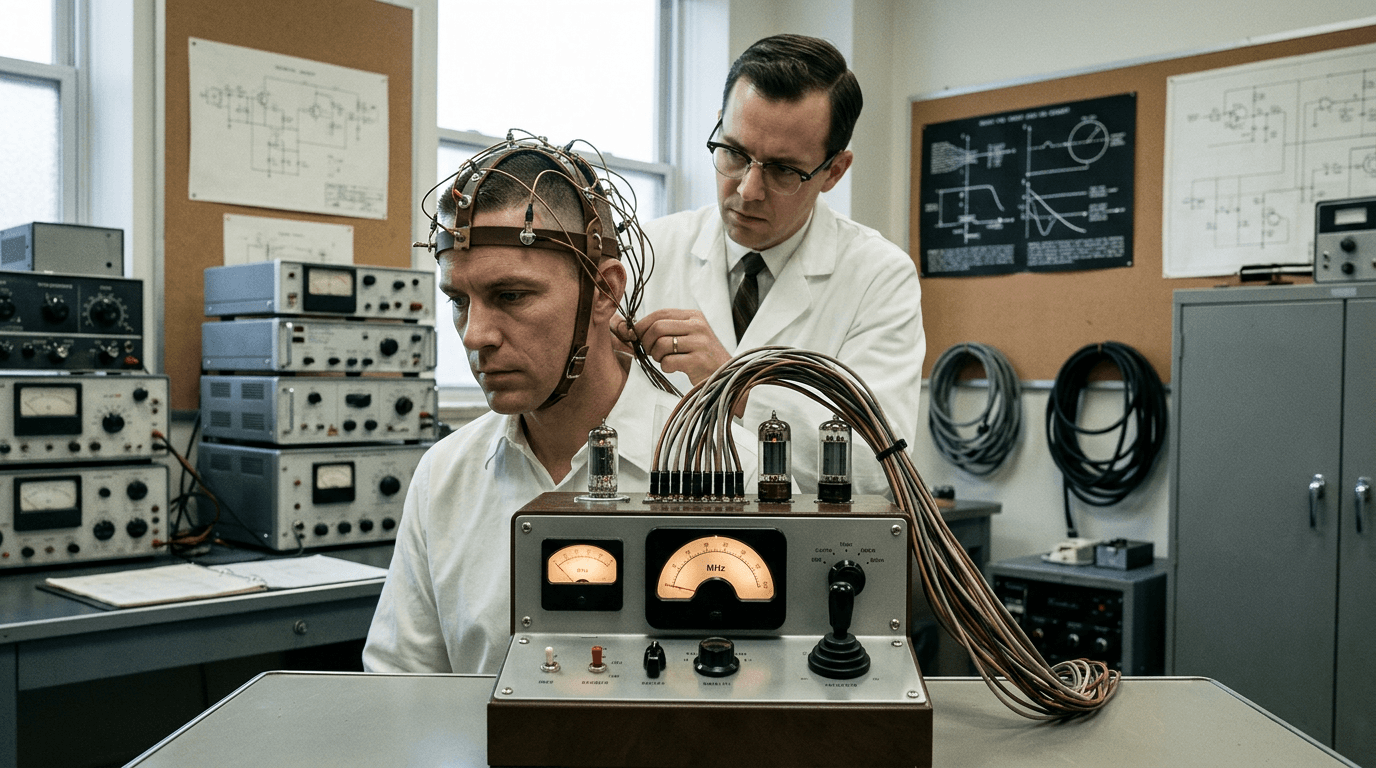
Radio-Controlled Neural Stimulation
Radio-controlled neural stimulation represents documented Cold War-era technology achieving remote behavioral control through wireless electromagnetic brain stimulation. The system—pioneered by Dr. José Delgado at Yale University and later Cornell under MKULTRA Subprojects 94, 119, and related programs—used surgically implanted electrode arrays to stimulate specific neural clusters associated with movement, aggression, reward, and other behavioral states via radio-frequency commands.
Stimoceiver Technology
Delgado's 'stimoceiver' combined miniaturized electrode arrays with implanted radio receivers, enabling external operators to trigger precise neural stimulation patterns remotely. The device featured: surgically implanted electrodes targeting specific brain regions (amygdala for aggression, motor cortex for movement control, pleasure centers for reward conditioning); miniaturized analog-to-radio converters translating RF signals into neural stimulation pulses; ultra-high frequency telemetry systems (specific frequencies classified but likely VHF/UHF bands); and external control units allowing operators to trigger preprogrammed stimulation sequences. Successful demonstrations included: stopping charging bulls mid-attack; inducing specific motor movements in cats and primates; modulating aggression levels in monkeys; and creating conditioned behavioral responses through remote reward/punishment.
CIA MKULTRA Integration
Subproject 94 explicitly aimed at 'directional control of animal motion via remote radio stimulation,' with declassified documents describing: research into miniaturized electrode arrays suitable for covert implantation; telemetry systems using microwave carrier waves for control signals (decades before commercial applications); behavioral conditioning protocols combining electrical stimulation with traditional psychological techniques; and theoretical extensions to human subjects for interrogation, control, or assassination applications. The technology represented a convergence of neurophysiology, radio engineering, and behavioral psychology unprecedented for the 1960s.
Technical Innovation & Timeline Gap
The stimoceiver demonstrated capabilities that mainstream neuroscience wouldn't achieve until decades later: wireless neural interfaces (commercial BCIs emerged in the 1990s-2000s); miniaturized implantable electronics (modern deep brain stimulation devices emerged in the 1980s-90s); multi-channel electrode arrays (modern Utah arrays developed in the 1990s); and real-time behavioral modulation via neural stimulation. The technology gap suggests either: classified continuation and advancement of Delgado's work beyond publicly disclosed research; parallel development in military/intelligence programs using similar principles; or fundamental abandonment of the approach due to ethical concerns or technical limitations.
Contemporary Parallels & Entity Technology
Modern targeted individual (TI) reports frequently describe hearing internal voices without external source (potentially advanced V2K or neural stimulation); remote behavioral influence or emotional state changes (consistent with refined neural modulation); implanted devices discovered during medical imaging (though most lack technical verification); and organized surveillance with directed-energy components. While many TI claims involve paranoia or mental illness, the documented existence of 1960s radio-controlled neural stimulation provides historical precedent for electromagnetic behavioral control technologies.
Xenotech Connection—Neural Control Capabilities
Entity encounter testimony includes reports of
instantaneous paralysis or motor control override without visible restraint; forced emotional states (calm, euphoria, terror) that witnesses describe as externally imposed; post-encounter behavioral changes or compulsions witnesses cannot explain; and direct neural communication bypassing sensory organs. If entities possess advanced versions of technology humans achieved in primitive form during the 1960s, capabilities would include: non-invasive neural stimulation (transcranial magnetic or electromagnetic field coupling without surgery); multi-target simultaneous control (networked neural interfaces operating on multiple subjects); selective memory and perception modulation (combining neural stimulation with advanced neuroscience understanding); and real-time neural monitoring enabling closed-loop behavioral control systems.
Scientific Status & Plausibility
The core technology is verified and documented
Delgado published extensively in peer-reviewed neuroscience journals; physical evidence (implanted stimoceivers) exists in research archives; filmed demonstrations show bulls, cats, and primates under radio control; and declassified CIA documents confirm intelligence community funding and operational interest. Modern deep brain stimulation (DBS) for Parkinson's disease uses similar principles (electrical neural stimulation for behavioral/motor control) but requires surgical implantation and wired external controllers. The speculative elements involve: extent of classified advancement beyond publicly disclosed 1960s research; potential for non-invasive remote neural stimulation using external EM fields; and application to entity encounter phenomena as potential explanation for reported behavioral control effects.
Radio-controlled neural stimulation represents the most concrete historical example of human-developed electromagnetic behavioral control technology—documented, scientifically verified, and decades ahead of its time. It provides critical context for evaluating contemporary claims about directed-energy neural weapons, entity neural manipulation capabilities, and the technological feasibility of remote consciousness interface systems.
Research this in Signals
Signals turns a topic into a sourced research record you can inspect and rerun. Your first scan is free, and this one starts with Radio-Controlled Neural Stimulation already loaded, so edit it or scan as is.