Envisioning is an emerging technology research institute and advisory.

LinkedInInstagramGitHub

2011 — 2026

research
  • Reports
  • Newsletter
  • Methodology
  • Origins
  • My Collection
services
  • Research Sessions
  • Signals Workspace
  • Bespoke Projects
  • Use Cases
  • Signal Scanfree
  • Readinessfree
impact
  • ANBIMAFuture of Brazilian Capital Markets
  • IEEECharting the Energy Transition
  • Horizon 2045Future of Human and Planetary Security
  • WKOTechnology Scanning for Austria
audiences
  • Innovation
  • Strategy
  • Consultants
  • Foresight
  • Associations
  • Governments
resources
  • Pricing
  • Partners
  • How We Work
  • Data Visualization
  • Multi-Model Method
  • FAQ
  • Security & Privacy
about
  • Manifesto
  • Community
  • Events
  • Support
  • Contact
  • Login
ResearchServicesPricingPartnersAbout
  1. Home
  2. Research
  3. Wonen
  4. Netcongestie (Grid Congestion & Connection Queues)

Netcongestie (Grid Congestion & Connection Queues)

Electricity grid capacity constraints delaying new-build connections, heat pump rollouts, and electrification—turning housing delivery into an energy-infrastructure problem.
Back to WonenView interactive version

Grid congestion—or netcongestie—has emerged as a critical bottleneck at the intersection of housing delivery and energy transition across the Netherlands, Belgium, and Luxembourg. The problem is straightforward: electricity networks built for twentieth-century consumption patterns cannot absorb the rapid electrification demands of new housing developments, heat pump installations, electric vehicle charging infrastructure, and industrial facilities without substantial upgrades. In practice, this means developers can secure building permits and financing, yet face multi-year delays waiting for grid operators to expand local capacity. What was once a technical concern for utilities has become a strategic constraint on housing supply, transforming energy infrastructure into a gatekeeper for residential construction and climate policy alike.

The roots of this congestion lie in the collision of two policy imperatives. On one side, national and municipal governments have set ambitious targets for new housing units and fossil-fuel phase-outs, pushing all-electric construction standards and heat pump mandates. On the other, grid operators—often working with decades-long investment cycles and regulatory approval processes—struggle to expand transformer capacity, substations, and distribution cables at the pace required. Early evidence of this mismatch is visible in connection queues stretching years in growth regions around Amsterdam, Rotterdam, and Antwerp, where developers report that grid availability now rivals land scarcity as a limiting factor. Pilot efforts to prioritize connections—such as reserving capacity for social housing or district heating projects—are underway, but these remain fragmented and politically contentious. The pattern is directional: as electrification accelerates, the gap between housing ambitions and grid readiness widens unless investment and governance structures fundamentally shift.

The implications extend beyond delayed projects. Stranded permits—approved developments that cannot proceed—represent wasted planning resources and erode confidence in housing pipelines. Municipalities may need to integrate grid capacity assessments into zoning decisions, effectively making energy infrastructure a co-determinant of where and when housing can be built. For grid operators, the challenge is not only capital but also workforce capacity, supply chain constraints for transformers, and regulatory frameworks that were not designed for rapid expansion. Monitoring priorities include the pace of grid investment announcements, changes in connection queue transparency, and whether governments introduce spatial prioritization frameworks that align housing targets with network upgrade schedules. The signal underscores a broader reality: the energy transition and housing crisis are no longer parallel challenges—they are interdependent, and resolving one without the other risks deepening both.
Regulatory Complexity
4/5Very Complex
Community Acceptance
3/5Neutral
Social Value Generation
3/5Moderate Social Value
Category
Energy & Sustainability

Connections

Energy & Sustainability
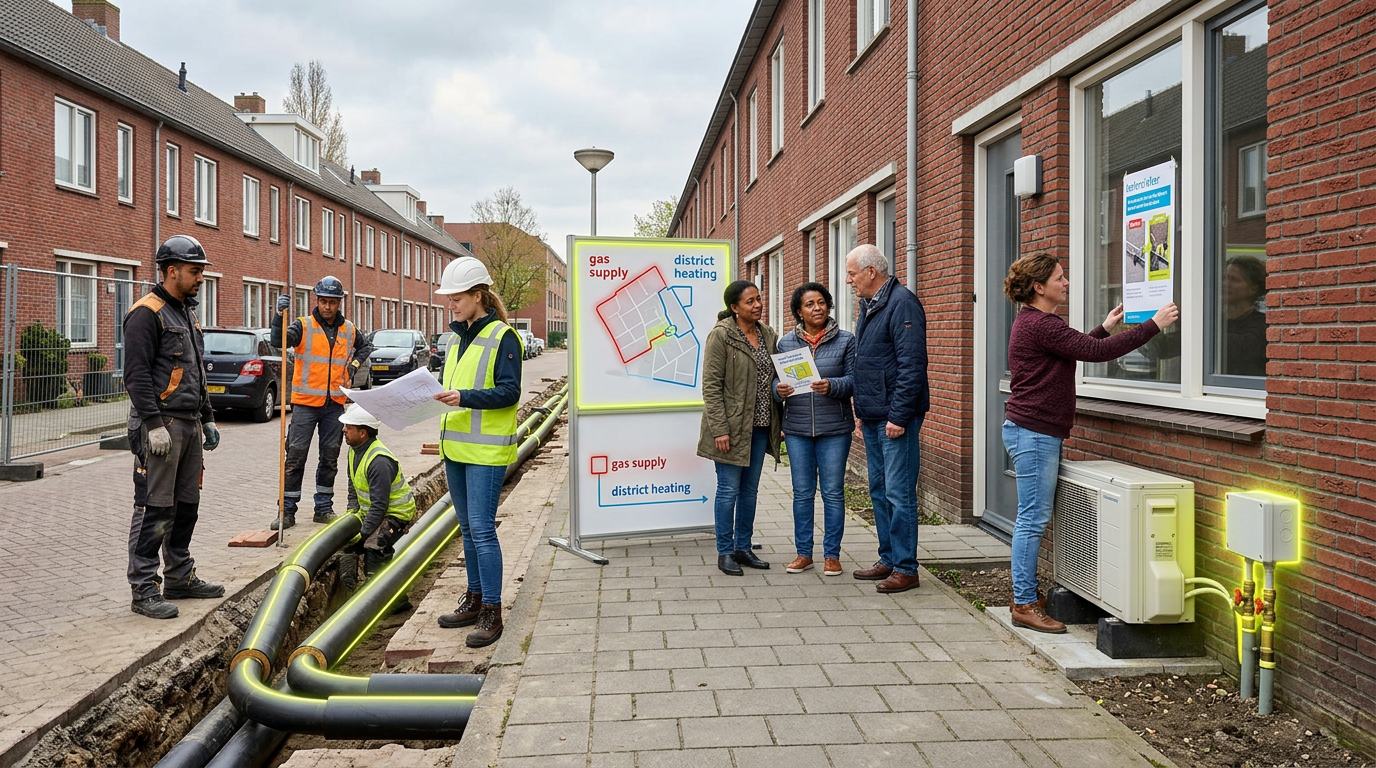
Aardgasvrij (Gas-Free Neighborhoods)

Mandatory transition from natural gas heating in existing and new neighborhoods, requiring coordination between housing and energy infrastructure.

Regulatory Complexity
4/5
Community Acceptance
3/5
Social Value Generation
4/5
Energy & Sustainability
Warmtewet (Heat Market Regulation)

Regulation of district heating pricing, ownership, and consumer protection that strongly shapes public acceptance of heat networks in new developments.

Regulatory Complexity
4/5
Community Acceptance
2/5
Social Value Generation
3/5
Energy & Sustainability
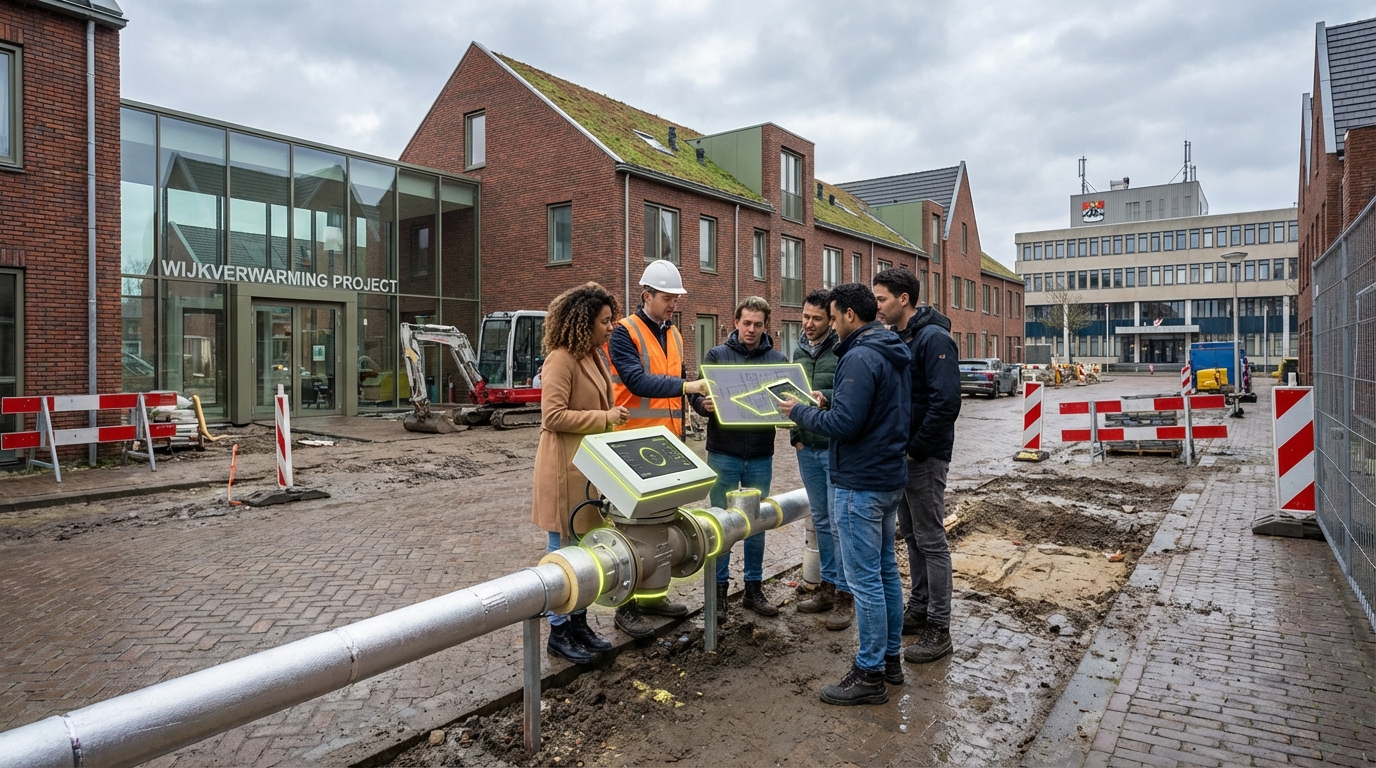
District Heating Networks

Centralized heating systems serving multiple buildings, enabling efficient renewable energy integration but requiring coordination and acceptance.

Regulatory Complexity
4/5
Community Acceptance
3/5
Social Value Generation
4/5
Barriers & Opposition
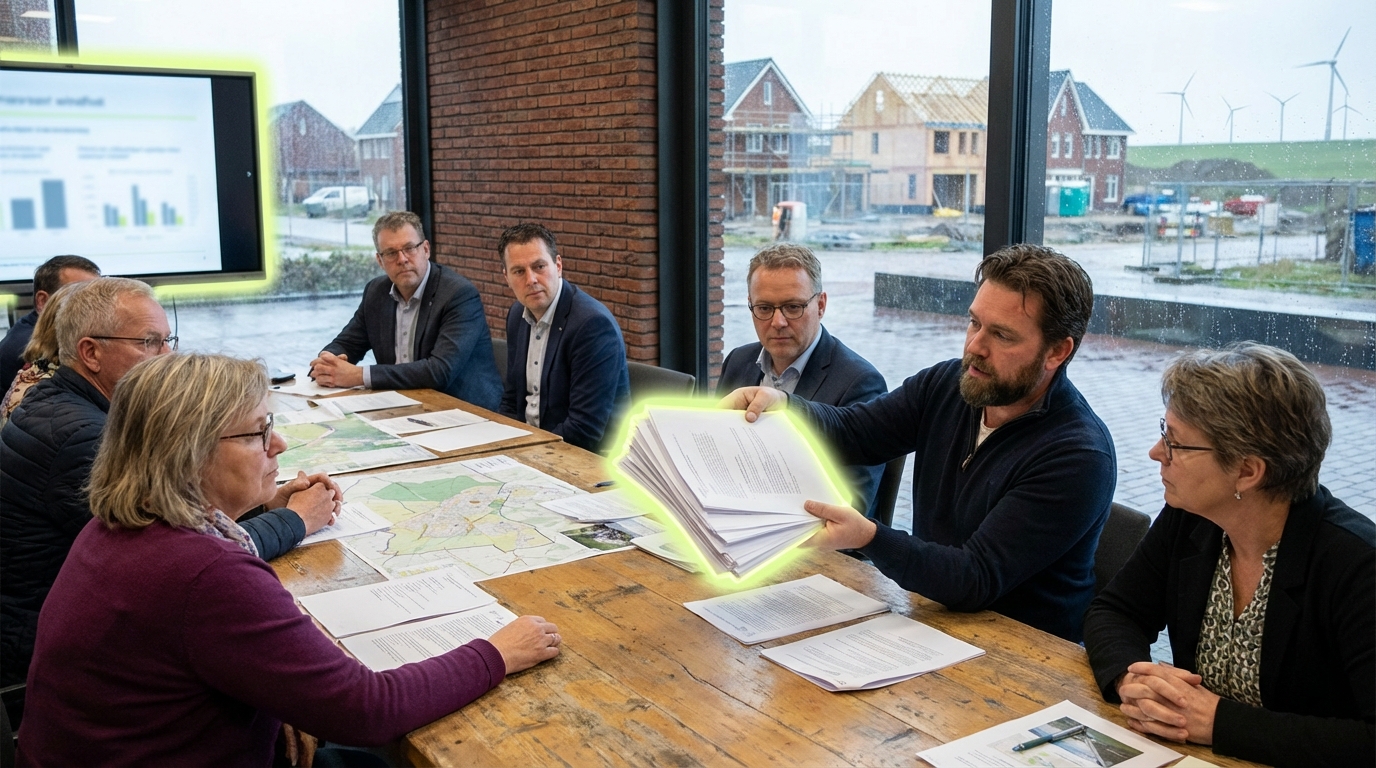
Systematic Anti-Wind Energy Movements

Organized opposition to renewable energy projects that can block both energy and housing developments when integrated, even when aligned with net-zero goals.

Regulatory Complexity
3/5
Community Acceptance
2/5
Social Value Generation
2/5
Barriers & Opposition
Stikstof (Nitrogen) Crisis Impacts

Regulatory deadlock caused by EU nitrogen emission limits, halting construction projects near protected nature areas in NL and Flanders.

Regulatory Complexity
5/5
Community Acceptance
2/5
Social Value Generation
2/5
Governance & Permitting
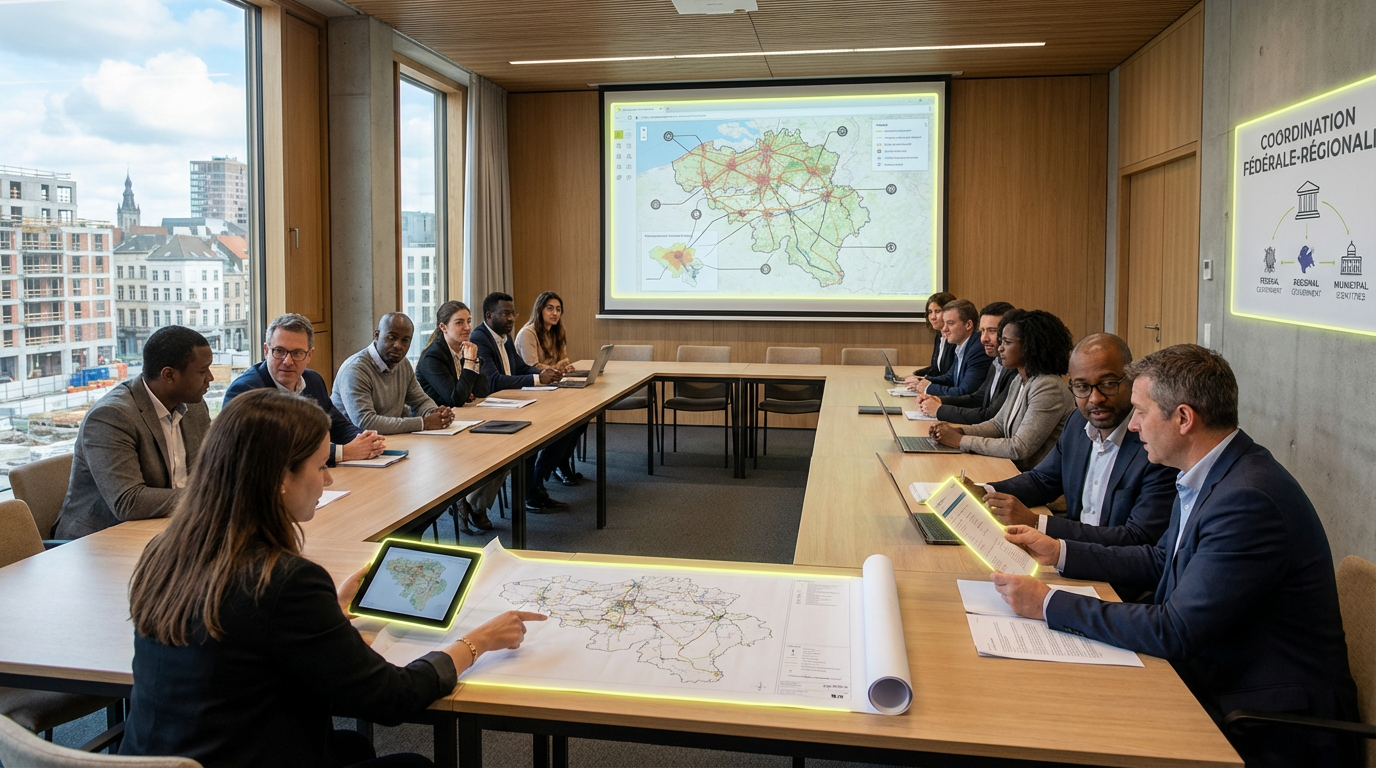
Belgian Federal-Regional Coordination

Complex coordination challenges between federal, regional (Flanders, Wallonia, Brussels), and municipal levels in housing and energy project approvals.

Regulatory Complexity
5/5
Community Acceptance
2/5
Social Value Generation
2/5

Book a research session

Bring this signal into a focused decision sprint with analyst-led framing and synthesis.
Research Sessions