Aardgasvrij (Gas-Free Neighborhoods)
The mandatory transition away from natural gas heating in Dutch neighborhoods represents a fundamental restructuring of how housing and energy systems intersect. This policy signal emerged from the Netherlands' commitment to phase out natural gas following the Groningen earthquake risks and climate targets, making it illegal to connect new homes to the gas grid since 2018. The challenge extends far beyond simply switching fuel sources—it requires synchronized transformation of building stock, energy infrastructure, financing mechanisms, and household behavior. Unlike incremental efficiency improvements, gas-free transitions force explicit choices about which heating technologies to deploy at neighborhood scale, who bears transition costs, and how to maintain housing affordability while upgrading entire districts. This creates a policy laboratory where housing development becomes inseparable from energy infrastructure planning, revealing tensions between climate ambitions, social equity, and the practical realities of retrofitting millions of existing homes.
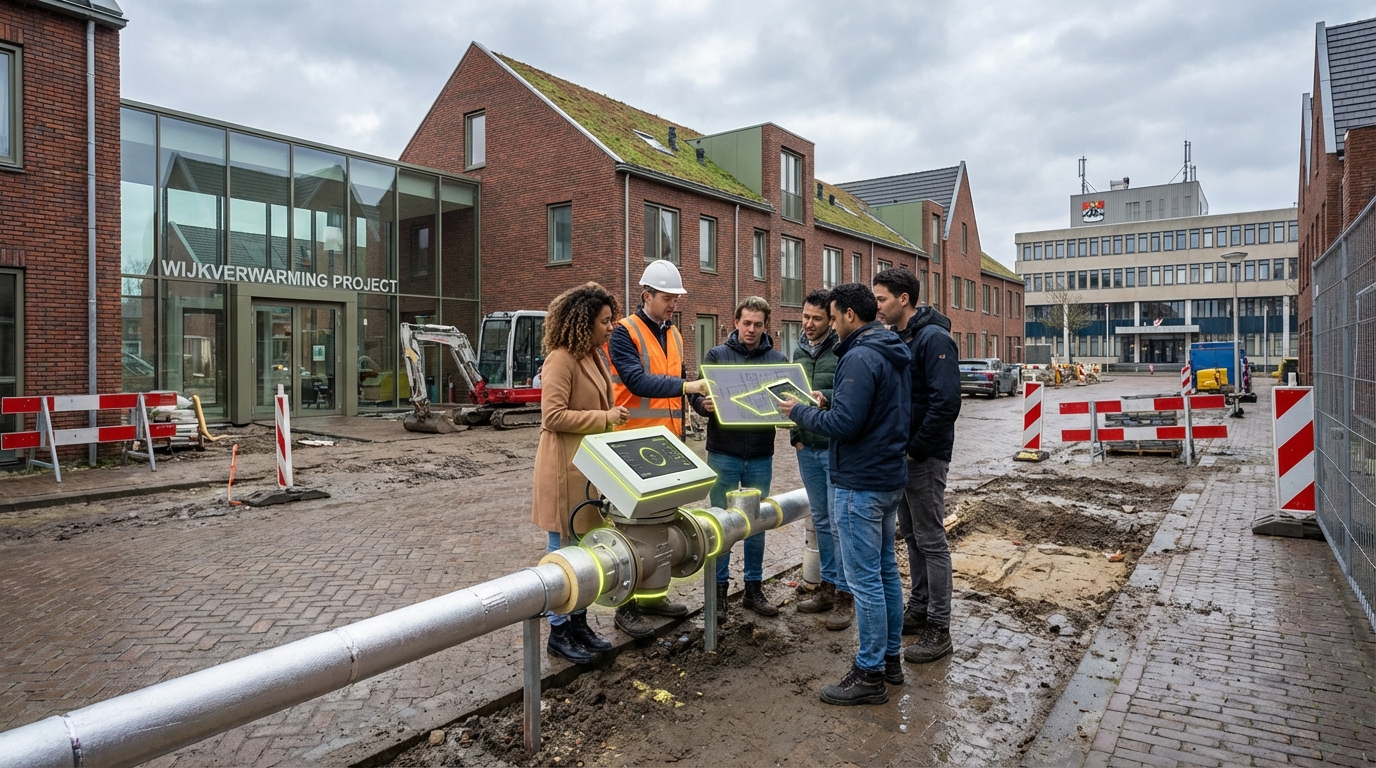
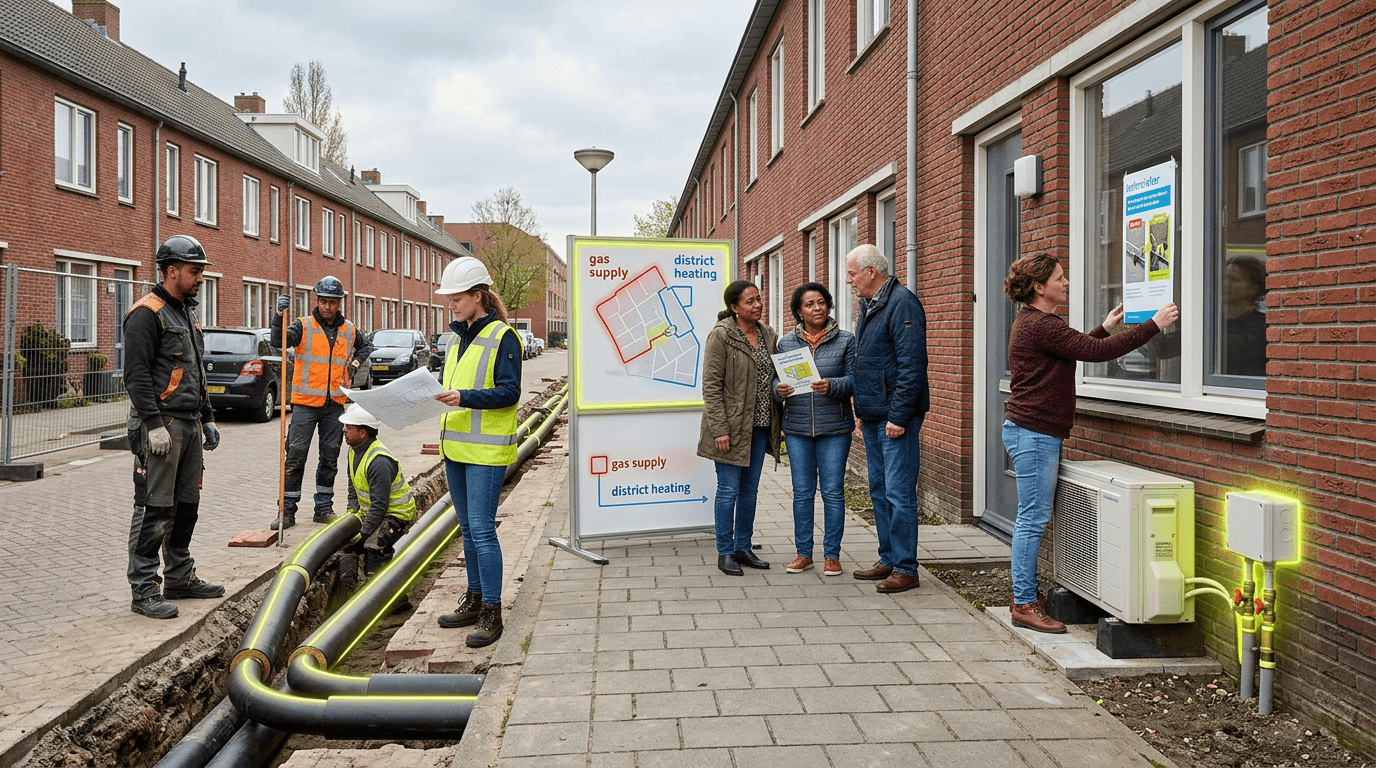
Early implementation patterns show significant variation in approaches and outcomes across municipalities. Some cities prioritize district heating networks fed by industrial waste heat or geothermal sources, requiring substantial upfront infrastructure investment but offering lower operational costs. Others favor decentralized solutions like individual heat pumps, which demand less coordination but place greater financial burden on individual households and require electrical grid reinforcement. Pilot neighborhoods have exposed critical friction points: renovation costs that can exceed €30,000 per dwelling, disruption timelines stretching years, and resistance from residents—particularly elderly homeowners and lower-income tenants—facing uncertainty about costs and comfort. Housing associations managing social housing portfolios face the dual challenge of financing large-scale retrofits while keeping rents affordable. Meanwhile, grid operators must balance investment in new infrastructure against the risk of stranded gas assets. Research from early transition neighborhoods indicates that success correlates strongly with intensive resident engagement, transparent cost-sharing models, and coordination between municipal planning, housing policy, and energy regulation.
The implications extend beyond the Netherlands to any jurisdiction attempting coordinated energy transitions in existing housing stock. This signal reveals how climate policy translates into concrete household impacts, testing the limits of top-down mandates versus participatory planning. Monitoring priorities include the evolution of financing mechanisms (grants, loans, collective purchasing models), the emergence of standardized retrofit approaches that reduce costs, and political sustainability as implementation scales from willing early adopters to reluctant majority. The pace of electrical grid upgrades will determine whether heat pump adoption can accelerate, while district heating viability depends on securing reliable heat sources and managing network economics. Most critically, watch for policy adjustments addressing equity concerns—whether transition costs exacerbate housing affordability crises or whether innovative models emerge that distribute benefits and burdens more fairly. The success or failure of aardgasvrij transitions will shape how other nations approach the politically sensitive intersection of housing, energy, and climate policy.