Envisioning is an emerging technology research institute and advisory.

LinkedInInstagramGitHub

2011 — 2026

research
  • Reports
  • Newsletter
  • Methodology
  • Origins
  • My Collection
services
  • Research Sessions
  • Signals Workspace
  • Bespoke Projects
  • Use Cases
  • Signal Scanfree
  • Readinessfree
impact
  • ANBIMAFuture of Brazilian Capital Markets
  • IEEECharting the Energy Transition
  • Horizon 2045Future of Human and Planetary Security
  • WKOTechnology Scanning for Austria
audiences
  • Innovation
  • Strategy
  • Consultants
  • Foresight
  • Associations
  • Governments
resources
  • Pricing
  • Partners
  • How We Work
  • Data Visualization
  • Multi-Model Method
  • FAQ
  • Security & Privacy
about
  • Manifesto
  • Community
  • Events
  • Support
  • Contact
  • Login
ResearchServicesPricingPartnersAbout
  1. Home
  2. Research
  3. Wonen
  4. Belgian Federal-Regional Coordination

Belgian Federal-Regional Coordination

Complex coordination challenges between federal, regional (Flanders, Wallonia, Brussels), and municipal levels in housing and energy project approvals.
Back to WonenView interactive version

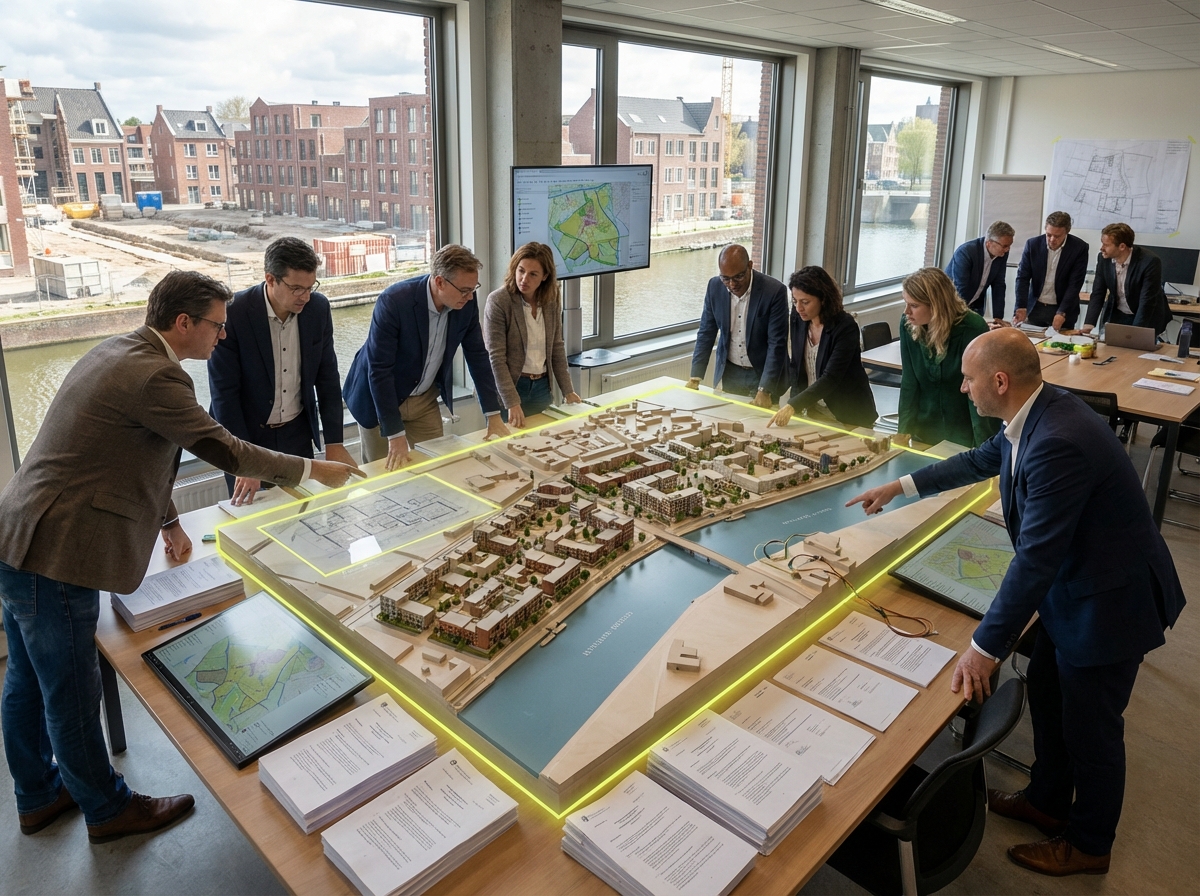
Belgium's multi-tiered governance structure presents a distinctive challenge for housing and energy development, where authority is fragmented across federal, regional (Flanders, Wallonia, Brussels-Capital), and municipal jurisdictions. This constitutional arrangement, designed to accommodate linguistic and cultural diversity, distributes critical decision-making powers in ways that complicate project delivery. Energy policy remains largely federal, spatial planning falls under regional control, and building permits are issued at the municipal level—creating a labyrinth of overlapping competencies. For developers, this means navigating three or more approval processes simultaneously, each operating under different legal frameworks, timelines, and political priorities. The signal matters because it highlights how governance architecture itself can become a structural barrier to housing supply and climate transition, even when all levels of government nominally support these goals.

Evidence of coordination friction appears across multiple domains. Renewable energy installations frequently require federal environmental permits while simultaneously needing regional spatial planning approvals and municipal building authorizations, with each authority applying distinct criteria and operating on incompatible schedules. Housing developers report cases where regional sustainability standards conflict with municipal aesthetic requirements, or where federal energy efficiency mandates require technologies not yet recognized in regional building codes. Research from planning institutes suggests these misalignments can extend project timelines by 12-18 months beyond technical construction periods. Pilot coordination platforms have emerged in some municipalities, attempting to create single points of contact, though these remain exceptions rather than systematic solutions. The pattern appears strongest in Brussels, where regional and municipal boundaries overlap most intensely, and in border areas where projects might span multiple regional jurisdictions.

The implications extend beyond individual project delays to systemic underperformance in housing delivery and energy transition targets. Prolonged approval cycles increase financing costs, discourage smaller developers who lack resources to manage complex bureaucratic processes, and create uncertainty that dampens investment. For climate goals, coordination failures may slow the deployment of heat networks, building retrofits, and distributed energy systems that require multi-level approvals. Monitoring should focus on whether Belgium develops formal inter-governmental coordination protocols, possibly through digital permitting platforms that integrate requirements across levels, or whether pressure from EU directives on housing and climate forces constitutional clarification of competencies. The emergence of standardized approval pathways for common project types, or conversely, increasing litigation over jurisdictional conflicts, would signal whether this governance challenge is being resolved or deepening.
Regulatory Complexity
5/5Extremely Complex
Community Acceptance
2/5Moderate Resistance
Social Value Generation
2/5Limited Community Benefit
Category
Governance & Permitting

Connections

Governance & Permitting
Multi-Jurisdictional Coordination

Governance arrangements that coordinate approval processes across municipal, regional, and national levels.

Regulatory Complexity
4/5
Community Acceptance
3/5
Social Value Generation
3/5
Governance & Permitting
Brussels 19 Municipality Fragmentation

The governance challenge of 19 separate municipalities within Brussels-Capital Region, creating coordination failures and permit inconsistencies.

Regulatory Complexity
5/5
Community Acceptance
2/5
Social Value Generation
2/5
Governance & Permitting
Expedited Permitting Frameworks

Streamlined approval processes that reduce approval cycles and uncertainty while maintaining quality standards.

Regulatory Complexity
3/5
Community Acceptance
4/5
Social Value Generation
3/5
Energy & Sustainability
Flemish Renovation Duty (EPC-Driven)

Transaction-triggered retrofit obligations in Flanders that push upgrades but can also freeze sales or price out buyers without subsidy access.

Regulatory Complexity
3/5
Community Acceptance
3/5
Social Value Generation
4/5
Barriers & Opposition
Systematic Anti-Wind Energy Movements

Organized opposition to renewable energy projects that can block both energy and housing developments when integrated, even when aligned with net-zero goals.

Regulatory Complexity
3/5
Community Acceptance
2/5
Social Value Generation
2/5
Governance & Permitting
Municipal Permitting Capacity (Planner Shortages)

A silent bottleneck: staffing and expertise constraints inside municipalities that turn ‘streamlined rules’ into backlogs and long lead times.

Regulatory Complexity
3/5
Community Acceptance
3/5
Social Value Generation
3/5

Book a research session

Bring this signal into a focused decision sprint with analyst-led framing and synthesis.
Research Sessions