Warmtewet (Heat Market Regulation)
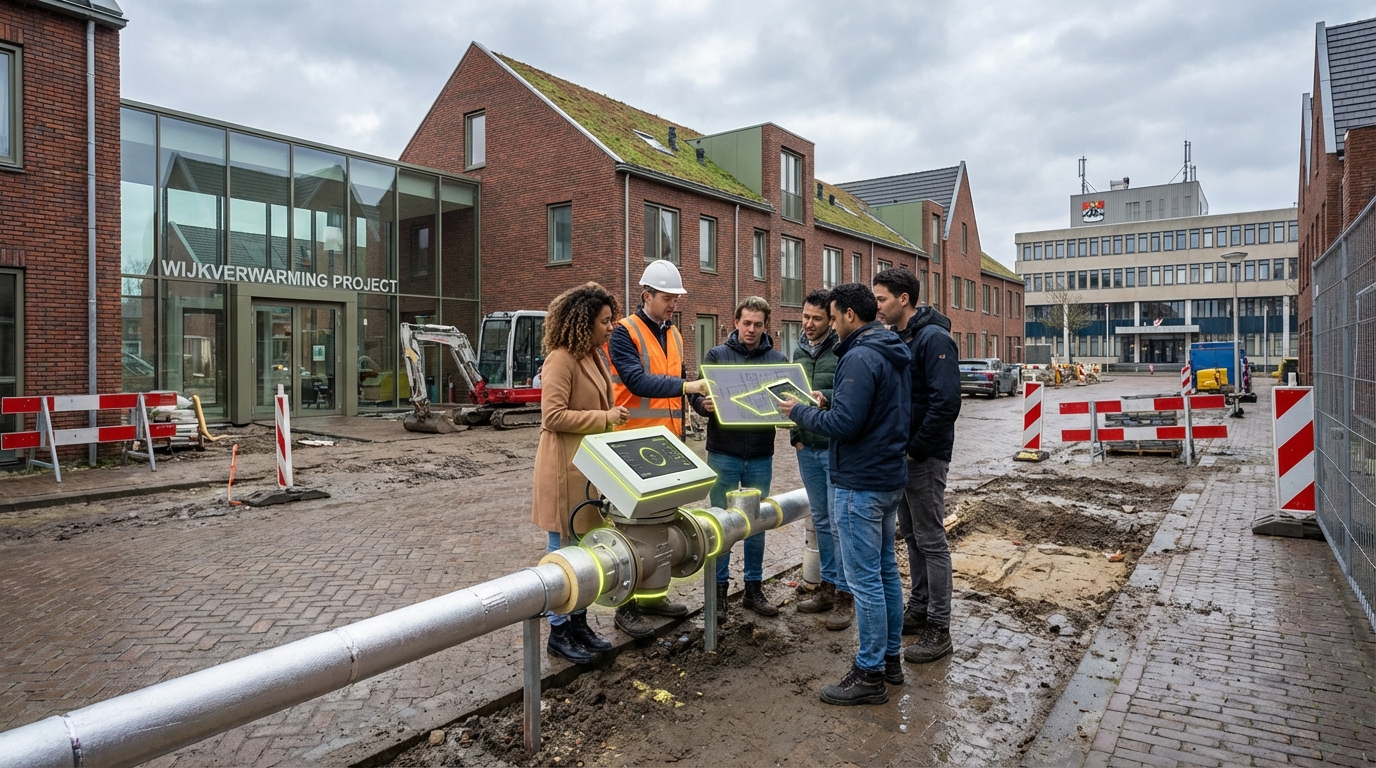
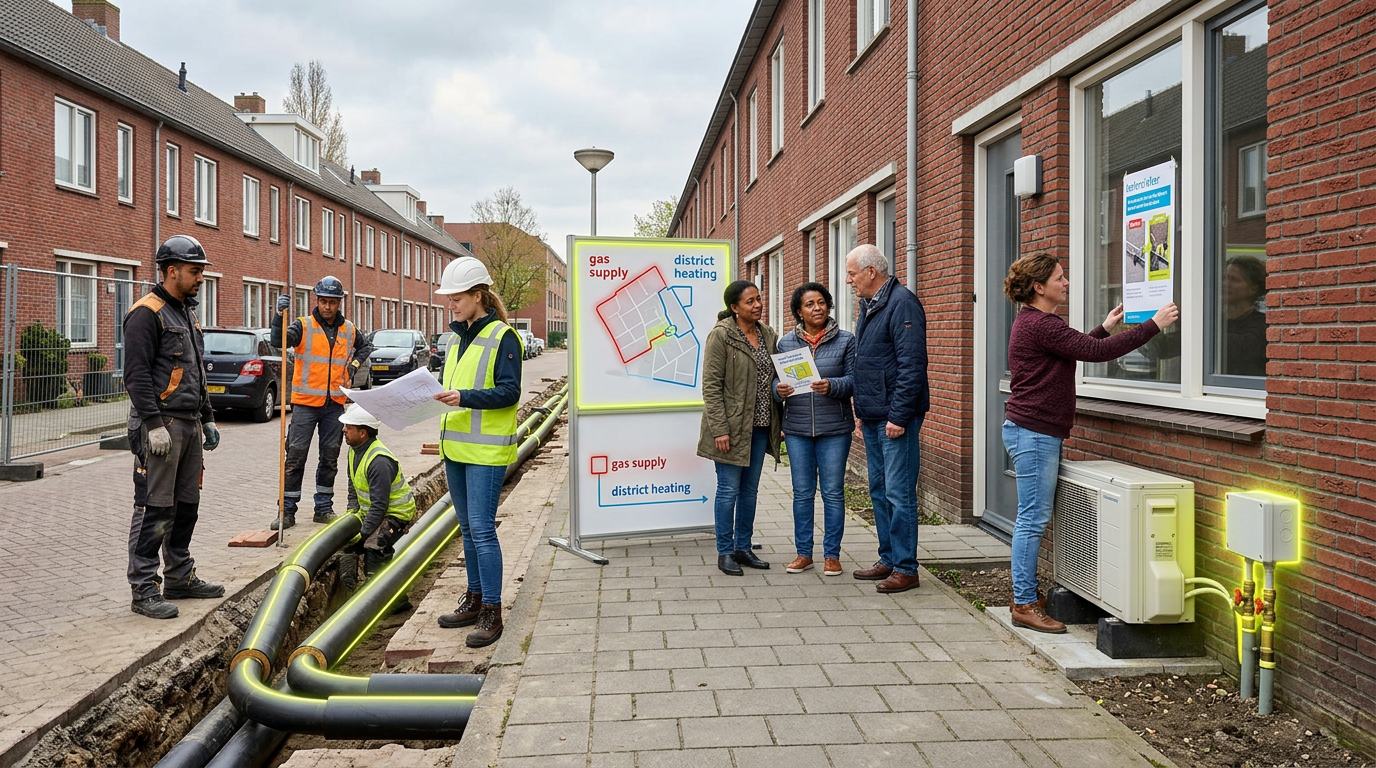
Heat market regulation addresses a fundamental tension in the transition away from natural gas: district heating networks operate as natural monopolies—once a building is connected, residents have no alternative supplier—yet public trust in these systems remains fragile. The Dutch Warmtewet (Heat Act) and similar regulatory frameworks across the Benelux region attempt to resolve this by setting price caps, mandating transparency, and defining ownership structures for heat networks. The core challenge is not technical but institutional: without credible governance, even well-designed heat infrastructure can face community opposition, permitting delays, and political backlash. As municipalities accelerate aardgasvrij (gas-free) transitions and plan dense new developments around collective heating, the question of who controls heat networks and how prices are determined has become as critical as the engineering itself.
Early evidence suggests that regulatory design significantly shapes public acceptance. In the Netherlands, the Warmtewet caps district heating tariffs to the cost of natural gas alternatives, aiming to prevent monopoly pricing, yet critics argue this framework still leaves consumers vulnerable to long-term price uncertainty and limits municipal control. Several cities are now piloting public or cooperative ownership models to increase local accountability, while housing associations and developers report that transparent governance structures—such as tenant representation on heat network boards or guaranteed price reviews—reduce resistance in new-build projects. Across Belgium and Luxembourg, evolving heat market policies are testing different balances: some favour private concessions with strict oversight, others lean toward municipal utilities. The pattern is directional but uneven, with regulatory fragmentation creating patchwork conditions that complicate cross-border heat planning and investor confidence.
The implications extend beyond energy policy into housing affordability and social equity. If heat network governance fails to deliver on consumer protection, it risks undermining broader decarbonisation goals by making collective heating politically toxic. Policymakers must monitor adoption rates in regulated versus unregulated markets, track consumer complaints and price disputes, and assess whether ownership models (municipal, cooperative, private concession) correlate with public trust and project success. Key thresholds to watch include the expansion of price-cap mechanisms, the emergence of standardised consumer rights across jurisdictions, and whether municipalities gain clearer authority to own or co-own heat infrastructure. Without credible institutional frameworks, the technical promise of district heating may remain unrealised, stalled not by engineering limits but by governance deficits that erode the social license required for large-scale deployment.
Related Organizations

The Dutch consumer and market authority that enforces the Heat Act (Warmtewet), setting maximum tariffs and protecting consumers in district heating monopolies.
The Dutch Ministry of the Interior and Kingdom Relations.
A large sustainable energy producer and supplier in the Netherlands, operating extensive district heating networks in cities like Rotterdam and Utrecht.
A major European energy company and one of the largest suppliers of district heating in the Netherlands, directly subject to Warmtewet regulations.

The largest consumer organization in the Netherlands, actively campaigning for better protection and lower tariffs within the Warmtewet.
A specialized district heating supplier serving over 85,000 households in the Netherlands.
A sustainable waste and energy company owned by 48 municipalities and 6 water boards, focusing on developing public heat networks.
The platform for the district heating sector in the Netherlands and Belgium, bringing together governments, suppliers, and researchers.

The trade association for energy companies in the Netherlands, lobbying on behalf of heat suppliers regarding the terms of the Warmtewet.
Dutch organization for applied scientific research, actively investigating molten metal pyrolysis for industrial hydrogen.