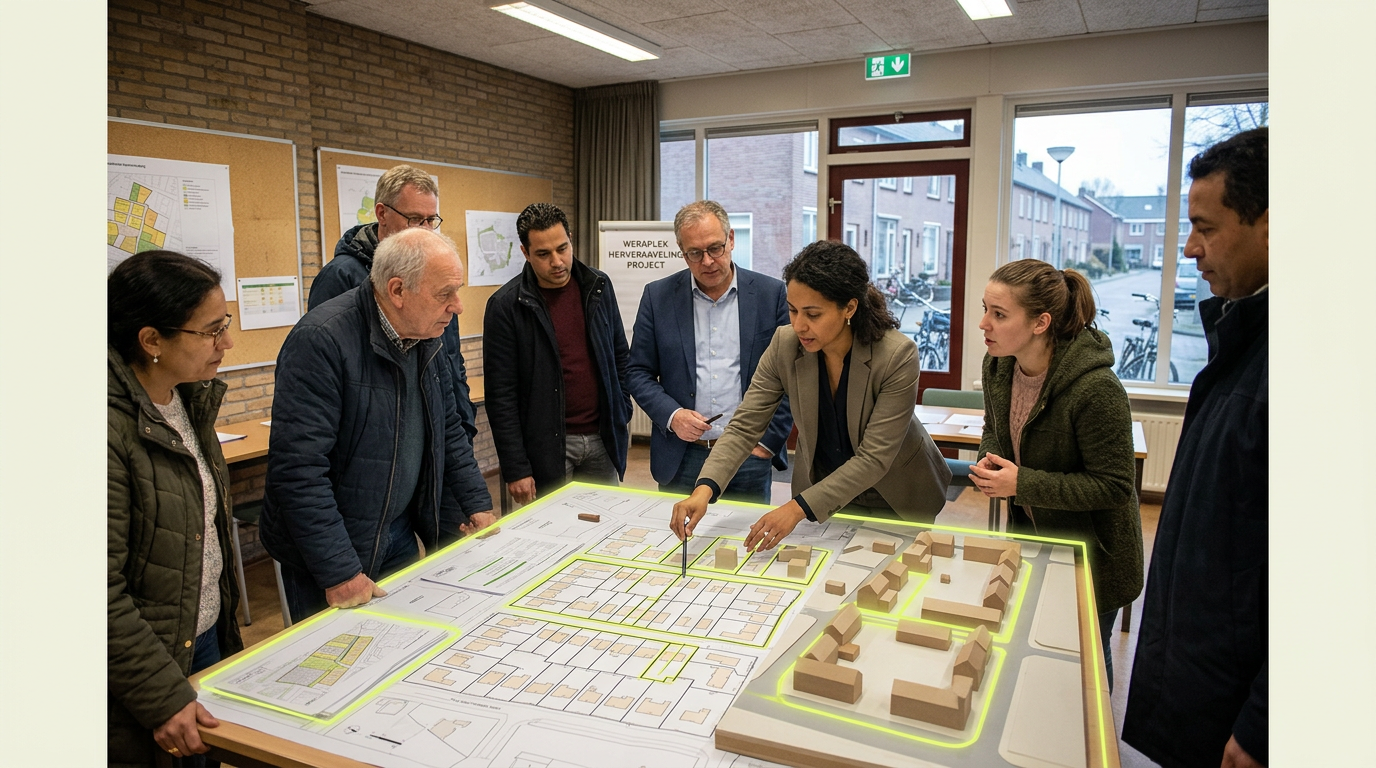
Multi-Jurisdictional Coordination
Multi-jurisdictional coordination represents a governance innovation designed to address one of the most persistent barriers to housing development in the Benelux region: the fragmentation of decision-making authority across multiple layers of government. In Belgium, the Netherlands, and Luxembourg, housing projects frequently require approvals from municipal councils, provincial or regional authorities, and national ministries, each operating under different timelines, criteria, and political pressures. This layered complexity can transform straightforward development proposals into multi-year approval odysseys, creating uncertainty for developers, delaying desperately needed housing supply, and frustrating communities awaiting new homes. The fundamental challenge is not that individual authorities are obstructive, but that their uncoordinated actions create cumulative friction that no single jurisdiction can resolve alone. Multi-jurisdictional coordination mechanisms attempt to solve this structural problem by creating formal frameworks for synchronizing decisions, sharing information, and aligning standards across governmental levels.
These coordination mechanisms take several practical forms, each addressing different aspects of the fragmentation problem. Inter-agency coordination bodies bring together representatives from various governmental levels to review major projects collectively, reducing sequential approval processes and identifying conflicts early. Shared digital platforms enable real-time visibility into application status across jurisdictions, preventing information asymmetries and duplicative requests for documentation. Harmonized standards establish common technical requirements and assessment criteria, reducing the need for projects to meet contradictory specifications from different authorities. In Belgium's federal structure, where Flanders, Wallonia, and Brussels each maintain distinct housing policies while municipalities retain significant planning powers, regional planning bodies have emerged to bridge these divides. The Netherlands has experimented with "environmental desks" that serve as single points of contact for developers navigating multiple permit requirements. Luxembourg's smaller scale has enabled national-municipal coordination protocols that streamline approvals for priority housing zones. Early evidence suggests these mechanisms can reduce approval timelines by months or even years, though implementation remains uneven and politically sensitive.
The broader implications of multi-jurisdictional coordination extend beyond administrative efficiency to fundamental questions about democratic governance and spatial equity. Successful coordination can accelerate housing delivery in regions facing acute shortages, potentially moderating price pressures and expanding access to affordable homes. However, these mechanisms also raise concerns about centralizing power, potentially diminishing local communities' ability to shape development in their neighbourhoods. The challenge lies in designing coordination frameworks that preserve meaningful democratic participation while preventing any single jurisdiction from exercising veto power over regionally significant projects. Monitoring should focus on whether coordination mechanisms actually reduce approval timelines in practice, how they handle conflicts between local preferences and regional housing needs, and whether they inadvertently favour large developers with resources to navigate complex processes over smaller builders. The signal's trajectory will likely depend on political willingness to formalize coordination arrangements through legislation, the development of interoperable digital infrastructure, and the emergence of professional cultures that prioritize cross-jurisdictional collaboration over institutional territoriality.