Stedelijke Herverkaveling (Land Readjustment)
Land readjustment—known in Dutch as stedelijke herverkaveling—addresses one of the most persistent frictions in urban densification: the fragmentation of ownership that prevents efficient redevelopment of underutilized or brownfield sites. In the Benelux region, where cities face acute housing shortages yet struggle to assemble developable parcels, this legal and planning tool offers a middle path between voluntary negotiation and compulsory expropriation. The core challenge it solves is the coordination problem inherent in multi-owner sites, where individual landowners may hold out for higher compensation, veto redevelopment plans, or simply lack the capital to participate in transformation. By pooling fragmented parcels, replotting boundaries, and redistributing land or development rights proportionally, readjustment allows municipalities to unlock sites while preserving a degree of equity and consent that reduces political resistance and litigation risk. This approach is particularly relevant in contexts where expropriation carries high political costs and where voluntary assembly fails due to misaligned incentives among dozens or even hundreds of small owners.
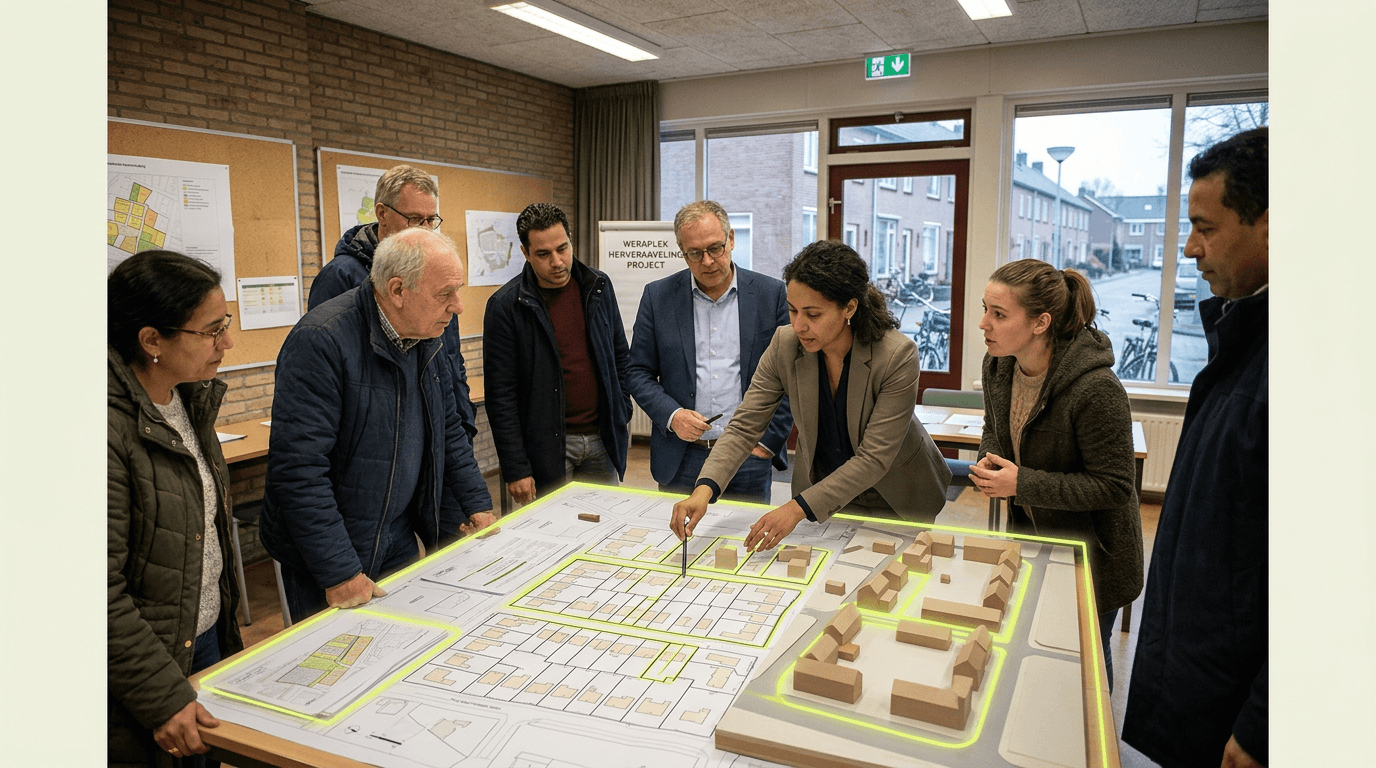
The mechanism works through a structured legal process in which a public authority—typically a municipality—designates a readjustment zone, conducts detailed valuation of existing parcels, and proposes a new plot configuration that accommodates public infrastructure, green space, and developable sites. Owners contribute their land to a common pool and receive replotted parcels or financial compensation based on their original share of value, adjusted for the benefits of improved infrastructure and planning gains. Early deployments in the Netherlands, such as pilot projects in Rotterdam and Utrecht, indicate that success hinges on transparent valuation methodologies, sustained engagement with landowners, and legal frameworks robust enough to withstand challenges. Belgium and Luxembourg are exploring similar instruments, though differences in property law and administrative tradition mean that cross-border learning remains cautious. Research from planning institutes suggests that readjustment works best in areas with moderate fragmentation—too few owners and voluntary deals suffice, too many and the coordination costs become prohibitive. The process also requires significant municipal capacity: skilled negotiators, GIS mapping, legal expertise, and patient timelines that can stretch over years.
The implications for housing delivery are substantial but conditional. If readjustment processes gain legitimacy and scale, they could unlock thousands of infill sites currently stalled by ownership gridlock, accelerating the shift from greenfield sprawl to urban intensification. Municipalities may gain a reputational tool that signals fairness and competence, reducing the political backlash associated with expropriation. However, the signal also points to risks: poorly executed readjustment can entrench distrust, favour well-resourced owners who can navigate complexity, or simply move too slowly to meet urgent housing targets. Key indicators to monitor include the number of readjustment zones formally designated, the average time from initiation to completion, legal challenges and their outcomes, and whether smaller municipalities develop the capacity to deploy the tool or whether it remains confined to large cities with specialized planning departments. The trajectory of this signal will reveal whether institutional innovation can keep pace with the political and spatial realities of Benelux urbanization.