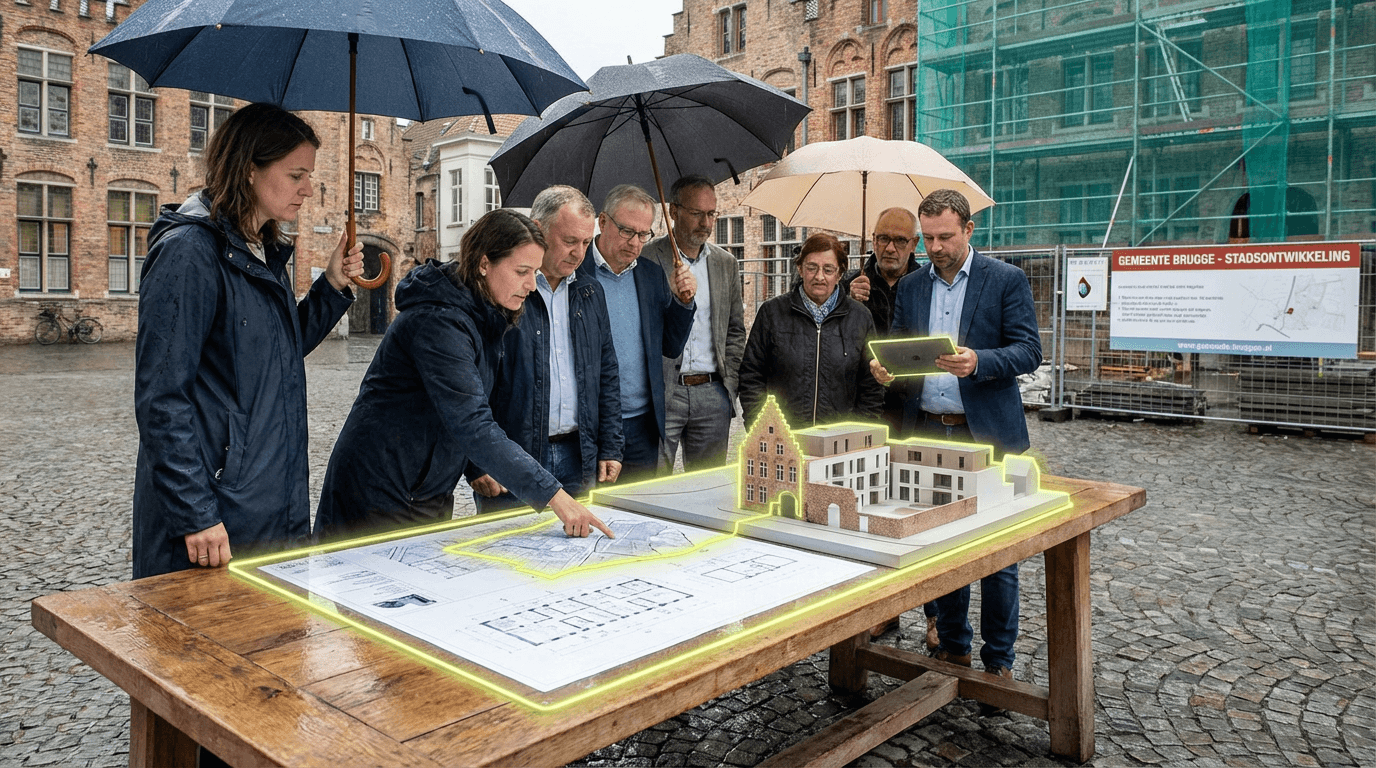
Heritage Preservation Conflicts
Heritage preservation conflicts emerge at the intersection of two urgent societal imperatives: safeguarding cultural identity through historic architecture and addressing acute housing shortages alongside climate adaptation goals. Across the Benelux region, where centuries-old urban fabric defines city centers and neighborhoods, regulatory frameworks designed to protect architectural heritage increasingly collide with pressures to densify housing supply and retrofit buildings for energy efficiency. This tension manifests when monument protection laws prevent subdivision of historic townhouses into multiple units, when façade preservation requirements make thermal insulation prohibitively expensive, or when historic district designations effectively freeze entire neighborhoods against adaptive reuse. The signal matters because it reveals a fundamental governance challenge: existing preservation frameworks were designed for different demographic and climate contexts, yet they now constrain responses to contemporary crises without necessarily delivering the cultural outcomes they promise.
Evidence of this conflict pattern appears across multiple scales and contexts. In Dutch cities, monument status affects approximately 60,000 buildings, with local heritage designations adding tens of thousands more to the protected inventory. Developers report that heritage procedures can add 18-24 months to project timelines, creating financial uncertainty that discourages investment in historic areas even when adaptive reuse might be technically feasible. Energy retrofit programs encounter similar barriers: research from Belgian heritage authorities indicates that achieving contemporary insulation standards in protected buildings can cost three to five times more than standard renovations, often requiring bespoke solutions that few contractors can deliver. Meanwhile, housing waiting lists grow in precisely those historic city centers where preservation rules are strictest. Luxembourg's Ville Haute demonstrates the pattern clearly—heritage protections maintain architectural coherence but effectively prevent the residential densification that might reduce commuter pressure on surrounding regions. Early experiments with "heritage innovation zones" in some Dutch municipalities suggest potential pathways, allowing greater flexibility for interior modifications or energy systems while maintaining street-facing architectural character, though these remain pilot-scale initiatives rather than systematic policy shifts.
The implications extend beyond individual projects to broader questions of urban equity and climate preparedness. If heritage frameworks continue to operate as de facto development vetoes, housing production will concentrate in peripheral greenfield sites, reinforcing car dependency and sprawl patterns that contradict climate goals. Conversely, weakening protections risks eroding the distinctive urban character that makes historic neighborhoods desirable in the first place, potentially triggering gentrification cycles as renovated properties command premium prices. Monitoring should focus on several indicators: the rate at which heritage appeals delay or block housing permits, the cost differential between standard and heritage-compliant energy retrofits, and the emergence of new legal instruments that create conditional flexibility within preservation frameworks. Policy experimentation around "heritage impact budgets"—allowing measured modifications in exchange for demonstrated public benefits—may signal whether governance systems can evolve beyond binary preserve-or-develop choices toward more nuanced approaches that recognize heritage as dynamic rather than frozen.
Related Organizations

The Cultural Heritage Agency of the Netherlands, which advises on and funds the transformation of monuments, balancing preservation with new housing needs.

A major Dutch heritage protection association that frequently litigates or campaigns against developments threatening historic fabric.

The administration responsible for urban planning and cultural heritage in the Brussels-Capital Region.

A specialized consultancy helping owners of historic buildings navigate regulations to implement sustainable retrofits.

A leading research center at KU Leuven focusing on the preservation of architectural heritage.

An organization that inspects and maintains historic buildings, often advising on maintenance vs. modification.

The pan-European federation for cultural heritage, headquartered in The Hague.

Union for people in precarious housing situations (anti-squat, temporary rental).