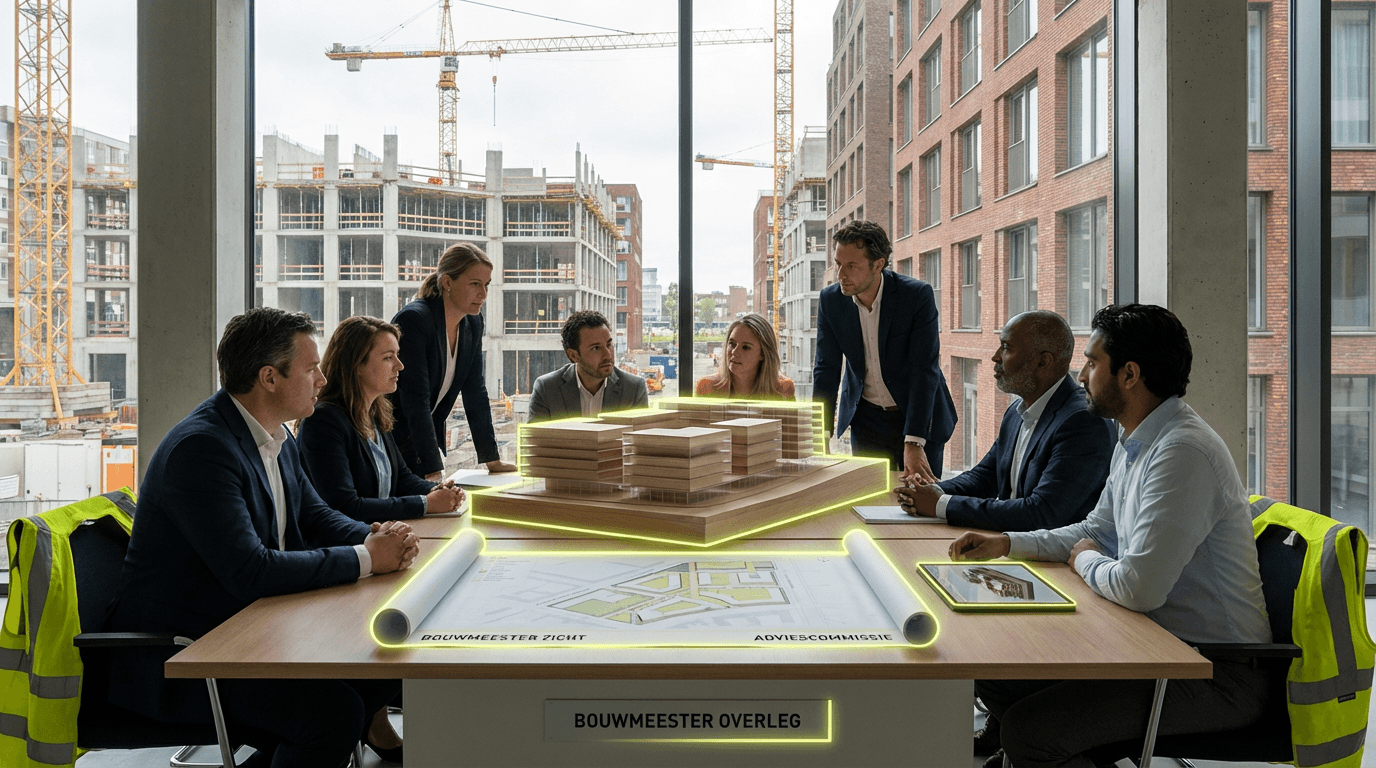
Bouwmeester (Government Architect) Model
The Bouwmeester model addresses a persistent tension in contemporary housing and urban development: how to reconcile public interest in design quality, livability, and long-term urban coherence with the pressures of rapid construction, cost efficiency, and fragmented decision-making. Traditional permitting systems often focus narrowly on regulatory compliance—zoning codes, safety standards, environmental thresholds—without mechanisms to elevate architectural ambition or mediate conflicts between developers, municipalities, and communities. This gap frequently results in projects that meet legal requirements but fail to contribute meaningfully to urban fabric, public space, or social cohesion. The Bouwmeester model, rooted in Flemish and Dutch governance traditions, introduces an independent quality oversight role that operates outside conventional bureaucratic hierarchies, using design excellence as both a negotiation tool and a strategic lever to unblock stalled developments.
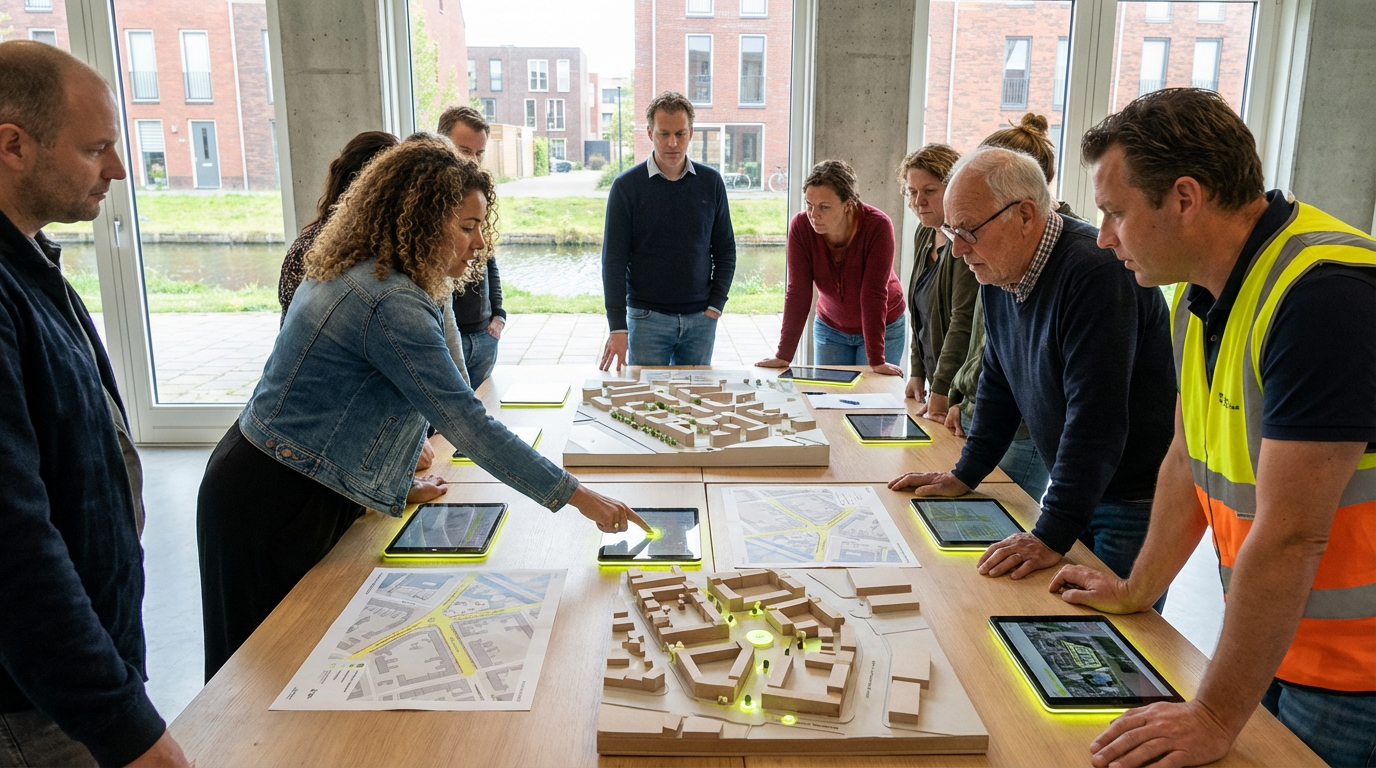
At its core, the model appoints respected architects or urbanists—often through competitive selection—to serve fixed terms as advisors to regional or municipal governments. These figures do not approve or reject permits directly; instead, they convene design competitions for significant public projects, provide non-binding but influential advice on private developments of strategic importance, and facilitate dialogue between stakeholders when projects encounter resistance or design impasses. In Flanders, the Vlaams Bouwmeester operates at the regional scale, while cities like Antwerp, Ghent, and Charleroi maintain their own stadsbouwmeesters with localized mandates. Early evidence suggests the model can accelerate contentious projects by reframing debates around shared design principles rather than adversarial positions. For example, Bouwmeesters have mediated disputes over density by proposing architectural solutions that preserve neighborhood character while meeting housing targets, or by organizing public design charrettes that build community buy-in before formal permitting begins. The approach relies on the personal credibility and political independence of the appointed architect, creating a governance layer that is advisory rather than regulatory but carries significant moral and professional authority.
The implications for housing systems are substantial but context-dependent. Where the model functions well, it can reduce permitting delays, improve public acceptance of density, and ensure that affordable housing projects achieve design standards comparable to market-rate developments—countering the stigmatization of social housing through architectural quality. However, the model's effectiveness hinges on political will to respect the Bouwmeester's independence and on the individual's ability to navigate competing interests without becoming captured by either municipal agendas or developer lobbying. Risks include the potential for design-led decision-making to prioritize aesthetic outcomes over affordability or construction speed, particularly in tight housing markets where delays carry real social costs. Monitoring should focus on whether Bouwmeester interventions correlate with measurable reductions in permitting timelines, increased public satisfaction with new developments, and the ability of the role to maintain credibility across political cycles. As housing crises intensify across the Benelux region, the scalability and replicability of this qualitative governance layer—beyond the cultural contexts where it emerged—remains an open question worth tracking closely.