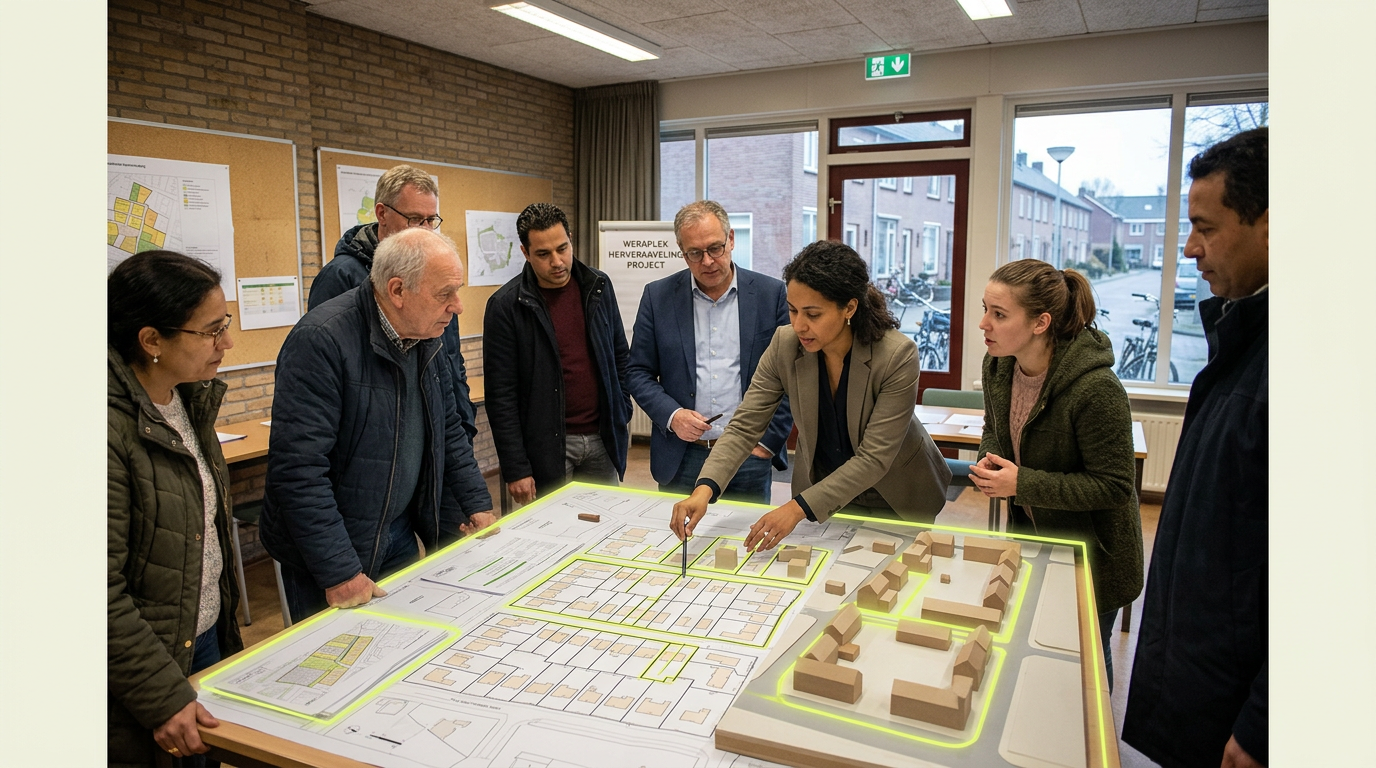
Bouwclaims (Development Rights Trading)
Development rights trading through bouwclaims represents a distinctive governance mechanism that addresses a fundamental tension in urban expansion: how municipalities can guide housing development while providing the certainty private developers require for long-term investment. Unlike conventional land markets where development rights remain uncertain until permits are granted, this system bundles land parcels with pre-negotiated development parameters—specifying housing types, densities, construction timelines, and affordability requirements. The approach emerged primarily in Dutch planning contexts where municipalities often own expansion land and face pressure to deliver housing at scale while capturing public value from urbanization. By establishing clear contractual frameworks upfront, bouwclaims aim to reduce the adversarial dynamics that often characterize permitting processes, where developers and municipalities negotiate project details through protracted approval cycles.
The mechanism functions through municipal land banks selling parcels with attached development obligations rather than simply transferring ownership. Developers acquire not just property but guaranteed rights to build specified housing within defined timeframes, often including requirements for social housing percentages or specific architectural standards. This contractual clarity enables developers to secure financing and plan construction schedules with greater confidence, while municipalities retain steering capacity over urban form and social outcomes. Early implementations in Dutch expansion districts like Vinex locations demonstrated how this approach could accelerate housing delivery in greenfield areas. However, the system's effectiveness depends heavily on accurate demand forecasting and flexible contract terms—overly rigid claims can create problems when market conditions shift or housing needs evolve. Some municipalities have experimented with conditional claims that adjust requirements based on market triggers, while others maintain stricter frameworks that prioritize predictability over adaptability.
The broader implications of development rights trading extend beyond administrative efficiency to fundamental questions about land value capture and development risk distribution. When structured effectively, bouwclaims can prevent speculative land banking by requiring construction within specified periods, while ensuring municipalities capture value increases from infrastructure investments and zoning decisions. However, poorly designed systems risk creating windfall profits if initial valuations underestimate future land values, or conversely, stranding developers with unprofitable obligations if markets deteriorate. Monitoring should focus on whether claim conditions genuinely serve public objectives beyond what conventional permitting achieves, particularly regarding affordability outcomes and development timing compliance. As housing pressure intensifies across European urban regions, the balance this mechanism strikes between public control and private certainty offers potential lessons for other contexts, though its replicability depends on whether municipalities possess sufficient land ownership and institutional capacity to manage complex long-term contractual relationships.