Metaverse Live Events
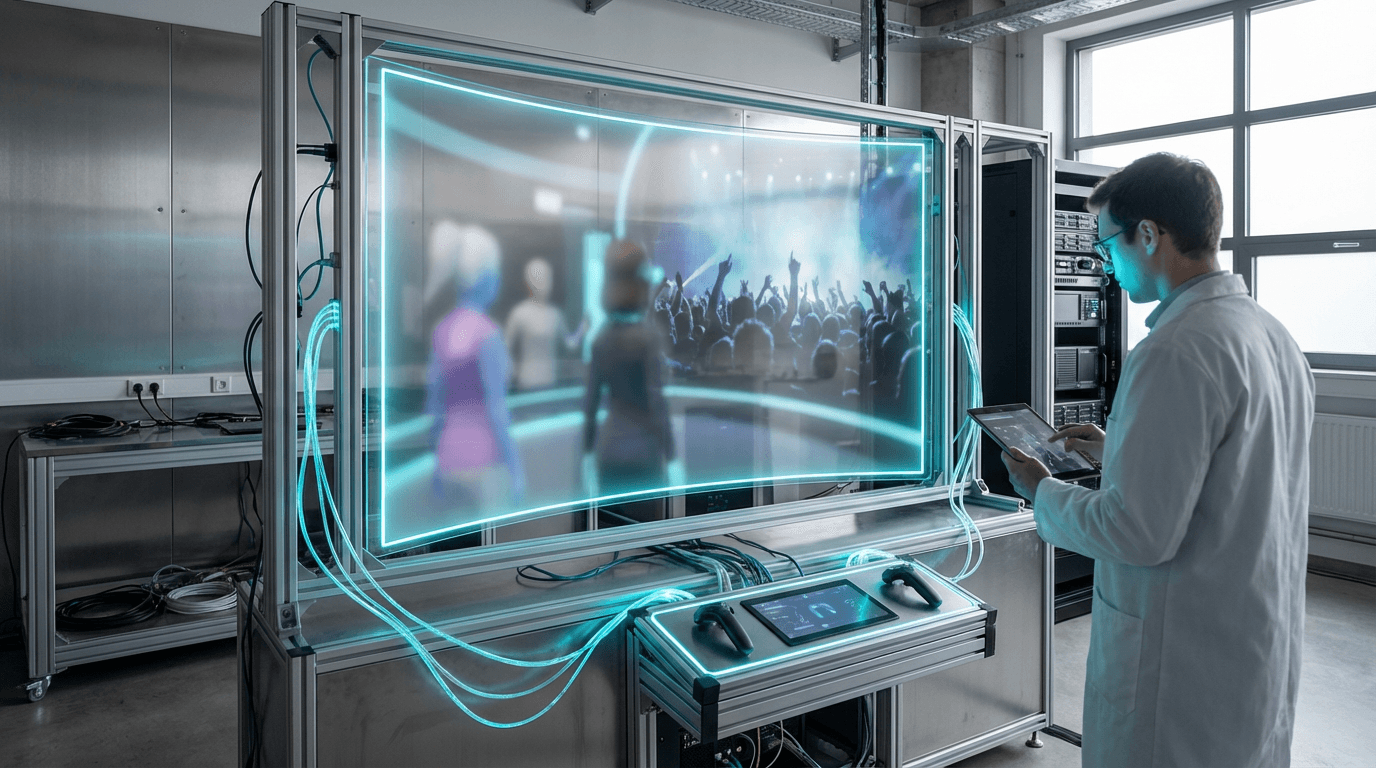
Metaverse live events represent a convergence of real-time 3D rendering, spatial audio systems, and massively multiplayer networking infrastructure that enables large-scale synchronous gatherings in persistent virtual environments. Unlike traditional streaming platforms that deliver passive video content, these systems create interactive three-dimensional spaces where participants appear as customizable avatars, capable of moving through virtual venues, interacting with digital objects, and communicating with other attendees through voice, text, or gesture-based systems. The underlying architecture relies on distributed server networks that partition virtual spaces into manageable zones, dynamically adjusting rendering quality and user density to maintain performance across diverse hardware capabilities. Spatial audio engines simulate realistic sound propagation, creating the acoustic experience of being in a crowd where conversations fade with distance and music emanates from virtual stage locations. These technical foundations enable experiences that transcend geographical limitations while introducing novel forms of audience participation unavailable in physical venues.
The entertainment industry faces persistent challenges in reaching global audiences while managing the physical constraints of venue capacity, travel logistics, and ticket accessibility. Metaverse live events address these limitations by eliminating geographical barriers and capacity restrictions, allowing artists to perform for audiences numbering in the millions rather than thousands. This technology creates new revenue streams through virtual merchandise, exclusive digital collectibles, and tiered access experiences that can range from general admission viewing areas to premium virtual backstage passes. Early deployments have demonstrated the commercial viability of this model, with major artists hosting virtual performances that generate significant engagement metrics and revenue. The format also enables experimental staging possibilities impossible in physical venues, from gravity-defying choreography to real-time environmental transformations synchronized with musical performances, expanding creative possibilities for performers and production teams.
Current adoption spans gaming platforms, dedicated metaverse environments, and social virtual reality applications, with entertainment companies increasingly viewing these events as complementary to rather than replacements for physical performances. Music festivals have begun offering hybrid experiences where physical attendees can interact with virtual participants, while film studios use metaverse premieres to generate pre-release excitement and gather real-time audience feedback. The technology particularly resonates with younger demographics already comfortable with avatar-based social interaction and digital identity expression. As network infrastructure improves and virtual reality hardware becomes more accessible, industry analysts note a trajectory toward more immersive and seamless experiences. The integration of haptic feedback systems, improved avatar fidelity, and persistent social spaces where communities can gather before and after events suggests metaverse live events will evolve from novelty experiences into established components of the entertainment ecosystem, fundamentally reshaping how audiences discover, experience, and remember cultural moments.
Related Organizations

A virtual entertainment platform specializing in interactive virtual concerts for major artists like Justin Bieber and The Weeknd.

Massive gaming platform with a persistent avatar identity system across millions of user-created experiences.

A metaverse technology company known for SpatialOS, enabling massive simulations with thousands of concurrent agents.

Platform specifically for VR concerts, using proprietary cameras and VFX pipelines to distribute volumetric artist performances.

The organization behind the Decentraland virtual world.

A no-code platform that provides infrastructure for brands and organizers to launch events across different metaverse worlds.

A technology startup reimagining music for the metaverse by combining gaming, mixed reality, and digital collectibles.

A gaming and social platform that functions across VR headsets, mobile devices, and web browsers, maintaining a unified 3D space.

Creators of Bored Ape Yacht Club and the 'Otherside' metaverse, which runs massive live technical tests for thousands of users.

Sensorium
Switzerland · Company
Developers of Sensorium Galaxy, a digital metaverse focused on high-end electronic music events and AI-driven social mechanics.
Supporting Evidence
Research this in Signals
Signals turns a topic into a sourced research record you can inspect and rerun. Your first scan is free, and this one starts with Metaverse Live Events already loaded, so edit it or scan as is.