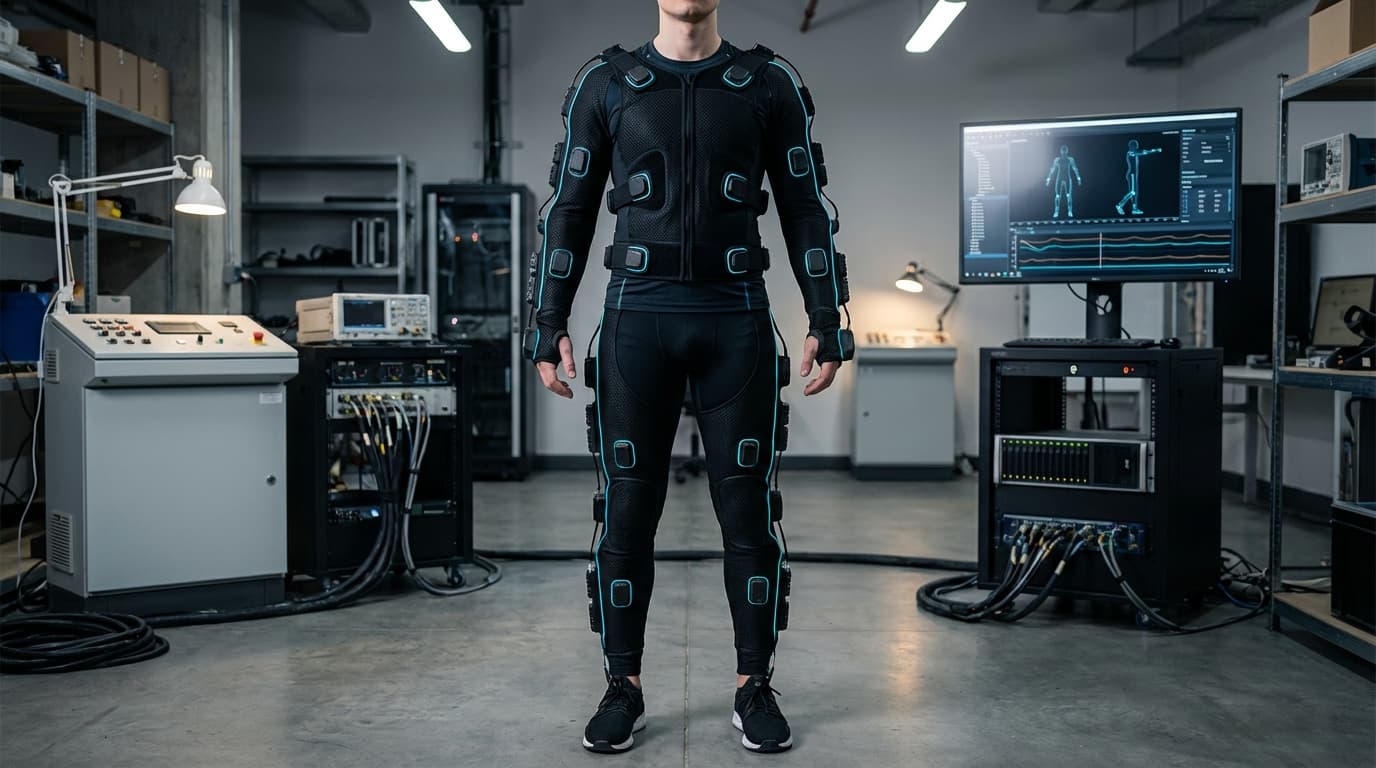
Haptic Feedback Suits
Haptic feedback suits represent a significant advancement in immersive technology, employing sophisticated wearable systems that translate digital experiences into physical sensations across the entire body. These suits integrate arrays of electro-tactile actuators, vibro-tactile motors, and sometimes pneumatic or exoskeletal components that work in concert to simulate touch, pressure, temperature variations, and even resistance. The technology operates through precise spatial mapping, where sensors track body position and movement while actuators deliver localized stimulation corresponding to virtual interactions. Some systems use electrical muscle stimulation to create the sensation of force or impact, while others employ micro-vibrations at varying frequencies to replicate textures and surfaces. Advanced implementations incorporate thermal modules that can simulate heat or cold, and pneumatic bladders that provide compression or expansion sensations, creating a multi-layered sensory experience that extends far beyond simple vibration.
The entertainment and streaming industry faces a fundamental challenge in bridging the gap between visual immersion and physical presence, particularly as virtual reality content becomes increasingly sophisticated. Traditional VR experiences rely primarily on visual and auditory inputs, leaving users disconnected from the tactile dimension that grounds our perception of reality. Haptic feedback suits address this limitation by enabling content creators to design experiences where viewers don't just watch action unfold but physically feel it—whether that's the impact of a virtual object, the sensation of wind or water, or the texture of surfaces in a digital environment. This technology unlocks new storytelling possibilities for filmmakers and game developers, allowing them to craft narratives that engage the body as well as the mind. For live streaming and interactive entertainment, these suits enable performers and audiences to share physical sensations across distances, fundamentally transforming how people experience concerts, sporting events, or social VR gatherings.
Early commercial deployments have emerged primarily in premium entertainment venues, VR arcades, and specialized gaming setups, though consumer-grade versions are beginning to enter the market at varying price points and capability levels. Research indicates growing adoption in training simulations for industries ranging from healthcare to aviation, where physical feedback enhances learning outcomes. The technology is particularly promising for remote collaboration and social experiences, where the ability to convey presence through touch could make virtual interactions feel more authentic and emotionally resonant. As wireless connectivity improves and manufacturing costs decline, industry analysts note a trajectory toward lighter, more affordable suits that could become standard peripherals for home entertainment systems. This evolution aligns with broader trends toward embodied computing and the convergence of physical and digital experiences, positioning haptic feedback suits as essential infrastructure for the next generation of immersive content consumption and creation.
Related Organizations

Produces haptic vests and accessories for VR, providing SDKs to sync tactile feedback with game events.

Produces a full-body haptic suit using electro-muscle stimulation (EMS) and TENS to simulate physical sensations.

Develops a haptic gaming system (vest/sleeves) that uses electrical muscle stimulation to simulate physical sensations.

Develops industrial-grade haptic gloves using microfluidic technology to simulate realistic touch and resistance.

Develops tactile audio technology and wearable vests that allow users to feel bass frequencies.

Consumer electronics company making haptic vests and straps using oscillating frame actuators (Osci).

Investigates soft robotics for safe human-robot interaction and expressive animatronics.
Supporting Evidence
Research this in Signals
Signals turns a topic into a sourced research record you can inspect and rerun. Your first scan is free, and this one starts with Haptic Feedback Suits already loaded, so edit it or scan as is.