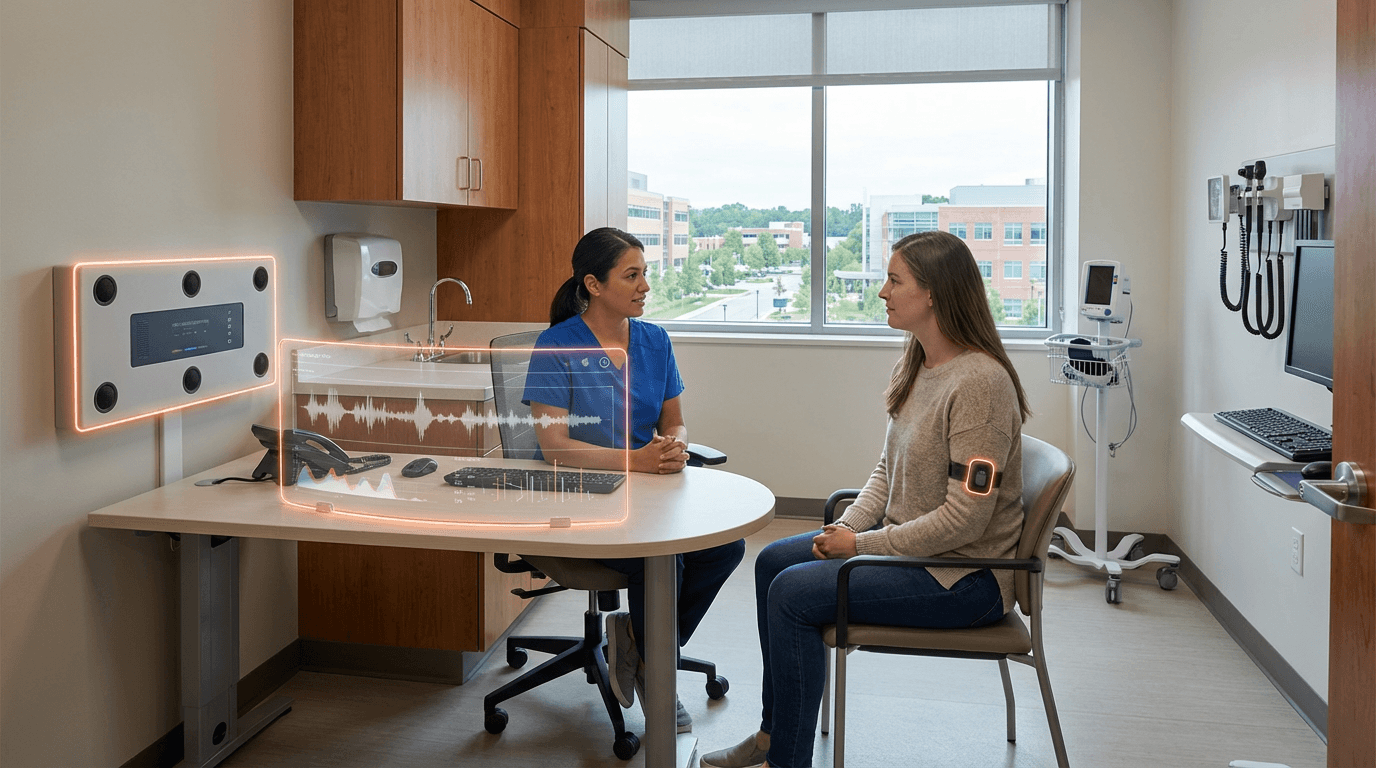
Voice Biomarker Diagnostics
Voice biomarker diagnostics represents a convergence of artificial intelligence, signal processing, and clinical medicine that transforms the human voice into a diagnostic tool. The technology operates by capturing vocal recordings through standard devices like smartphones or computers, then applying sophisticated machine learning algorithms to extract hundreds of acoustic features from the speech signal. These features include fundamental frequency variations, harmonic-to-noise ratios, jitter and shimmer measurements, formant frequencies, and temporal patterns in speech rhythm and articulation. Advanced neural networks trained on thousands of voice samples can detect subtle deviations from healthy vocal patterns—changes often imperceptible to human listeners but statistically significant for disease detection. The analysis occurs entirely in software, requiring no specialized sensors beyond a basic microphone, making the approach fundamentally different from traditional diagnostic equipment that demands clinical settings and trained operators.
The healthcare delivery system faces persistent challenges in early disease detection and continuous patient monitoring, particularly for populations with limited access to medical facilities. Traditional diagnostic pathways often require patients to travel to clinics, undergo invasive procedures, or use expensive imaging equipment—barriers that delay diagnosis and increase healthcare costs. Voice biomarker platforms address these limitations by enabling screening that can occur anywhere, anytime, with devices patients already own. Research suggests that vocal characteristics change measurably in response to respiratory conditions affecting lung capacity and airflow, neurological disorders that impact motor control of speech muscles, cardiovascular diseases that alter breathing patterns, and mental health conditions that influence speech prosody and energy. This creates opportunities for population-level screening programs that can identify at-risk individuals for further clinical evaluation, as well as remote monitoring systems that track disease progression or treatment response over time. The approach also supports telemedicine initiatives by providing objective, quantifiable health data that complements video consultations.
Early clinical deployments have explored voice biomarker applications across multiple disease categories, with pilot programs testing the technology for respiratory infection screening, Parkinson's disease monitoring, and depression assessment. Some healthcare systems have begun integrating voice analysis into patient intake processes or chronic disease management programs, though widespread clinical adoption remains in development stages. The technology shows particular promise for underserved communities where diagnostic infrastructure is limited, enabling health workers to conduct preliminary screenings using mobile devices before referring patients for confirmatory testing. Industry analysts note growing interest from both healthcare providers seeking cost-effective screening tools and technology companies developing consumer health applications. As validation studies continue and regulatory frameworks evolve to accommodate software-based diagnostics, voice biomarker platforms are positioned to become an increasingly important component of preventive medicine and remote patient monitoring. The convergence of this technology with broader telehealth expansion and artificial intelligence advancement in healthcare suggests a future where routine voice analysis becomes a standard element of health assessment, much like temperature or blood pressure measurement today.
Related Organizations

Develops voice biomarker technology for mental health.

Analyzes vocal biomarkers to detect health conditions and mental states.

Develops voice biomarker software to detect depression and anxiety from short clips of speech.

Analyzes vocal features to track neurological and cognitive conditions like Alzheimer's.

US government medical research agency funding the 'Bridge2AI' voice project.


A spin-off from TU Munich specializing in audio analysis and speech emotion recognition.

Supporting Evidence
Research this in Signals
Signals turns a topic into a sourced research record you can inspect and rerun. Your first scan is free, and this one starts with Voice Biomarker Diagnostics already loaded, so edit it or scan as is.