








Increased Capabilities of Point-of-Care Diagnostics
Point-of-Care Diagnostics Platforms
Portable lab and imaging devices that perform diagnostic tests at the bedside or home
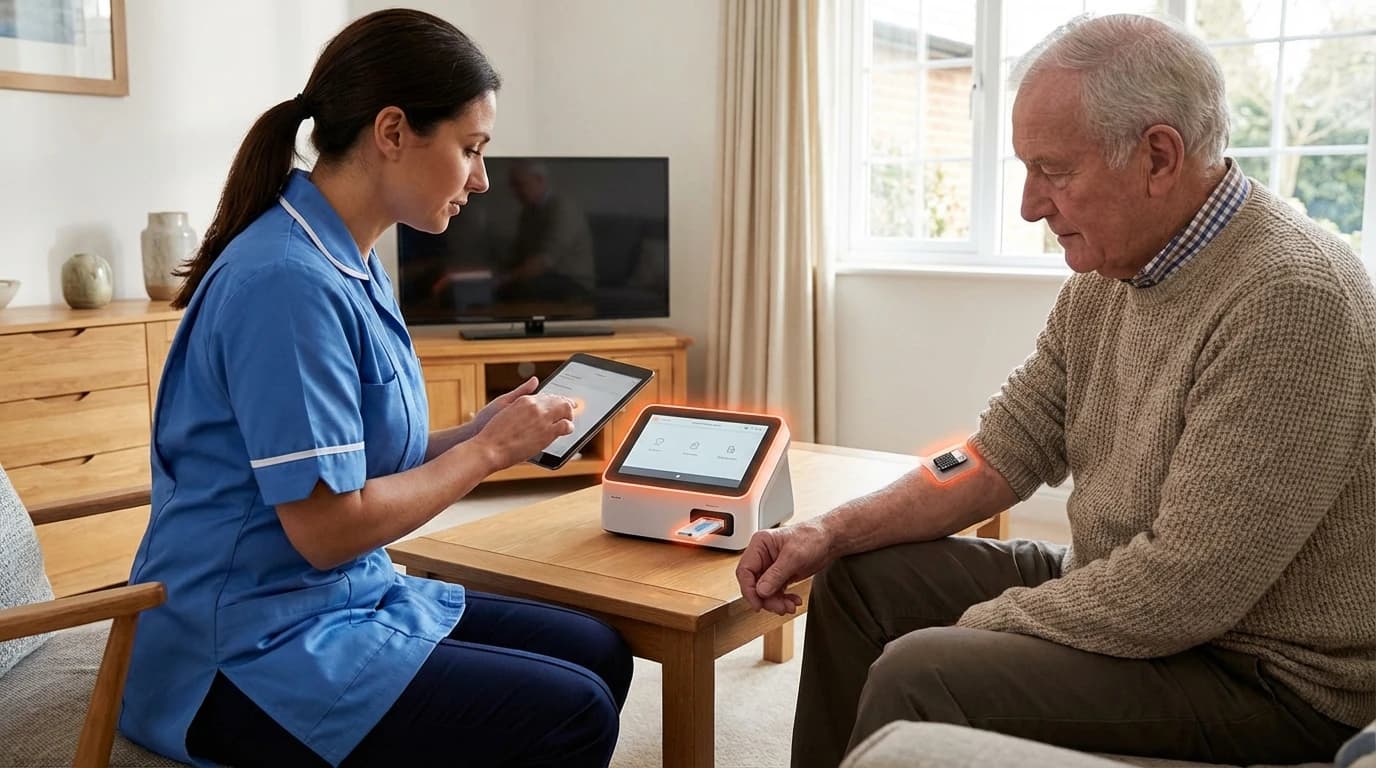
Point-of-care diagnostics platforms represent a fundamental shift in medical testing, moving sophisticated laboratory capabilities from centralized facilities directly to the patient's location. These systems encompass a range of technologies, from miniaturized ultrasound devices that fit in a clinician's pocket to compact molecular analyzers capable of detecting infectious diseases from a single drop of blood. The technical foundation relies on microfluidics, advanced biosensors, and integrated electronics that can perform complex biochemical analyses within self-contained cartridges or handheld units. Unlike traditional laboratory equipment that requires dedicated infrastructure, controlled environments, and specialized technicians, point-of-care platforms are designed for simplicity and portability, often delivering results in minutes rather than hours or days. The devices typically combine sample preparation, analysis, and result interpretation into a single workflow, using technologies such as lateral flow assays, electrochemical detection, or miniaturized spectroscopy to achieve laboratory-grade accuracy in field conditions.
The healthcare industry has long grappled with diagnostic delays that create bottlenecks in patient care, particularly in resource-limited settings, emergency situations, and remote locations where access to centralized laboratories is impractical or impossible. Traditional diagnostic workflows require sample transport, laboratory processing, and result communication—a chain that can take hours to days and introduces opportunities for sample degradation, administrative errors, and treatment delays. Point-of-care platforms address these challenges by collapsing the diagnostic timeline, enabling clinicians to obtain actionable results while the patient is still present. This immediacy transforms clinical workflows in emergency departments, where rapid triage decisions can mean the difference between life and death, and in primary care settings, where same-visit diagnosis and treatment improve patient adherence and outcomes. The technology also democratizes access to advanced diagnostics, bringing capabilities previously confined to well-equipped hospitals to rural clinics, pharmacies, and even patients' homes, thereby reducing healthcare disparities and enabling earlier intervention in disease progression.
Current deployments of point-of-care diagnostics span a wide spectrum of clinical applications, from rapid COVID-19 testing that became ubiquitous during the pandemic to continuous glucose monitors that have revolutionized diabetes management. Emergency medical services increasingly rely on portable ultrasound devices to assess trauma patients in ambulances, while infectious disease programs use molecular testing cartridges to diagnose tuberculosis and HIV in remote villages. The technology has proven particularly valuable in maternal health, where portable ultrasound enables prenatal screening in areas without imaging facilities, and in chronic disease management, where home-based monitoring devices allow patients to track biomarkers without clinic visits. Industry analysts note that the convergence of smartphone connectivity, artificial intelligence for result interpretation, and decreasing costs of microelectronics is accelerating adoption across both developed and developing healthcare systems. As these platforms become more sophisticated and affordable, they are expected to play a central role in value-based care models that prioritize prevention and early intervention, while also supporting the broader shift toward decentralized healthcare delivery that brings medical services closer to where people live and work.
TRL
8/9Deployed
Impact
5/5
Investment
5/5
Category
Hardware
Related Organizations
Produces handheld ultrasound devices (Butterfly iQ) that utilize Ultrasound-on-Chip technology for local processing and imaging.
Developer
Creator of the FreeStyle Libre system, a leading continuous glucose monitoring platform.
Developer
Produces the GeneXpert system, a leading platform for rapid molecular diagnostic testing at the point of care.
Developer
Develops an all-in-one modular device for remote medical exams, allowing patients to capture heart, lung, and throat data at home.
Developer
Manufactures high-definition wireless handheld ultrasound scanners for medical professionals.
Developer
Developing a handheld ultrasound device using piezoelectric micromachined ultrasound transducers (pMUT) combined with AI.
Developer
Offers a microfluidic platform that delivers lab-comparable diagnostic results at the point of care in minutes.
Developer
Specializes in portable digital radiography (X-ray) systems for field and mobile medical use.
Developer
A major diagnostic manufacturer known for the Sofia and Savanna platforms, offering rapid immunoassay and molecular testing.
Developer
What was expected
Published forecasts about this technology, graded against what happened in Hindsight.
Point-of-Care Diagnostics Capabilities
Supporting Evidence
Evidence data is not available for this technology yet.
Research this in Signals
Scan Point-of-Care Diagnostics Platforms for yourself.
Signals turns a topic into a sourced research record you can inspect and rerun. Your first scan is free, and this one starts with Point-of-Care Diagnostics Platforms already loaded, so edit it or scan as is.