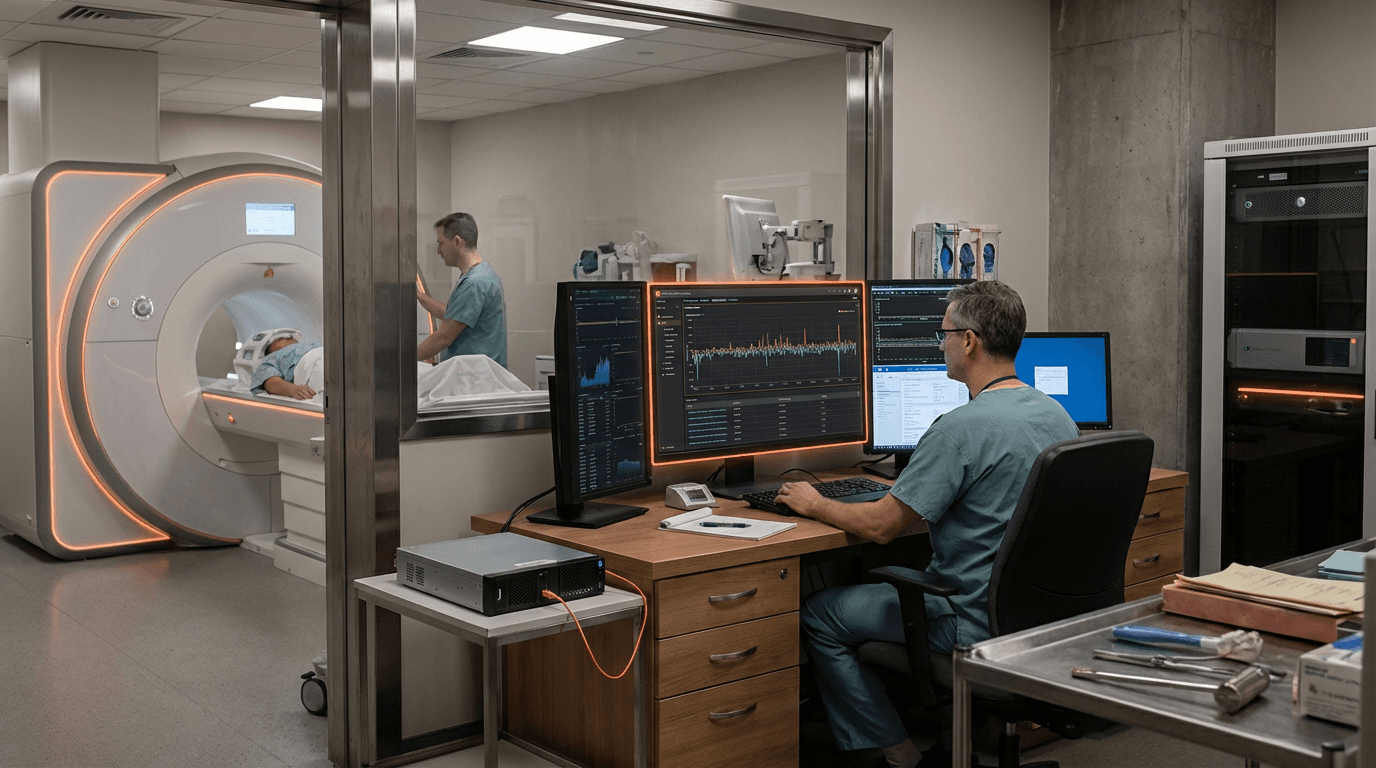
AI Safety & Performance Monitoring
AI safety and performance monitoring represents a critical infrastructure layer for healthcare systems deploying machine learning models in clinical decision-making. These frameworks establish continuous surveillance mechanisms that track how diagnostic algorithms, treatment recommendation systems, and predictive analytics tools perform once they leave controlled research environments and encounter the messy realities of everyday medical practice. Unlike traditional software validation that occurs primarily before deployment, these monitoring systems recognize that AI models can degrade over time as patient populations shift, clinical protocols evolve, or data collection practices change. The technical architecture typically combines automated performance metrics—such as prediction accuracy, false positive rates, and calibration scores—with structured feedback channels from clinicians who flag unexpected outputs or concerning patterns. Advanced implementations incorporate statistical process control methods borrowed from manufacturing quality assurance, applying them to detect subtle drifts in model behavior that might escape manual review.
The healthcare industry faces a fundamental challenge with AI deployment: models trained on historical data may not generalize reliably to future patients or different hospital systems. A diagnostic algorithm that performs well in one academic medical center might produce dangerous errors when applied to a rural clinic serving a different demographic mix. Safety monitoring addresses this generalization gap by establishing guardrails around AI-enabled clinical workflows. These systems can identify when a model encounters patient characteristics outside its training distribution, when outcomes diverge from expected patterns across racial or socioeconomic groups, or when integration with electronic health record systems introduces data quality issues that compromise predictions. By creating structured feedback loops between frontline clinicians and algorithm developers, monitoring frameworks enable rapid response to emerging safety concerns—whether through temporary model deactivation, targeted retraining on new data, or adjustments to how predictions are presented to care teams. This capability is particularly crucial as healthcare organizations move beyond pilot projects to deploy AI at scale across multiple care settings.
Regulatory bodies including the FDA have begun requiring post-market surveillance plans for certain categories of clinical AI, recognizing that pre-deployment validation alone cannot guarantee ongoing safety. Early implementations focus on high-stakes applications such as sepsis prediction algorithms, radiology interpretation tools, and medication dosing systems, where monitoring has already revealed instances of model drift and population-specific performance gaps. Some academic medical centers have established dedicated AI safety committees that review monitoring dashboards alongside traditional patient safety metrics, treating algorithm performance as an institutional quality measure. The technology landscape includes both vendor-provided monitoring tools embedded in commercial AI products and open-source frameworks that allow healthcare systems to build custom surveillance capabilities. As AI becomes more deeply woven into clinical workflows—from triage decisions in emergency departments to treatment planning in oncology—the maturity of safety monitoring infrastructure will likely determine which innovations can scale responsibly. The trajectory points toward increasingly automated monitoring systems that not only detect problems but also trigger adaptive responses, creating self-correcting AI ecosystems that maintain alignment with patient safety standards as medical practice evolves.
Related Organizations

A platform provider for medical imaging AI applications.

Develops AI solutions for radiologists that flag acute abnormalities in medical scans (CT, etc.) to prioritize life-threatening cases.

Provides an AI governance platform that helps enterprises measure and monitor the fairness and performance of their AI systems.



Provides Model Performance Management (MPM) to monitor, explain, and analyze AI models in production.

Uses AI to detect suspected strokes in brain imaging and synchronize care teams for rapid intervention.

Supporting Evidence
Research this in Signals
Signals turns a topic into a sourced research record you can inspect and rerun. Your first scan is free, and this one starts with AI Safety & Performance Monitoring already loaded, so edit it or scan as is.