Autonomous Clinical Robotics
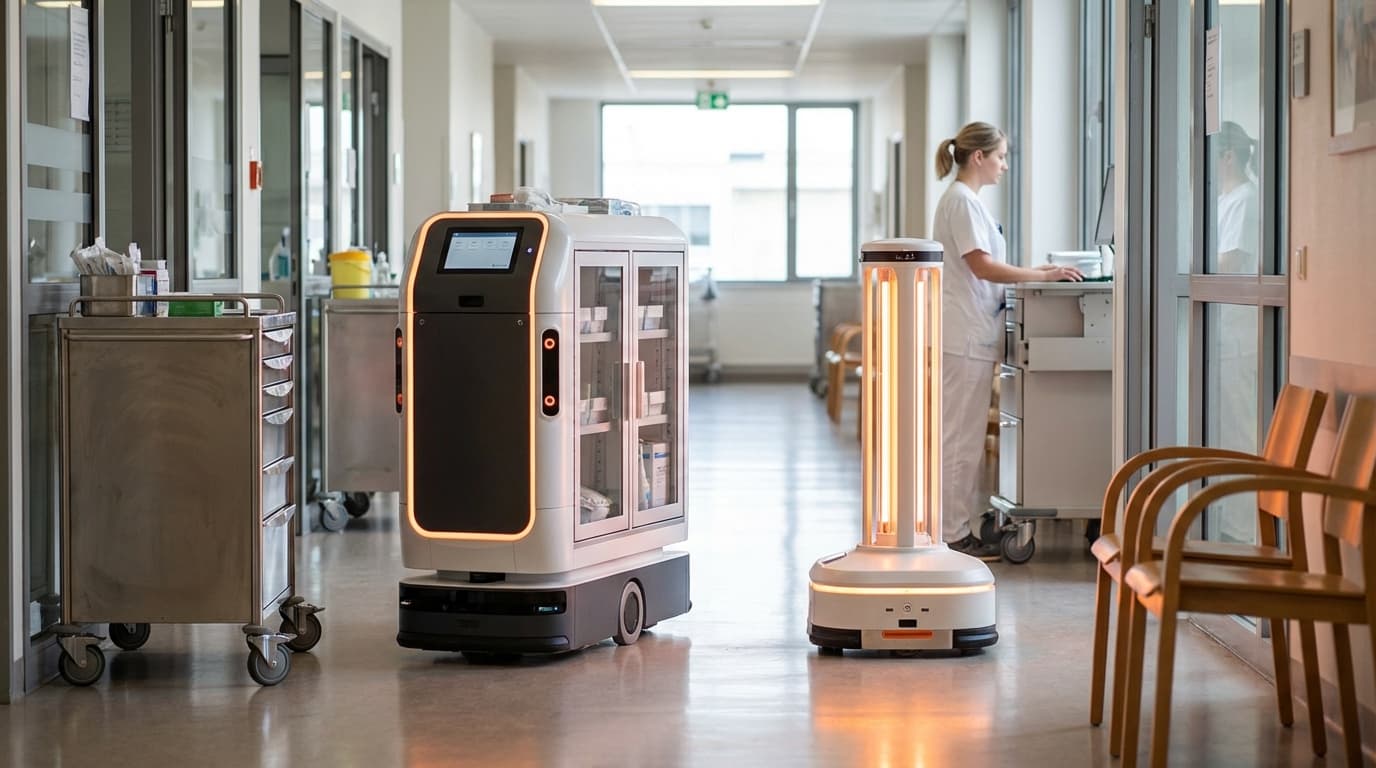
Autonomous clinical robotics represents a class of intelligent mobile systems designed to operate independently within healthcare facilities, performing routine but essential tasks that traditionally consume significant staff time and resources. These robots integrate advanced sensor arrays—including LiDAR, depth cameras, and ultrasonic sensors—with sophisticated navigation algorithms to map hospital environments and plan collision-free paths through crowded corridors, elevators, and patient areas. The systems employ real-time localization and mapping (SLAM) techniques to understand their surroundings dynamically, adapting to obstacles such as medical equipment, staff members, and patients while maintaining safe operating speeds. Many platforms incorporate secure compartments for medication transport, UV-C emitters for pathogen neutralization, or cargo bays for linens and supplies, with some systems capable of autonomous elevator operation and door navigation through integration with building management systems.
Healthcare facilities face persistent challenges in maintaining operational efficiency while managing labor shortages, infection control protocols, and the need to maximize clinical staff time spent on direct patient care. Traditional hospital logistics require nurses, orderlies, and support staff to spend considerable time on non-clinical activities—transporting medications from pharmacy to nursing stations, moving soiled linens to processing areas, delivering meals, and performing routine environmental disinfection. These tasks not only divert skilled clinical personnel from patient-facing responsibilities but also contribute to staff fatigue and potential occupational injuries from repetitive lifting and pushing. Autonomous clinical robotics addresses these pain points by assuming responsibility for predictable, repeatable transport and sanitation workflows, operating continuously across shifts without breaks and maintaining consistent performance standards. The technology proves particularly valuable in infection control, where UV-C disinfection robots can systematically sanitize patient rooms and high-touch surfaces with greater consistency than manual cleaning protocols, reducing healthcare-associated infection rates.
Hospitals and health systems have begun integrating these robotic platforms into daily operations, with early deployments indicating measurable improvements in staff satisfaction and operational metrics. Medication delivery robots now operate in hundreds of facilities globally, transporting pharmaceuticals from central pharmacies to nursing units while maintaining chain-of-custody documentation and temperature-controlled environments for sensitive medications. UV-C disinfection robots have become standard equipment in many hospitals' environmental services departments, particularly following increased attention to surface contamination during recent public health challenges. Research suggests that facilities deploying autonomous logistics robots report reduced medication delivery times, fewer lost items, and improved staff morale as clinical personnel redirect their efforts toward patient assessment and care coordination. As healthcare systems continue confronting workforce constraints and rising operational costs, autonomous clinical robotics represents a practical pathway toward maintaining service quality while optimizing human capital allocation, positioning these technologies as foundational infrastructure for next-generation hospital operations alongside electronic health records and telehealth platforms.
Related Organizations

Manufacturer of the TUG autonomous mobile robot, widely used for delivering medications, meals, and linens in hospitals.

Creators of Moxi, a socially intelligent robot assistant designed to help clinical staff with non-patient-facing tasks.

Provides automated transport and pharmacy automation solutions, including the BoxPicker automated pharmacy storage system.

Develops autonomous UV-C disinfection robots used in hospitals to prevent healthcare-associated infections.

Produces autonomous delivery robots (formerly Savioke) used in healthcare for secure transport of lab samples and meds.

Known for LightStrike Germ-Zapping Robots, primarily for room disinfection in clinical settings.

Originally focused on hospitality, they have expanded their Servi robot line to healthcare for dietary and supply transport.

Produces the LD Series of autonomous mobile robots (AMRs) often integrated by third parties for hospital logistics.
Supporting Evidence
Research this in Signals
Signals turns a topic into a sourced research record you can inspect and rerun. Your first scan is free, and this one starts with Autonomous Clinical Robotics already loaded, so edit it or scan as is.