AI Workforce Optimization Engines
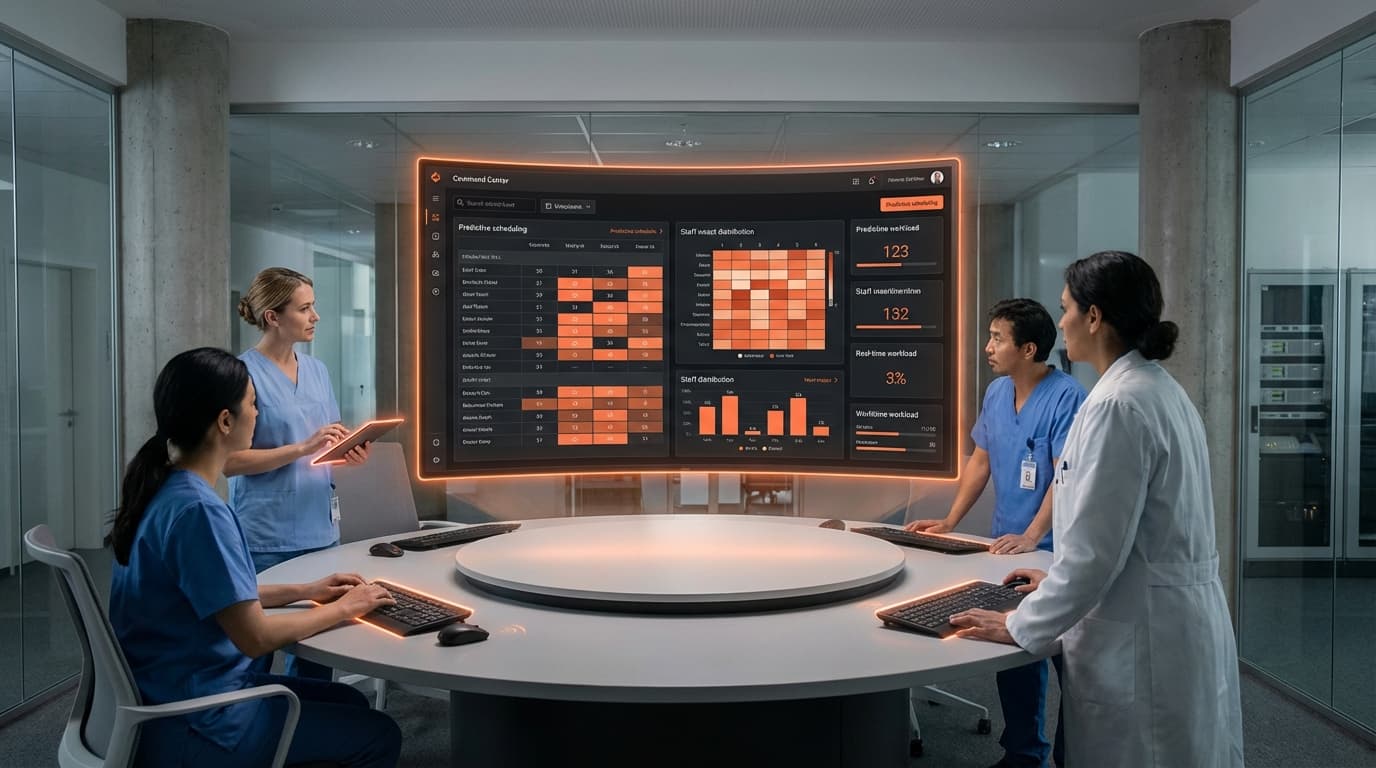
Healthcare organizations face a persistent challenge in balancing patient care demands with staff availability and wellbeing. Traditional scheduling methods often rely on historical patterns and manual adjustments, leading to overstaffing during quiet periods and dangerous understaffing during surges. This mismatch not only drives up labor costs—which can account for more than half of a hospital's operating budget—but also contributes to clinician burnout, medical errors, and patient safety incidents. AI Workforce Optimization Engines address these issues by applying machine learning algorithms to predict patient volumes, acuity levels, and resource needs with greater precision than conventional approaches. These systems analyze diverse data streams including historical admission patterns, seasonal trends, local events, and even weather forecasts to anticipate fluctuations in demand. They then generate staffing schedules that align the appropriate number and skill mix of nurses, physicians, technicians, and support staff to projected needs across different units and shifts.
Beyond simple headcount matching, these engines incorporate complex constraints that manual scheduling struggles to balance simultaneously. They account for individual staff preferences, certification requirements, mandatory rest periods, union rules, and fatigue risk models that recognize how consecutive shifts or overnight rotations impact performance and safety. Advanced systems also consider continuity of care by preferentially assigning staff to patients they have previously treated, and they can dynamically adjust schedules in response to real-time changes such as unexpected admissions or staff call-outs. By optimizing these multiple variables, the technology helps healthcare organizations reduce reliance on expensive agency staff and overtime while creating more equitable and predictable schedules that support work-life balance. Early implementations indicate that these tools can decrease scheduling time by significant margins while improving staff satisfaction scores and reducing turnover rates.
As healthcare systems grapple with ongoing workforce shortages and rising patient complexity, AI-driven scheduling represents a critical operational lever. Several large hospital networks have begun deploying these platforms across their facilities, integrating them with electronic health records and workforce management systems to create closed-loop optimization. The technology is evolving to incorporate broader operational factors such as equipment availability, patient transport logistics, and even predictive models for no-show rates in outpatient settings. Looking forward, these engines are expected to become standard infrastructure in healthcare delivery, particularly as value-based care models create stronger incentives to optimize resource utilization without compromising outcomes. The convergence of workforce optimization with other AI-driven clinical decision support tools points toward more holistic operational intelligence systems that can coordinate staffing, patient flow, and care delivery in real time, ultimately supporting the transition toward more resilient and sustainable healthcare organizations.
Related Organizations

Uses predictive analytics and AI to optimize hospital operations, specifically OR utilization and infusion center scheduling.




Marketplace platform connecting hospitals with local healthcare professionals.

Workforce management and compensation software.

Career marketplace for permanent healthcare workers.

Supporting Evidence
Research this in Signals
Signals turns a topic into a sourced research record you can inspect and rerun. Your first scan is free, and this one starts with AI Workforce Optimization Engines already loaded, so edit it or scan as is.