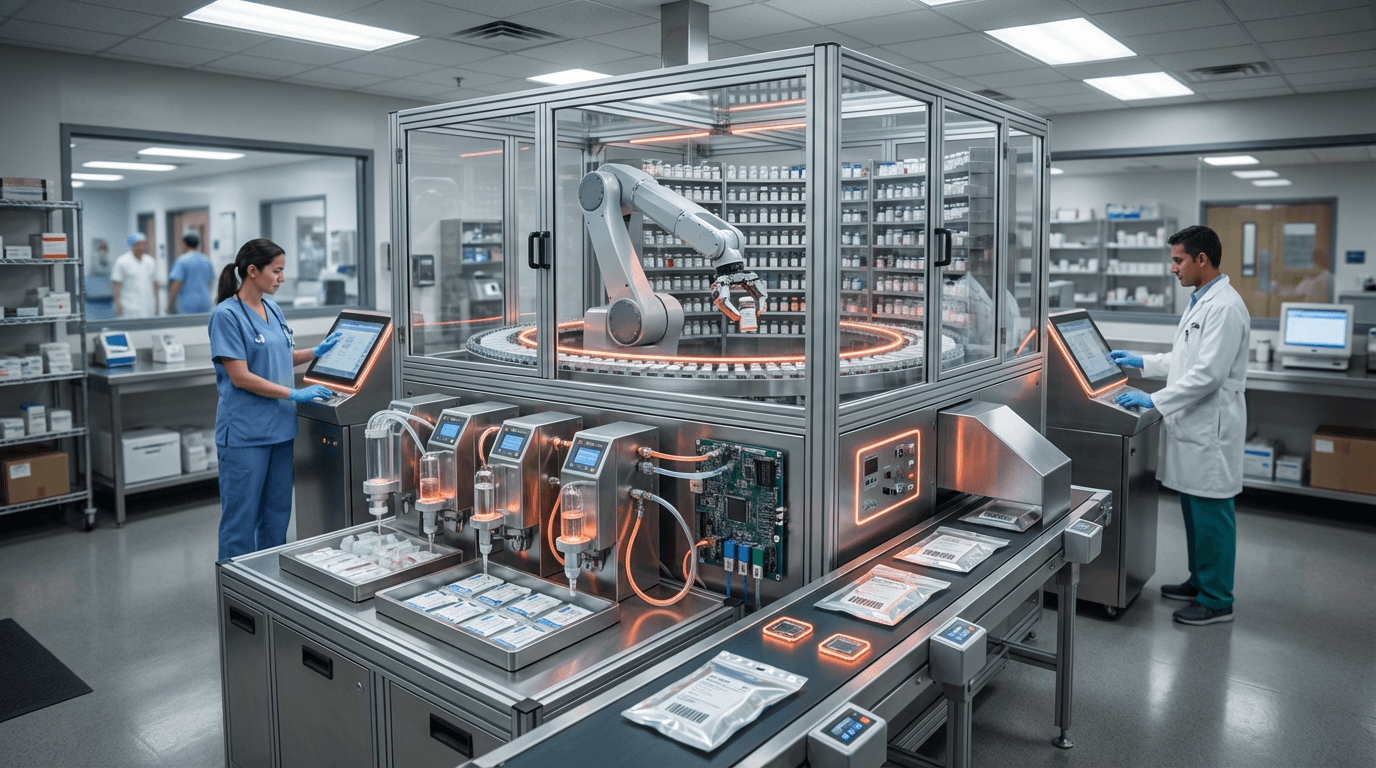
Robotic Pharmacy Automation
Robotic pharmacy automation represents a fundamental shift in how healthcare facilities manage medication workflows, replacing manual processes with precision-engineered systems capable of storing, retrieving, compounding, and dispensing pharmaceuticals with minimal human intervention. These systems typically combine high-density automated storage carousels or shelving units with robotic arms, barcode scanners, and computer vision to identify, select, and package medications according to physician orders. Advanced installations integrate sterile compounding robots that can prepare intravenous admixtures and chemotherapy agents in controlled environments, using gravimetric verification to ensure dose accuracy down to the milligram. The underlying architecture relies on sophisticated inventory management software that tracks medication expiration dates, lot numbers, and regulatory compliance requirements in real time, creating an auditable chain of custody from pharmaceutical wholesaler to patient bedside.
The healthcare industry faces mounting pressure to reduce medication errors, which remain among the most common preventable causes of patient harm in hospital settings. Traditional pharmacy workflows involve numerous manual steps—transcription, selection, counting, labeling—each introducing opportunities for human error, particularly during high-volume periods or overnight shifts when staffing is limited. Robotic systems address these vulnerabilities by standardising processes and embedding multiple verification checkpoints into every transaction. They also solve critical capacity constraints, enabling hospitals to maintain consistent pharmacy services around the clock without proportional increases in staffing costs. For specialty medications requiring sterile compounding, automation reduces contamination risk and occupational exposure hazards for pharmacy staff, while simultaneously increasing throughput to meet growing demand for complex therapies like biologics and personalised oncology regimens.
Early adopters of robotic pharmacy automation have primarily been large hospital systems and health networks seeking to centralise medication preparation across multiple facilities, though the technology is gradually becoming accessible to mid-sized institutions as equipment costs decline. Research indicates that facilities implementing these systems report significant reductions in dispensing errors and improved inventory accuracy, while pharmacists redirect time previously spent on technical tasks toward direct patient care activities such as medication therapy management and antimicrobial stewardship. Retail pharmacy chains have also begun deploying automated dispensing systems in high-volume locations, using robotics to handle routine prescription fills while staff focus on immunisations and clinical consultations. As healthcare delivery continues its evolution toward value-based care models that emphasise patient outcomes over transaction volume, robotic pharmacy automation is positioned to become standard infrastructure, supporting both the safety imperatives and operational efficiency requirements that define modern pharmaceutical care.
Related Organizations

A market leader in medication management automation, offering robotic dispensing systems and IV compounding robots for hospitals.

Provides automated transport and pharmacy automation solutions, including the BoxPicker automated pharmacy storage system.

Global medical technology company that acquired Parata Systems, makers of the Eyecon visual pill counter.

Major Japanese manufacturer of pharmacy automation and pill counting machines.

German manufacturer of automated dispensing systems known for their compact, rolling cabinet design.

Provides high-volume pharmacy automation software and hardware, focusing on enterprise-level fulfillment.

A leader in pharmacy automation robotics that includes visual inspection and counting mechanisms.

Provider of the Kirby Lester line of pill counters, which utilize advanced optical sensors and on-device processing.

Pharmacy automation company developing systems like the RxSafe 1800 which includes verification vision systems.

Researching sensory feedback in prosthetics (Paul Marasco's lab) to restore the sense of agency and ownership over artificial limbs.
Supporting Evidence
Research this in Signals
Signals turns a topic into a sourced research record you can inspect and rerun. Your first scan is free, and this one starts with Robotic Pharmacy Automation already loaded, so edit it or scan as is.