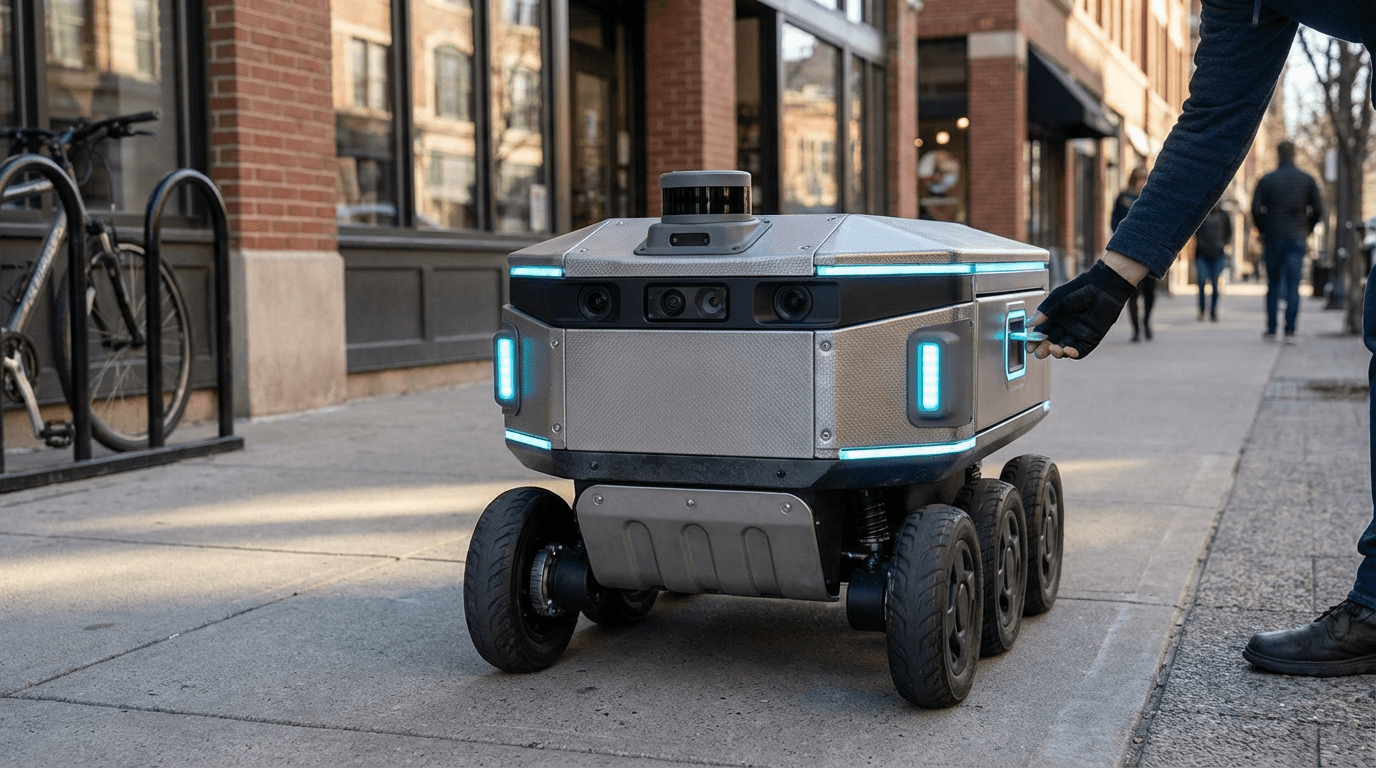
Last-Mile Delivery Droids
Last-mile delivery droids represent a new category of autonomous ground vehicles specifically engineered to navigate pedestrian infrastructure for local deliveries. These compact, wheeled robots typically stand between knee and waist height, equipped with secure cargo compartments, multiple cameras, ultrasonic sensors, and LiDAR systems that enable them to perceive and navigate complex sidewalk environments. Operating at walking speeds of 4-6 mph, these droids use sophisticated path-planning algorithms to avoid obstacles, cross streets at designated points, and climb curbs while maintaining stability of their cargo. Their electric powertrains provide quiet operation and zero direct emissions, while onboard GPS and cellular connectivity allow for real-time tracking and remote monitoring by both operators and customers. The robots typically operate within a limited radius of distribution hubs, making them particularly suited for urban and suburban neighborhoods where delivery density is high.
The fundamental challenge these droids address is the inefficiency and environmental impact of traditional last-mile delivery, which accounts for a disproportionate share of logistics costs and urban congestion. Conventional delivery vans often travel significant distances to deliver single packages, contributing to traffic, parking shortages, and carbon emissions in residential areas. By deploying fleets of small autonomous robots that can make multiple deliveries per trip and operate continuously throughout the day, delivery companies can significantly reduce per-package costs while minimising their footprint on urban infrastructure. This technology also addresses the growing demand for rapid delivery services, particularly for food and groceries, where delivery windows of one to two hours have become consumer expectations. The droids enable a more distributed delivery model, where goods can be dispatched from local micro-fulfillment centers rather than distant warehouses, fundamentally changing the economics of on-demand delivery.
Several companies have moved beyond pilot programs to commercial deployment in select cities, with thousands of autonomous delivery robots now operating on public sidewalks in North America, Europe, and Asia. University campuses and planned communities have emerged as particularly favorable environments for early adoption, offering controlled settings with predictable pedestrian traffic patterns. Regulatory frameworks are evolving to accommodate these vehicles, with many jurisdictions establishing specific rules governing their weight, speed, and operational areas. The technology connects to broader trends in urban logistics, including the proliferation of dark stores and micro-fulfillment centers that serve as launching points for these droids. As cities grapple with increasing delivery volumes and sustainability mandates, sidewalk delivery robots offer a glimpse of a future where autonomous systems handle routine logistics tasks, freeing road space for other uses while providing convenient, low-impact delivery services that integrate seamlessly into the urban fabric.
Related Organizations

The market leader in autonomous sidewalk delivery robots, with millions of commercial deliveries completed.

An Uber spin-out developing Level 4 autonomous sidewalk delivery robots for food delivery.

Developed the 'Xiaomanlv' autonomous delivery robot for last-mile logistics.

Develops AI-powered autonomous delivery robots for indoor and outdoor environments.

Last-mile delivery service using remotely piloted and semi-autonomous sidewalk robots.

Provides robotic delivery services primarily for university campuses.

Chinese developer of autonomous delivery vehicles for retail and logistics.

Goggo Network
Spain · Startup
European logistics operator building a network of autonomous delivery robots.

Developer of autonomous delivery robots capable of navigating indoor and outdoor environments, piloting in airports and retail.

Tier 1 automotive supplier manufacturing delivery droids through partnership with Cartken.
Supporting Evidence
Research this in Signals
Signals turns a topic into a sourced research record you can inspect and rerun. Your first scan is free, and this one starts with Last-Mile Delivery Droids already loaded, so edit it or scan as is.