








Spatial Computing
Spatial Computing Interfaces
3D digital environments for manipulating data and collaborating remotely
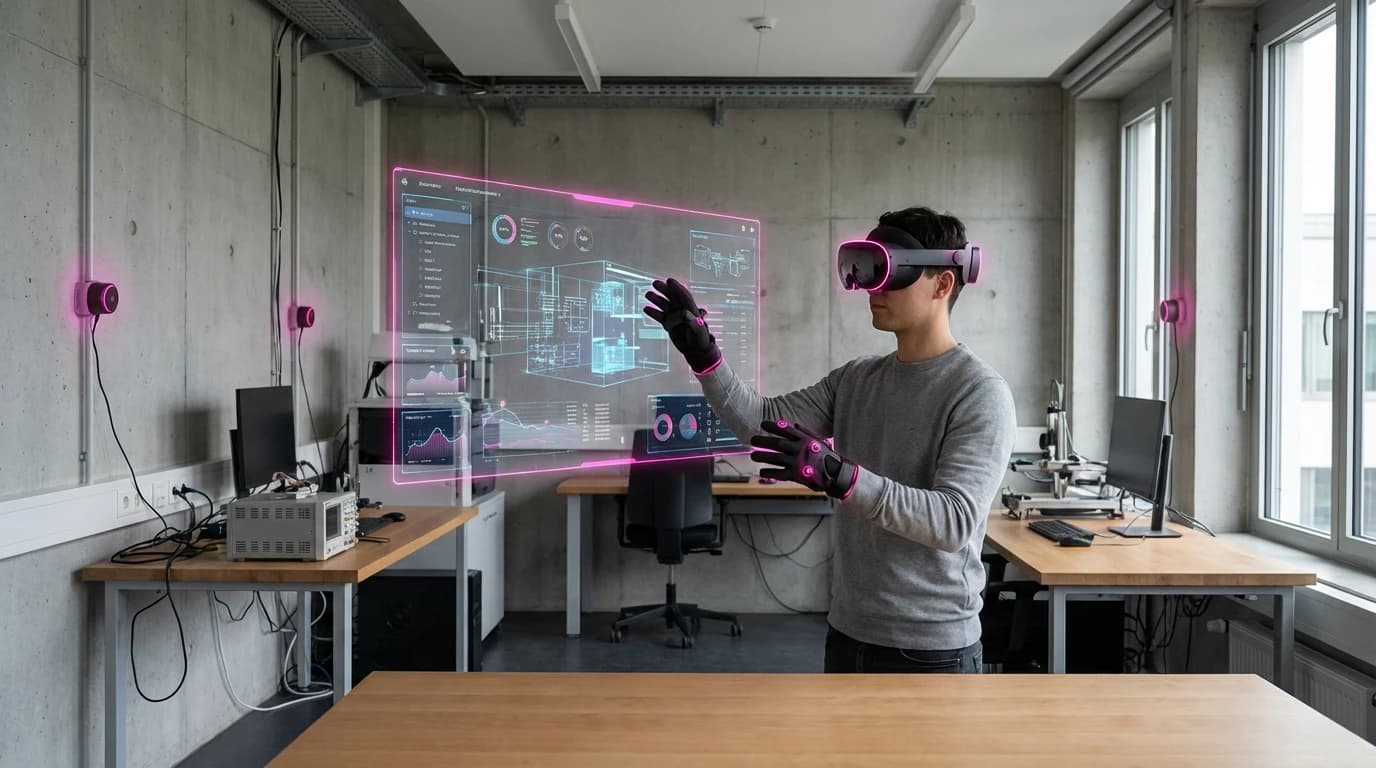
Spatial computing interfaces represent a fundamental shift in how organizations interact with digital information and collaborate across distances. Unlike traditional 2D screens that confine users to flat representations of data and limited video conferencing windows, these systems create three-dimensional digital environments where users can move, gesture, and manipulate information as naturally as they would physical objects. The technology relies on advanced head-mounted displays, hand-tracking sensors, and increasingly sophisticated room-scale projection systems that map digital content onto physical spaces. These interfaces combine real-time spatial mapping, low-latency rendering engines, and precise motion tracking to create convincing illusions of shared presence and persistent digital workspaces. The underlying architecture processes vast amounts of spatial data to maintain consistent coordinate systems across distributed locations, ensuring that when team members in different cities point at the same virtual object, they're truly referencing identical spatial positions within a shared digital environment.
For enterprises grappling with the limitations of remote work and the complexity of modern organizational structures, spatial computing interfaces address several critical challenges. Traditional video conferencing flattens human interaction into rectangular windows, stripping away the spatial cues and peripheral awareness that make in-person collaboration effective. Complex data sets—whether organizational charts, supply chain networks, or architectural models—lose critical dimensionality when forced onto flat screens, making it difficult for teams to grasp relationships and patterns. These interfaces restore the spatial dimension to digital work, allowing distributed teams to gather around virtual conference tables, walk through 3D representations of data, and maintain the kind of ambient awareness of colleagues' activities that naturally occurs in physical offices. The technology enables new workflows particularly valuable for design review, strategic planning, and training scenarios where spatial relationships matter. Organizations can visualize hierarchical structures as navigable 3D spaces, manipulate complex datasets with intuitive gestures, and conduct immersive training simulations that would be impractical or impossible in physical settings.
Early enterprise deployments have focused on specific high-value use cases where the benefits clearly outweigh the current costs and learning curves associated with these systems. Architecture and engineering firms are using spatial interfaces for collaborative design reviews, allowing stakeholders across continents to examine building models at full scale and identify potential issues before construction begins. Manufacturing organizations are deploying these systems for remote equipment maintenance, where technicians can overlay digital instructions onto physical machinery or consult with distant experts who can annotate their shared view of a problem. Research suggests that as hardware becomes lighter, more affordable, and capable of longer sessions, adoption will expand beyond these specialized applications into broader knowledge work. The trajectory points toward a future where spatial computing interfaces become as commonplace as video conferencing is today, fundamentally reshaping how distributed organizations maintain cohesion, make decisions, and preserve institutional knowledge across physical distances. This evolution aligns with broader trends toward hybrid work models and the growing recognition that effective collaboration requires more than just seeing colleagues' faces on screens.
TRL
7/9Operational
Impact
4/5
Investment
5/5
Category
Hardware
Related Organizations
Through Copilot and the 'Recall' feature in Windows, Microsoft is integrating persistent memory and agentic capabilities directly into the operating system.
Developer
Developing foundation models for robotics (Project GR00T) and vision-language models like VILA.
Developer
Manufacturer of 'bionic display' headsets that use a high-density focus display inside a peripheral context display.
Developer
A virtual office space provider for enterprise collaboration in VR.
Developer
AR headset manufacturer utilizing dynamic dimming and eye-tracking for optimized rendering.
Developer
Develops ruggedized head-mounted tablet devices for industrial frontline workers to access data hands-free.
Developer
Holographic collaboration system for professional 3D workflows.
Developer
A virtual collaboration platform for remote teams to work together in 3D.
Developer
Spatial data company that integrated mobile LiDAR support into their capture app, democratizing real estate digital twins.
Developer
Offers 'TeamViewer Frontline', an enterprise AR productivity platform (acquired from Ubimax) for logistics and manufacturing.
Deployer
What was expected
Published forecasts about this technology, graded against what happened in Hindsight.
Spatial computing and the industrial metaverse
This page is broader than it.
Worlds for the Enterprise
This page is broader than it.
Supporting Evidence
Evidence data is not available for this technology yet.
Research this in Signals
Scan Spatial Computing Interfaces for yourself.
Signals turns a topic into a sourced research record you can inspect and rerun. Your first scan is free, and this one starts with Spatial Computing Interfaces already loaded, so edit it or scan as is.