District-Scale Circular Water Reuse
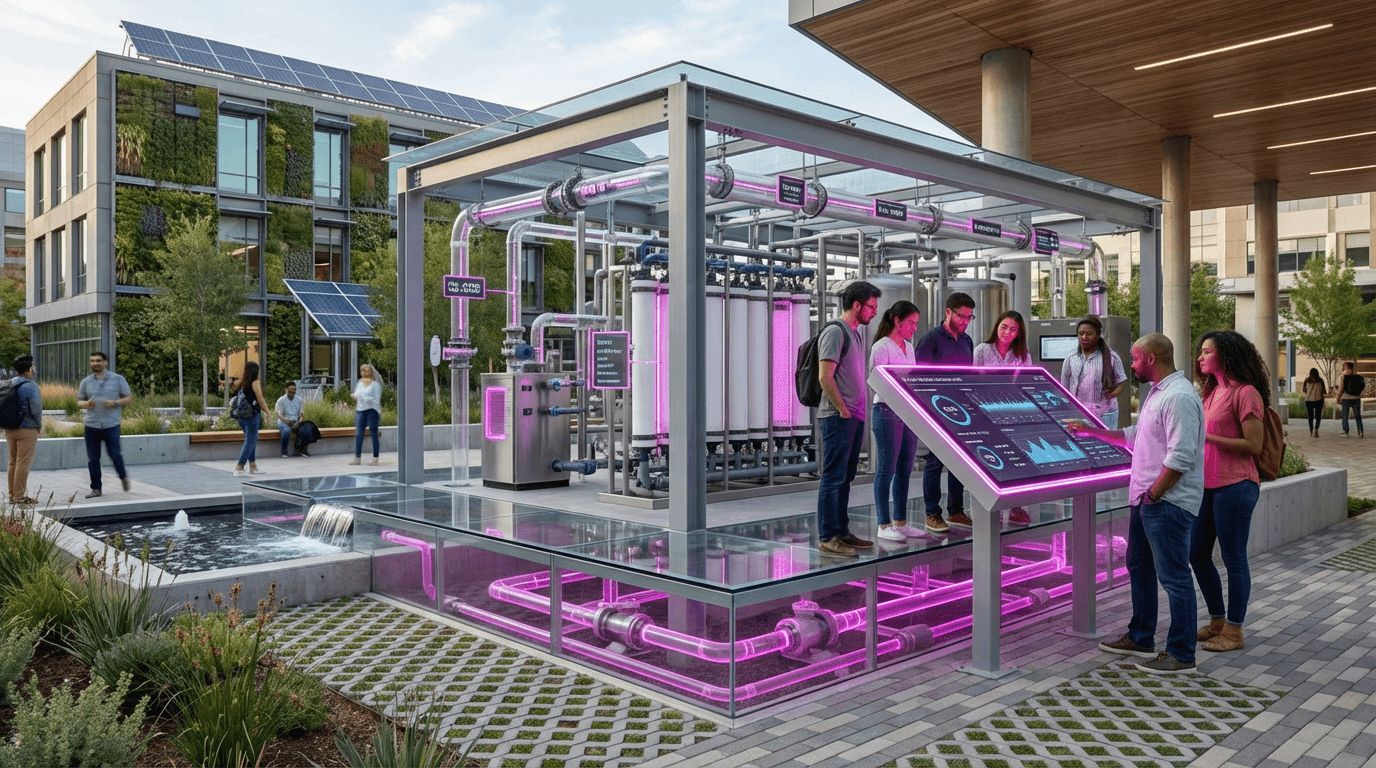
Urban water systems face mounting pressures from population growth, climate change, and aging infrastructure. Traditional linear water models—where freshwater is extracted, used once, and discharged—are increasingly unsustainable in cities experiencing water scarcity, drought cycles, or overwhelmed treatment facilities. District-scale circular water reuse addresses these challenges by creating closed-loop systems that capture, treat, and redistribute water within defined urban areas, fundamentally rethinking how cities manage their water resources. These systems integrate advanced treatment technologies including membrane bioreactors, ultraviolet disinfection, and multi-stage filtration to purify wastewater and stormwater to standards suitable for various applications. The infrastructure typically includes dual or triple piping networks that separate potable water from reclaimed water streams, along with decentralised treatment facilities strategically positioned within districts to minimise pumping distances and energy consumption. Smart monitoring systems continuously assess water quality, flow rates, and demand patterns, enabling dynamic management that optimises treatment intensity based on intended end-use requirements.
The implementation of district-scale circular water systems solves several critical urban infrastructure challenges simultaneously. By recycling water locally, cities can dramatically reduce their dependence on distant freshwater sources and energy-intensive long-distance water transport, while also decreasing the volume of wastewater requiring centralised treatment. This approach enables non-potable applications such as toilet flushing, landscape irrigation, industrial processes, and cooling systems to draw from reclaimed sources, reserving high-quality potable water exclusively for drinking and food preparation. In water-stressed regions, advanced purification can even enable direct potable reuse, though this typically requires more sophisticated treatment trains and rigorous monitoring protocols. The distributed nature of these systems also enhances resilience by creating redundancy—if one treatment node fails, others can compensate, and localised systems are less vulnerable to single points of failure that plague centralised infrastructure. Additionally, capturing and treating stormwater within districts reduces urban flooding risks and prevents polluted runoff from reaching natural waterways.
Early deployments in water-scarce regions and forward-thinking municipalities demonstrate the viability of this approach. Several planned urban developments and eco-districts have integrated circular water systems from the ground up, while retrofit projects in existing neighbourhoods show that incremental implementation is feasible, albeit more complex. The technology aligns with broader trends toward decentralised urban infrastructure, resource recovery, and circular economy principles. As climate variability intensifies and urban populations concentrate, district-scale water reuse represents a pragmatic pathway toward water security, offering cities a means to stretch limited freshwater resources while simultaneously addressing wastewater management and stormwater challenges through integrated solutions that operate at a scale large enough to be economically viable yet small enough to be locally managed and optimised.
Related Organizations

Specializes in onsite water reuse systems for high-rise buildings and urban developments.

PUB, Singapore's National Water Agency
Singapore · Government Agency
Manages Singapore's water supply and drainage, implementing the 'Active, Beautiful, Clean Waters' (ABC Waters) programme.

Municipal agency that pioneered the Non-Potable Water Ordinance, requiring onsite water reuse for large new developments.
Australian specialist in commercial and district blackwater recycling systems.

Provides distributed wastewater treatment and resource recovery for industrial and commercial customers.

Provides localized wastewater treatment plants that look like botanical gardens, suitable for urban integration.

Global market leader in energy storage products and services, and digital applications for renewables and storage.
Veolia Water Technologies
France · Company
Global utility giant offering mobile water services and packaged plants.


Consumer-friendly greywater recycling systems for residential homes and apartments, reducing water consumption by up to 45%.
Supporting Evidence
Research this in Signals
Signals turns a topic into a sourced research record you can inspect and rerun. Your first scan is free, and this one starts with District-Scale Circular Water Reuse already loaded, so edit it or scan as is.