Real-Time Water Quality Biosensing
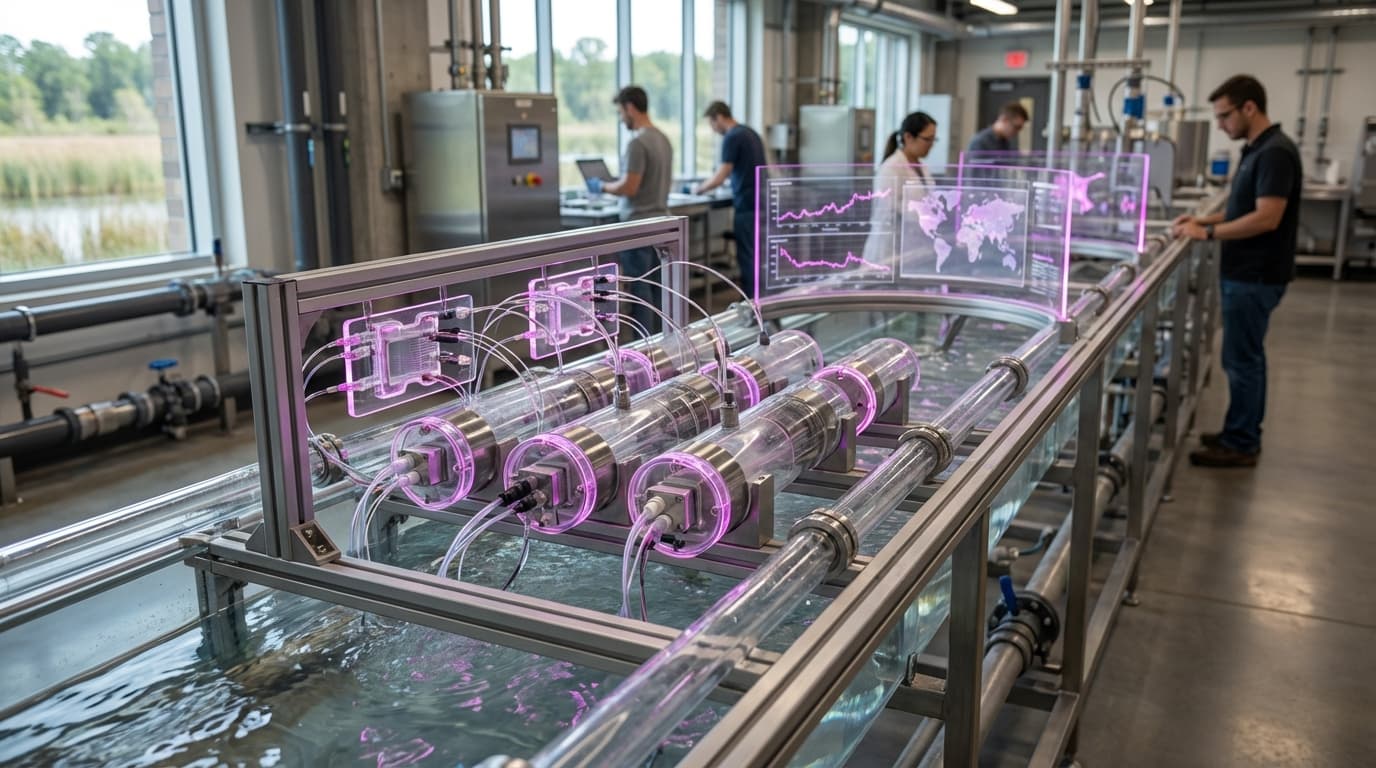
Traditional water quality monitoring relies on periodic laboratory testing, a process that can take hours or even days to detect contamination events. This delay creates significant public health risks, as harmful pathogens or chemical pollutants may circulate through distribution systems before authorities can respond. Real-time water quality biosensing addresses this critical gap by deploying networks of advanced sensors throughout water infrastructure that continuously monitor for contaminants at the molecular level. These systems integrate multiple sensing modalities—optical sensors that detect changes in water clarity and fluorescence, electrochemical sensors that measure pH and specific ion concentrations, and biological sensors that respond to the presence of particular microorganisms or toxins. The biological components often employ engineered bacteria, antibodies, or enzymes that produce measurable signals when they encounter target contaminants. By combining these complementary technologies, the systems can simultaneously track dozens of water quality parameters, from heavy metals and pesticides to E. coli and cryptosporidium, providing a comprehensive real-time picture of water safety.
The water industry faces mounting pressure to ensure safe drinking water while managing aging infrastructure, emerging contaminants, and increasingly unpredictable pollution events. Real-time biosensing transforms water utilities from reactive to proactive organizations, enabling them to detect contamination within minutes rather than days. This rapid detection capability allows operators to immediately isolate affected sections of the distribution network, adjust treatment processes, or issue public advisories before widespread exposure occurs. The technology also addresses the challenge of emerging contaminants—pharmaceuticals, microplastics, and novel industrial chemicals—that traditional monitoring programs may not routinely test for. By providing continuous data streams, these sensor networks enable utilities to optimize treatment chemical dosing, reducing both costs and the environmental impact of over-treatment while maintaining safety margins. Furthermore, the granular data generated by distributed sensor networks helps utilities identify specific contamination sources, whether from aging pipes, cross-connections, or external pollution events.
Several water utilities have begun deploying pilot biosensor networks in critical infrastructure points, with early implementations focusing on treatment plant effluent monitoring and high-risk distribution nodes near hospitals or schools. Research initiatives are expanding the range of detectable contaminants and improving sensor longevity in harsh water environments, where biofouling and chemical interference can degrade performance. The integration of these biosensing networks with smart water management platforms represents a convergence of environmental monitoring, Internet of Things connectivity, and artificial intelligence-driven analytics. Machine learning algorithms can identify subtle patterns in sensor data that precede contamination events, potentially enabling predictive warnings. As sensor costs decrease and reliability improves, the technology is expected to transition from strategic deployment at critical points to comprehensive coverage of entire distribution systems. This evolution aligns with broader trends toward digital water infrastructure and resilient utility management, positioning real-time biosensing as a foundational technology for ensuring water security in an era of climate change, urbanization, and evolving public health challenges.
Related Organizations

Swiss company specializing in automated, industrial flow cytometry for rapid microbiological monitoring of water.
Develops real-time, autonomous pathogen detection devices that identify bacteria and viruses in water supplies without lab culture.
Provides autonomous sampling and measurement systems for E. coli and other pathogens in environmental waters.
Specializes in online biomonitoring systems for water quality, detecting toxicity via light-emitting bacteria.

Uses bio-electrode sensor technology to monitor biological activity and toxicity in wastewater treatment processes in real-time.

Manufactures automated microbiological testing systems for detecting E. coli and Total Coliforms.

Home to the 'Digital Bridge' project and CEBRA, a machine learning method for mapping neural data to low-dimensional spaces.

Manufactures water quality testing and analytical instruments, providing data for wastewater treatment optimization.

Provides a wastewater intelligence platform using IoT sensors to detect pollution events and optimize network quality.
Supporting Evidence
Research this in Signals
Signals turns a topic into a sourced research record you can inspect and rerun. Your first scan is free, and this one starts with Real-Time Water Quality Biosensing already loaded, so edit it or scan as is.