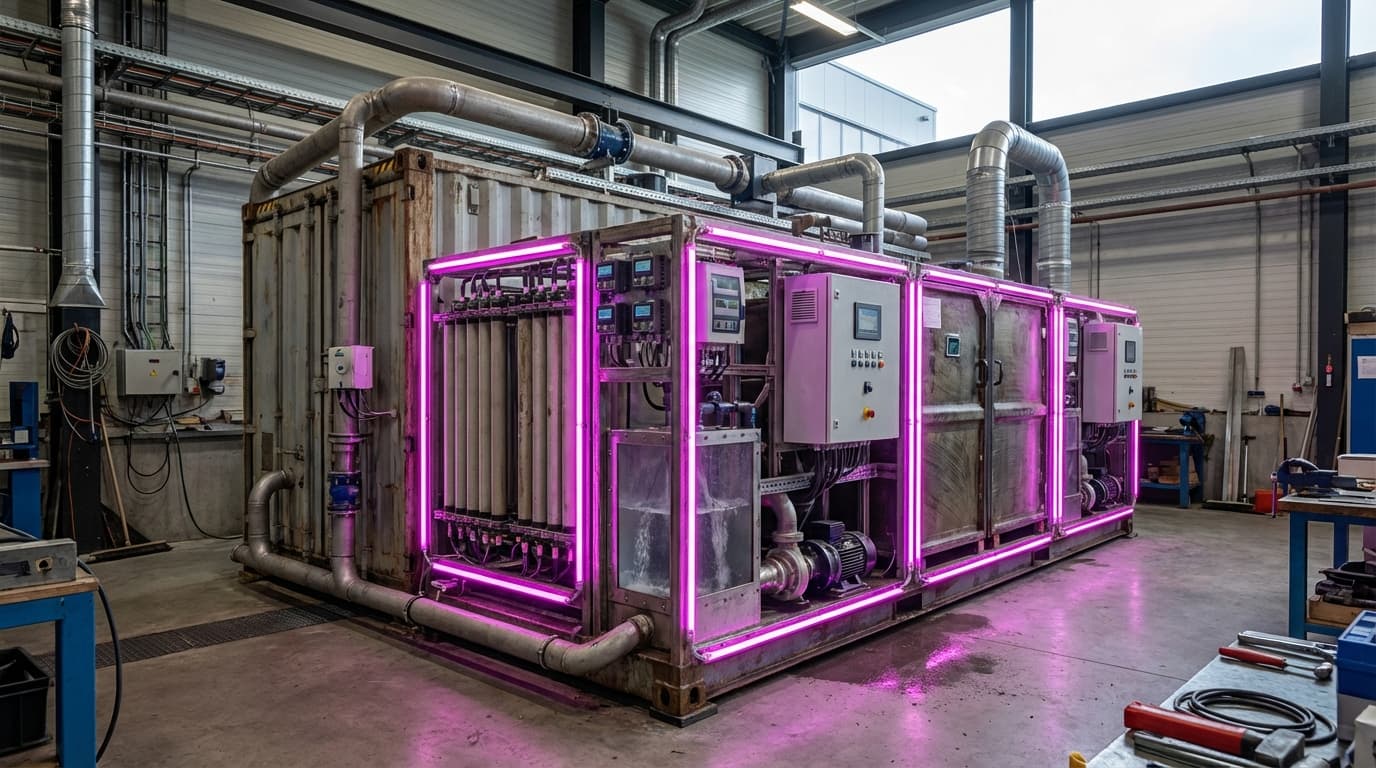
Modular Decentralized Treatment Plants
Modular decentralized treatment plants represent a fundamental shift in water infrastructure design, moving away from the century-old paradigm of large, centralized facilities toward distributed, scalable treatment systems. These units are typically housed in standardized shipping containers or prefabricated structures, integrating all necessary treatment processes—filtration, biological treatment, disinfection, and monitoring systems—into compact, self-contained modules. The technology employs advanced treatment methods such as membrane bioreactors, ultraviolet disinfection, and real-time sensor networks that can be configured to meet specific water quality requirements. Unlike traditional infrastructure that requires years of planning and construction, these systems arrive pre-assembled and can be operational within days of delivery, requiring only connections to water sources, power supplies, and discharge points.
The appeal of this approach lies in its ability to address multiple infrastructure challenges simultaneously. Centralized water treatment plants, while efficient at scale, create single points of failure that leave entire communities vulnerable during natural disasters, equipment failures, or contamination events. They also require extensive pipe networks that lose significant volumes of treated water to leakage and demand enormous capital investments that many growing cities struggle to finance. Modular systems overcome these limitations by treating water at or near the point of use—whether at residential developments, university campuses, industrial facilities, or temporary settlements. This proximity enables direct water reuse for non-potable applications like irrigation or cooling systems, dramatically reducing freshwater demand. The modular nature also allows cities to scale capacity incrementally as populations grow, avoiding the financial burden of building oversized centralized plants based on uncertain future projections.
Early deployments of decentralized treatment systems have emerged across diverse contexts, from disaster relief operations requiring rapid water provision to permanent installations serving remote communities and military bases. Industrial sites increasingly adopt these units to treat process water on-site, reducing discharge fees and regulatory compliance costs. In rapidly urbanizing regions, developers integrate modular plants into new neighborhoods, creating self-sufficient water districts that reduce strain on aging municipal infrastructure. The technology aligns with broader trends toward resilient, adaptive infrastructure that can respond to climate uncertainty and population shifts. As sensor technology and remote monitoring capabilities advance, these distributed systems increasingly function as networked nodes within smart city frameworks, providing granular data on water quality and consumption patterns that enable more responsive resource management across entire urban watersheds.
Related Organizations

Provides distributed wastewater treatment and resource recovery for industrial and commercial customers.

Global market leader in energy storage products and services, and digital applications for renewables and storage.

Specializes in onsite water reuse systems for high-rise buildings and urban developments.

South African company specializing in rapidly deployable, modular water treatment and desalination plants.

Manufactures decentralized wastewater, greywater, and stormwater treatment systems.

Consumer-friendly greywater recycling systems for residential homes and apartments, reducing water consumption by up to 45%.

Provides localized wastewater treatment plants that look like botanical gardens, suitable for urban integration.

Provides Water-as-a-Service (WaaS) using modular desalination and wastewater treatment units.

Manufacturer of wastewater products, specializing in effluent sewers and decentralized treatment technologies.
Veolia Water Technologies
France · Company
Global utility giant offering mobile water services and packaged plants.
Supporting Evidence
Research this in Signals
Signals turns a topic into a sourced research record you can inspect and rerun. Your first scan is free, and this one starts with Modular Decentralized Treatment Plants already loaded, so edit it or scan as is.