Tactical Intelligence Engines
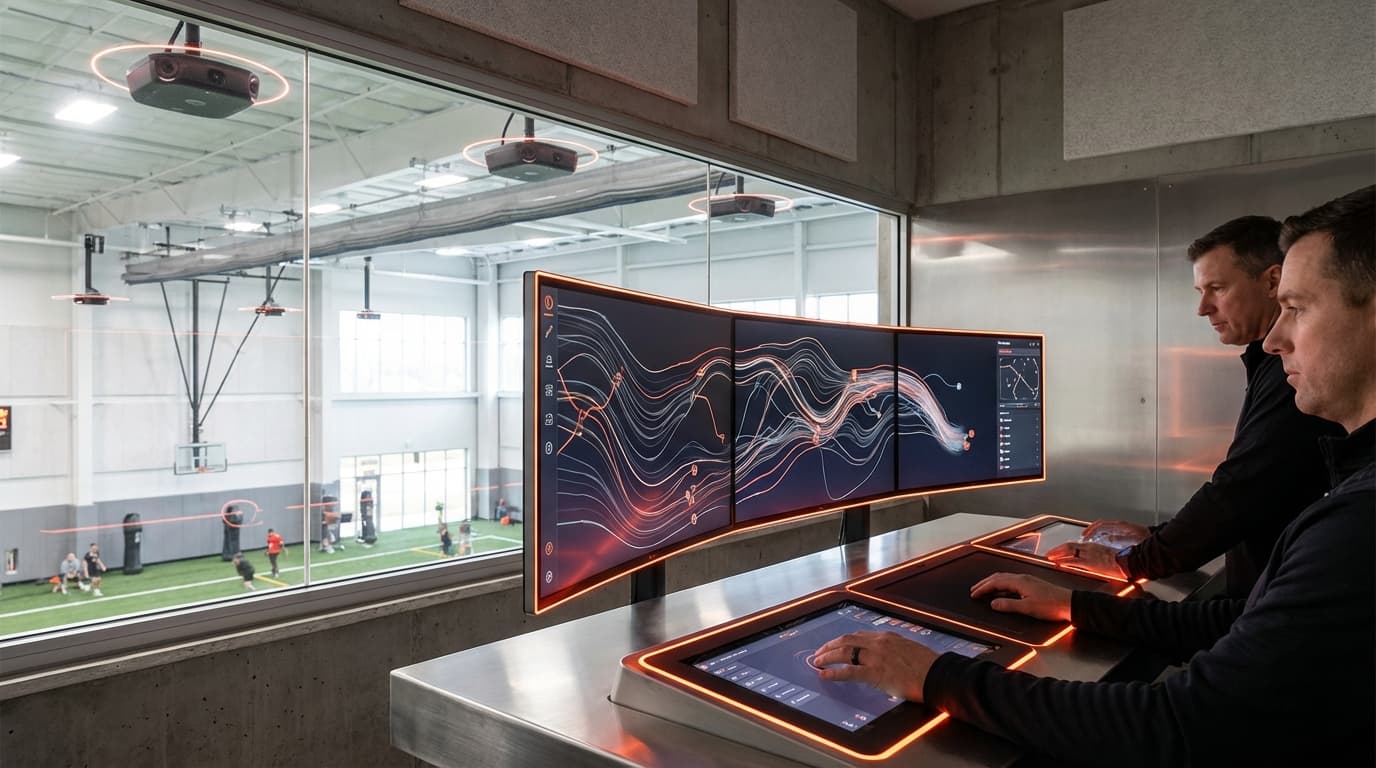
Tactical Intelligence Engines represent a convergence of computer vision, machine learning, and sports analytics designed to decode the complex spatial and temporal patterns that define team performance. These platforms ingest multiple data streams—optical tracking systems that capture player coordinates at sub-second intervals, timestamped event logs recording passes, shots, and defensive actions, and synchronized video feeds—then apply deep learning architectures to construct holistic models of game dynamics. Unlike traditional statistics that reduce play to discrete events, these engines treat matches as continuous spatial problems, analyzing how teams create and deny space, how passing networks evolve under pressure, and how individual positioning decisions cascade into collective tactical outcomes. The underlying algorithms often employ graph neural networks to model player relationships, recurrent architectures to capture temporal dependencies, and clustering techniques to identify recurring tactical patterns across thousands of match situations.
The competitive demands of modern sports have created an urgent need for insights that transcend conventional box scores and highlight reels. Coaches face the challenge of preparing teams against opponents whose tactical flexibility can shift multiple times within a single match, while player evaluation increasingly requires understanding not just what athletes do with the ball, but how they influence space, create passing lanes, and disrupt opposition structure when off the ball. Tactical Intelligence Engines address these challenges by quantifying previously intangible aspects of play—measuring how effectively a midfielder occupies dangerous zones, calculating the defensive value of a fullback's positioning, or predicting which formation adjustments will exploit specific opponent vulnerabilities. This capability transforms preparation workflows, enabling coaching staffs to simulate tactical scenarios, test formation changes against opponent tendencies, and identify matchup advantages that might otherwise remain hidden in the complexity of live play.
Professional leagues and national federations have begun integrating these platforms into their performance ecosystems, with some clubs embedding tactical analysts who translate engine outputs into actionable coaching points. The technology has proven particularly valuable in tournament settings where preparation time between matches is compressed, allowing teams to rapidly digest opponent tendencies and adjust game plans. Beyond elite competition, these engines are gradually influencing player development pathways, helping academies identify young athletes whose spatial intelligence and tactical awareness may not surface in traditional scouting metrics. As tracking technology becomes more affordable and machine learning models grow more sophisticated, the trajectory points toward real-time tactical guidance—systems that could eventually provide in-match recommendations, alert coaches to emerging patterns, and help teams adapt dynamically to opponent adjustments. This evolution reflects a broader shift in sports toward treating tactical decision-making as a data problem, one where the right analytical framework can reveal competitive advantages hidden within the structured chaos of team play.
Related Organizations

Sports data and AI company providing media and performance solutions.

Provides video review and performance analysis tools (including Wyscout and Sportscode) that integrate data to reveal team tactics.

A sports intelligence platform founded by former team analysts that builds custom tactical models for pro teams.

Uses computer vision to extract game data and player pose information from broadcast video.

Develops software that allows coaches to add tactical visualizations to video automatically using pattern recognition.

Provides real-time tactical analysis via wearable sensors (UWB) and ball tracking, used heavily in the NBA and Handball.

Optical tracking solution that uses deep learning to provide tactical analytics from a single viewpoint camera.

Automated camera systems with integrated cloud analysis tools for tactical feedback.
Supporting Evidence
Research this in Signals
Signals turns a topic into a sourced research record you can inspect and rerun. Your first scan is free, and this one starts with Tactical Intelligence Engines already loaded, so edit it or scan as is.