







Augmented Training Analytics
This page is a narrower case of it.
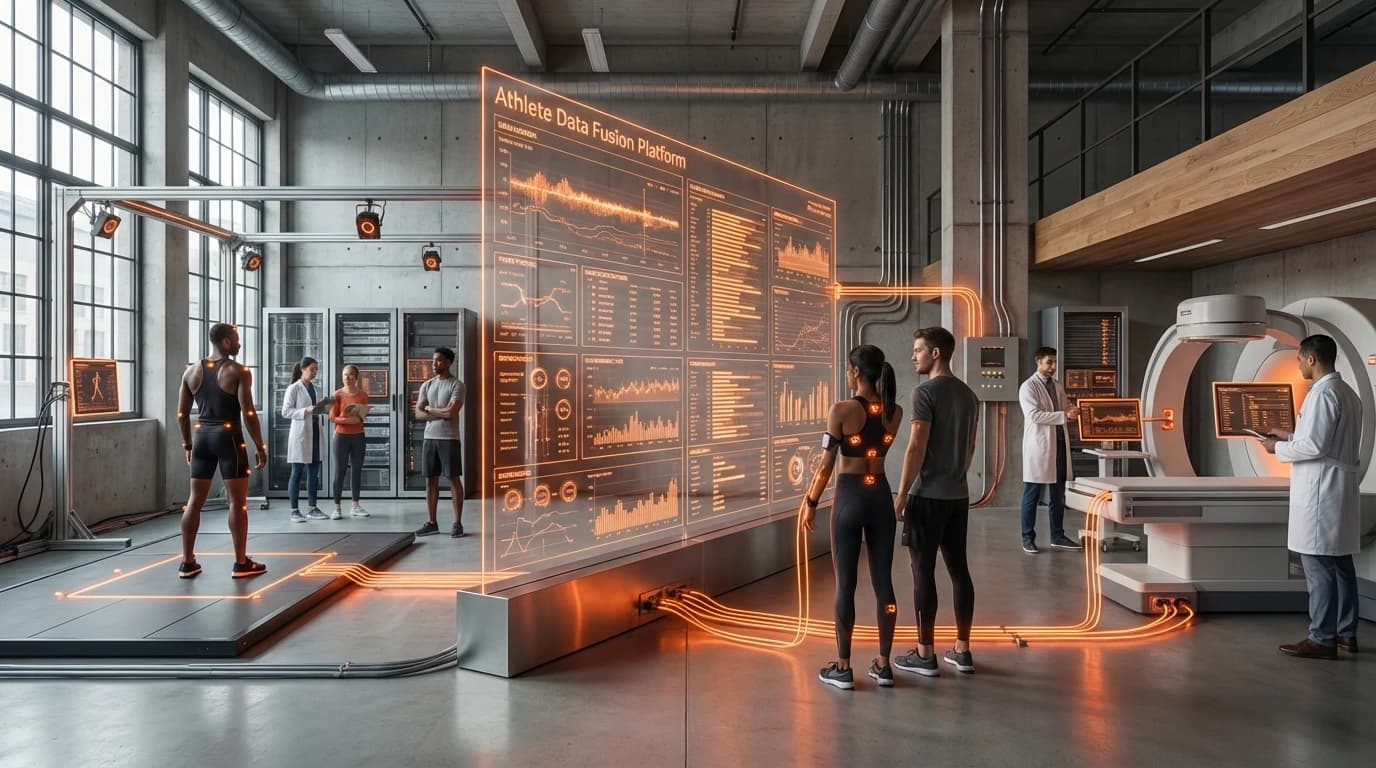
Modern athletic performance optimization faces a fundamental challenge: data fragmentation. Elite athletes generate vast quantities of performance metrics across dozens of disconnected systems—GPS tracking units record movement patterns during training, force plates capture biomechanical loads in the weight room, wearable sensors monitor sleep and recovery, laboratory tests measure physiological markers, and electronic medical records document injury histories. This siloed data landscape makes it nearly impossible for coaches, sports scientists, physicians, and performance staff to develop a complete understanding of an athlete's status. Critical insights often remain hidden in the gaps between systems, while decision-makers waste valuable time manually correlating information across platforms. The inability to view an athlete's complete profile in real time can lead to suboptimal training decisions, missed injury warning signs, and inefficient resource allocation across sports organizations.
Athlete data fusion platforms address this fragmentation through cloud-native architectures designed to harmonize disparate data streams into unified longitudinal profiles. These systems employ standardized application programming interfaces (APIs) that connect to existing hardware and software ecosystems, automatically ingesting data from GPS units, inertial measurement units, heart rate monitors, sleep trackers, force measurement devices, biochemical analyzers, and medical record systems. Advanced data normalization algorithms reconcile different measurement scales, sampling rates, and formats into coherent time-series datasets. The platforms then apply analytics layers that identify correlations across data types—for instance, linking declining sleep quality metrics with increased injury risk markers or connecting training load patterns with performance outcomes. Role-based dashboards present this integrated information to different stakeholders: coaches see training readiness scores informed by multiple physiological inputs, medical staff access injury risk assessments that incorporate biomechanical and workload data, and front-office personnel gain visibility into squad-wide trends that inform roster and contract decisions.
Early adoption of these platforms is concentrated among professional sports organizations and national Olympic programs, where the return on investment from marginal performance gains justifies significant technology expenditure. Research suggests that integrated data approaches can reduce soft-tissue injury rates by improving load management precision and identifying at-risk athletes earlier than single-source monitoring. As cloud infrastructure costs decline and platform vendors develop more accessible pricing models, adoption is expanding into collegiate athletics and high-performance training centers. The trajectory points toward these systems becoming standard infrastructure in competitive sports, particularly as regulatory frameworks around athlete health data mature and interoperability standards emerge across the sports technology ecosystem.
Athlete Management System acquired by Movella, specializing in ingesting data from 50+ different hardware integrations.
Sports intelligence platform consolidating medical, performance, and coaching data.
The operating system for sports, integrating scheduling, communication, and performance data (via the acquisition of Smartabase) into a centralized hub.
Silicon Valley Exercise Analytics; builds 'Ellida', a digital twin for athlete optimization.
Global leader in athlete analytics, providing both hardware sensors and a software platform (OpenField) that integrates video and biometric data.
Provides athlete management systems (AMS) focused on health, performance, and administrative data centralization.
Bio-analytics company analyzing blood and biomarkers to optimize performance.
Applied sports science software that centralizes workout tracking, hydration, sleep, and soreness data.
Sports data and AI company providing media and performance solutions.
Published forecasts about this technology, graded against what happened in Hindsight.
Augmented Training Analytics
This page is a narrower case of it.
Sports Tech
This page is a narrower case of it.
Signals turns a topic into a sourced research record you can inspect and rerun. Your first scan is free, and this one starts with Athlete Data Fusion Platforms already loaded, so edit it or scan as is.