








Augmented Training Analytics
This page is a narrower case of it.
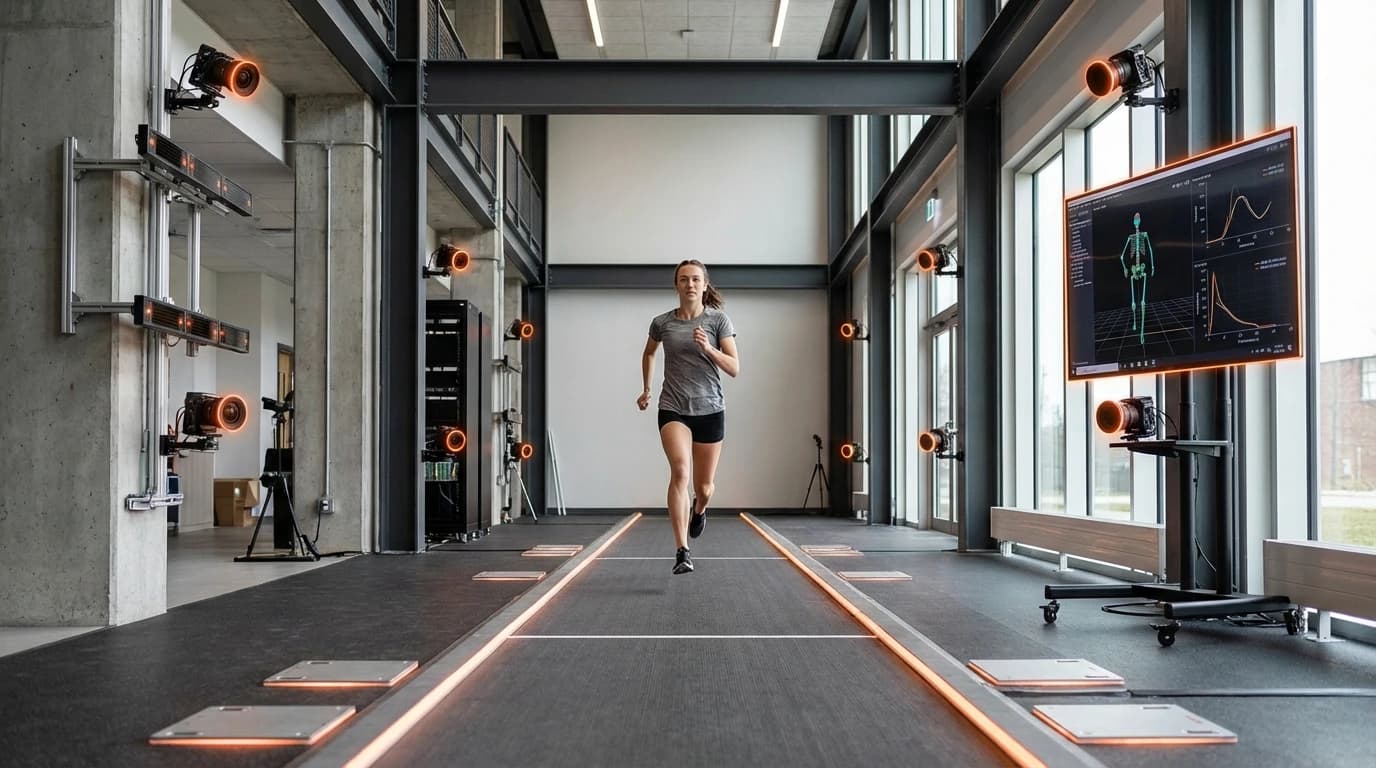
Automated biomechanics analysis represents a significant advancement in sports performance technology, leveraging artificial intelligence and computer vision to extract detailed skeletal and movement data from standard video footage without requiring athletes to wear specialized markers, suits, or sensors. The technology employs deep learning algorithms trained on vast datasets of human movement to identify and track key anatomical landmarks—joints, limbs, and body segments—across video frames captured by conventional cameras. These algorithms can reconstruct three-dimensional skeletal models from two-dimensional video, calculating joint angles, velocities, accelerations, and force estimations with increasing accuracy. By processing visual information in real-time or near-real-time, the system generates comprehensive biomechanical profiles that previously required laboratory-grade motion capture equipment costing hundreds of thousands of dollars and demanding controlled environments with multiple synchronized cameras and reflective markers placed precisely on the athlete's body.
The primary challenge this technology addresses is the longstanding barrier between elite biomechanical analysis and practical athletic training environments. Traditional motion capture systems, while highly accurate, have been largely confined to research laboratories and specialized training facilities due to their complexity, cost, and the time-intensive setup they require. Athletes needed to interrupt their natural training routines, don cumbersome equipment, and perform movements in artificial settings that often failed to replicate the dynamic conditions of actual competition. This disconnect meant that coaches and sports scientists could rarely analyze an athlete's biomechanics during the moments that mattered most—actual games, races, or competitions where psychological pressure, fatigue, and environmental factors all influence movement patterns. Automated biomechanics analysis dissolves this barrier by enabling analysis anywhere a camera can be positioned, whether courtside, trackside, or poolside, capturing authentic performance data during training sessions and competitive events without disrupting the athlete's natural movement or mental state.
Current implementations of this technology are appearing across multiple sports, from professional basketball and soccer teams using it to assess injury risk and optimize shooting or kicking mechanics, to track and field programs analyzing sprint biomechanics and jumping techniques. Swimming programs have begun deploying underwater camera systems paired with automated analysis software to evaluate stroke efficiency without the drag-inducing effects of wearable sensors. Research institutions and sports medicine clinics are also adopting these systems to conduct return-to-play assessments following injuries, comparing an athlete's current movement patterns against their pre-injury baseline to identify compensatory movements that might indicate incomplete recovery. As the technology matures and validation studies continue to demonstrate its reliability against gold-standard laboratory systems, automated biomechanics analysis is positioned to democratize access to sophisticated movement analysis, extending capabilities once reserved for elite programs to collegiate, amateur, and youth sports organizations. This broader accessibility aligns with growing emphasis on injury prevention and individualized training optimization, suggesting that markerless motion analysis will become a standard component of athletic development programs across all competitive levels in the coming years.
Develops markerless motion capture software used in biomechanics and sports science to extract 3D kinematics from standard video cameras.
Provides AI-powered motion capture and biomechanics analysis using just two iPhones.
Markerless motion capture systems installed in stadiums to capture in-game biomechanics.
Creators of OpenCap, an open-source software for capturing human movement using smartphones.
FDA-cleared markerless motion capture solution for musculoskeletal health and performance.
Smartphone-based biomechanics analysis specifically for baseball pitching.

Simi Reality Motion Systems
Germany · Company
Develops high-end image-based motion capture software for sports and medicine.
The pioneer of ball-tracking technology in tennis, cricket, and football.
Develops AI software that extracts high-fidelity 3D motion data from standard 2D video footage (using iPhones or GoPros) without markers.
Uses computer vision to extract game data and player pose information from broadcast video.
Published forecasts about this technology, graded against what happened in Hindsight.
Augmented Training Analytics
This page is a narrower case of it.
Signals turns a topic into a sourced research record you can inspect and rerun. Your first scan is free, and this one starts with Automated Biomechanics Analysis already loaded, so edit it or scan as is.