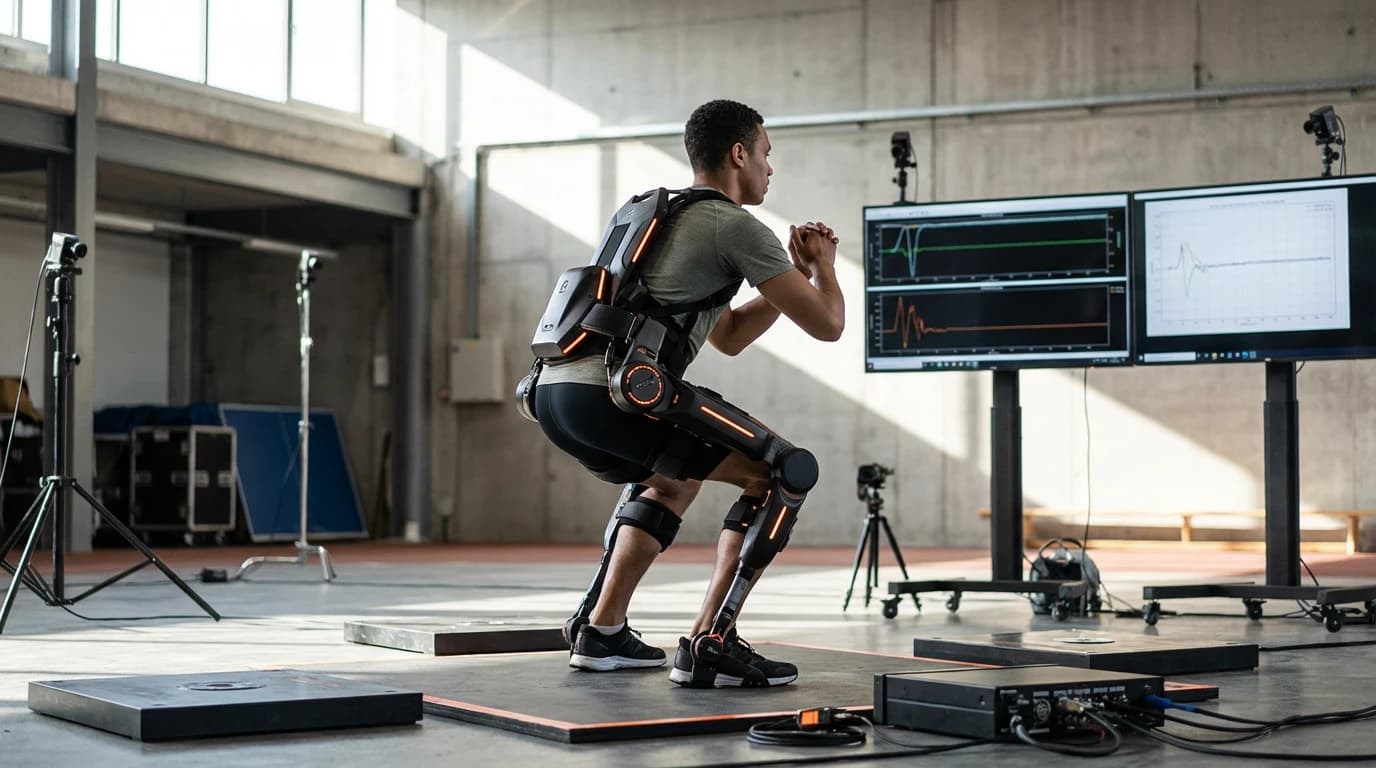
Sports Training Exoskeletons
Sports training exoskeletons represent a convergence of robotics, biomechanics, and athletic performance science, offering athletes unprecedented control over resistance and assistance during movement. Unlike traditional weighted vests or resistance bands that apply constant, passive loads, these wearable robotic systems use actuators, sensors, and real-time control algorithms to modulate force application throughout specific phases of athletic motion. The technology typically employs lightweight carbon fiber or aluminum frames fitted with electric or pneumatic actuators positioned at key joints—hips, knees, ankles for lower-body systems, or shoulders and elbows for upper-body variants. Integrated motion sensors continuously monitor joint angles, velocities, and ground contact patterns, feeding data to onboard processors that adjust resistance or assistance millisecond by millisecond. This allows coaches to program exoskeletons to resist only the explosive push-off phase of a sprint, assist the deceleration phase of a landing to reduce joint stress, or add resistance exclusively during the backswing of a golf stroke while leaving the follow-through unimpeded.
The fundamental challenge these systems address is the limitation of conventional strength training, which occurs in controlled gym environments divorced from the actual biomechanics of sport-specific movements. Traditional weightlifting builds general strength but cannot selectively overload the precise muscle activation patterns, joint angles, and timing sequences that define elite athletic performance. Sports training exoskeletons bridge this gap by enabling resistance training that mirrors competitive movement with extraordinary specificity. For rehabilitation applications, the technology solves the problem of safely returning injured athletes to full performance by offloading damaged joints or tissues during movement retraining, allowing athletes to maintain movement patterns and cardiovascular conditioning while healing progresses. This capability is particularly valuable for lower-limb injuries, where maintaining gait mechanics during recovery can significantly reduce reinjury rates and accelerate return-to-play timelines.
Early deployments of sports training exoskeletons have appeared primarily in elite training facilities and research institutions, where biomechanics laboratories partner with professional teams to develop sport-specific protocols. Track and field programs have experimented with lower-body systems that add resistance during the drive phase of sprinting while providing slight assistance during recovery, theoretically building explosive power without disrupting stride mechanics. Basketball and volleyball programs have explored exoskeletons that resist the descent phase of jumping movements, building eccentric strength critical for injury prevention. As actuator technology becomes lighter and battery systems more compact, industry analysts note growing interest from collegiate athletic programs and high-performance training centers. The technology aligns with broader trends toward data-driven, individualized training methodologies and the quantification of athletic movement. Future development trajectories point toward systems with finer force resolution, wireless connectivity for real-time coaching feedback, and integration with motion capture systems that automatically adjust resistance profiles based on detected form degradation, potentially transforming how athletes build sport-specific strength and resilience.
Related Organizations

Develops pneumatic exoskeletons using high-strength fabrics.

A research lab at Harvard University focused on soft robotics and wearable assistive devices.

Creates lightweight AI-powered exoskeletons for outdoor sports, running, and hiking.

Develops ExoBoot technology for performance augmentation and load carriage.

A premier research center for biologically inspired engineering, known for soft exosuits and microrobotics.
ETH Zurich (Sensory-Motor Systems Lab)
Switzerland · University
Conducts advanced research on wearable robotics and human-machine interaction in sports.

Produces a spring-based exoskeleton for skiers to reduce leg strain.
Supporting Evidence
Research this in Signals
Signals turns a topic into a sourced research record you can inspect and rerun. Your first scan is free, and this one starts with Sports Training Exoskeletons already loaded, so edit it or scan as is.