Advanced Adaptive & Para-Sports Systems
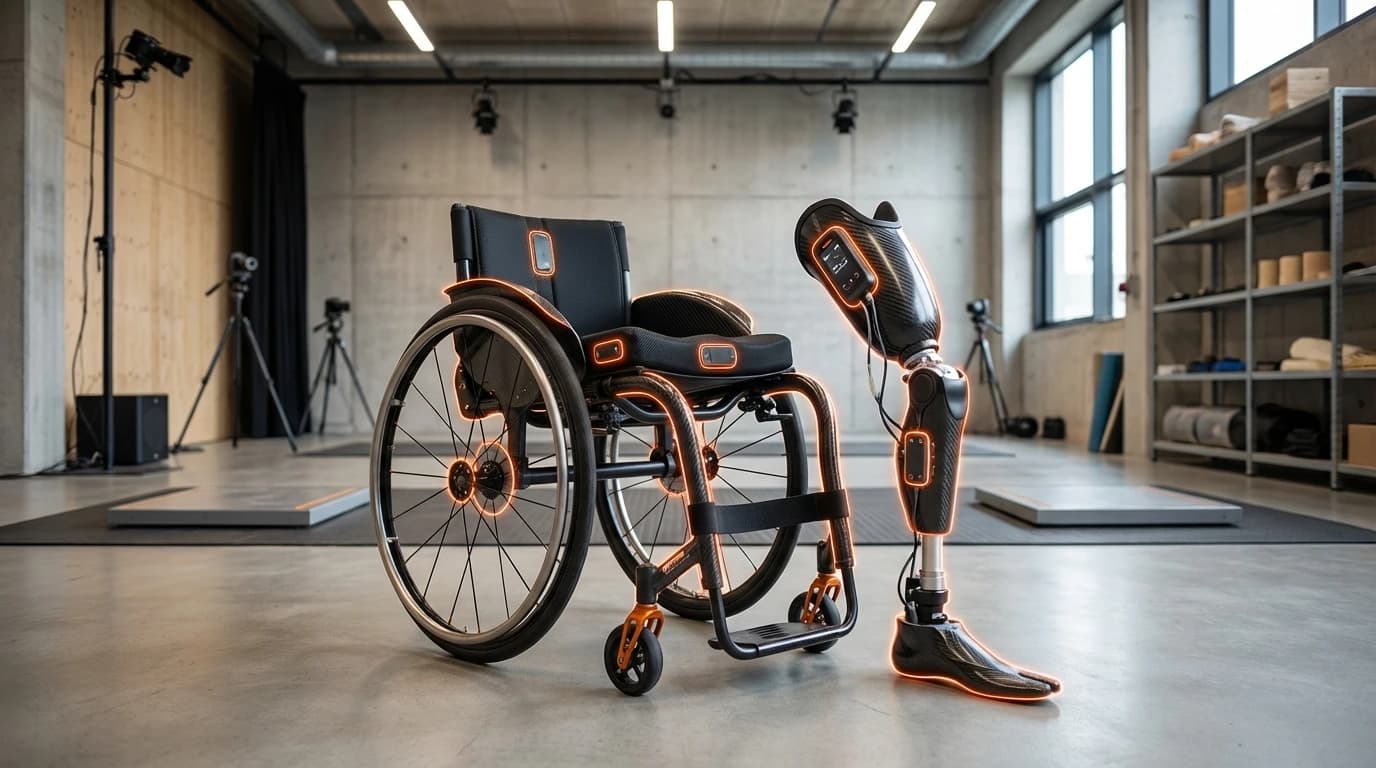
Advanced adaptive and para-sports systems represent a convergence of biomechanical engineering, materials science, and computational design that fundamentally reimagines athletic equipment for para-athletes. These systems encompass specialized racing wheelchairs engineered with carbon fiber frames and aerodynamic fairings, running prosthetics featuring energy-return carbon fiber blades, and custom seating solutions molded to individual athletes' anatomies. The development process typically involves computational fluid dynamics (CFD) simulations to minimize drag, finite element analysis to optimize structural integrity while reducing weight, and motion capture systems to analyze biomechanical efficiency. Unlike conventional adaptive equipment designed primarily for daily mobility, these performance-oriented systems push the boundaries of what's mechanically and physiologically possible, incorporating technologies such as adjustable camber angles in wheelchairs, variable stiffness prosthetic feet that adapt to different track surfaces, and pressure-mapping sensors that inform custom seating configurations.
The emergence of these sophisticated systems addresses a critical challenge in competitive para-sports: the historical gap between the performance capabilities of adaptive athletes and the equipment available to them. Traditional prosthetics and wheelchairs were designed for function rather than speed, limiting athletes' potential and creating inequities in competition. Modern adaptive sports systems solve this by treating the athlete-equipment interface as an integrated biomechanical unit, where the technology becomes an extension of human capability rather than merely a compensatory tool. This shift has enabled new business models around custom fabrication services, performance testing facilities, and specialized engineering consultancies that work directly with athletes and national teams. However, it has also introduced complex questions around competitive fairness, as variations in equipment quality and customization can significantly impact performance outcomes, prompting ongoing debates within governing bodies about classification systems and equipment regulations.
Elite para-athletes at international competitions increasingly rely on equipment developed through partnerships between sports science institutes, aerospace engineering firms, and specialized manufacturers. Racing wheelchairs now feature designs informed by wind tunnel testing similar to Formula 1 development, while prosthetic running blades incorporate materials and geometries that maximize energy return during ground contact phases. Some national Paralympic programs have established dedicated biomechanics laboratories where athletes undergo comprehensive gait analysis and equipment fitting protocols. Looking forward, this technology sector is poised to expand beyond elite competition into broader adaptive sports participation, driven by advances in 3D printing that could democratize access to customized equipment and machine learning algorithms that optimize designs for individual biomechanical profiles. The trajectory suggests a future where adaptive sports systems not only enable competitive parity but potentially redefine our understanding of human athletic performance itself, challenging conventional distinctions between natural ability and technological enhancement.
Related Organizations


The world market leader in technical orthopedics and prosthetics.

A collaboration between the University of Pittsburgh and the VA, focusing on wheelchair and mobility technology.

Home to the Peter Harrison Centre for Disability Sport.

A foundation established by Toyota to support innovative mobility solutions and eliminate disparities in mobility.

Danish manufacturer specializing in custom-made wheelchairs for sports like rugby, basketball, and racing.

A charity and design firm providing low-cost, high-quality sports wheelchairs to developing nations.

A leading healthcare technology company specializing in power and manual wheelchairs.
Supporting Evidence
Research this in Signals
Signals turns a topic into a sourced research record you can inspect and rerun. Your first scan is free, and this one starts with Advanced Adaptive & Para-Sports Systems already loaded, so edit it or scan as is.