







Applied Gaming
This page is a narrower case of it.
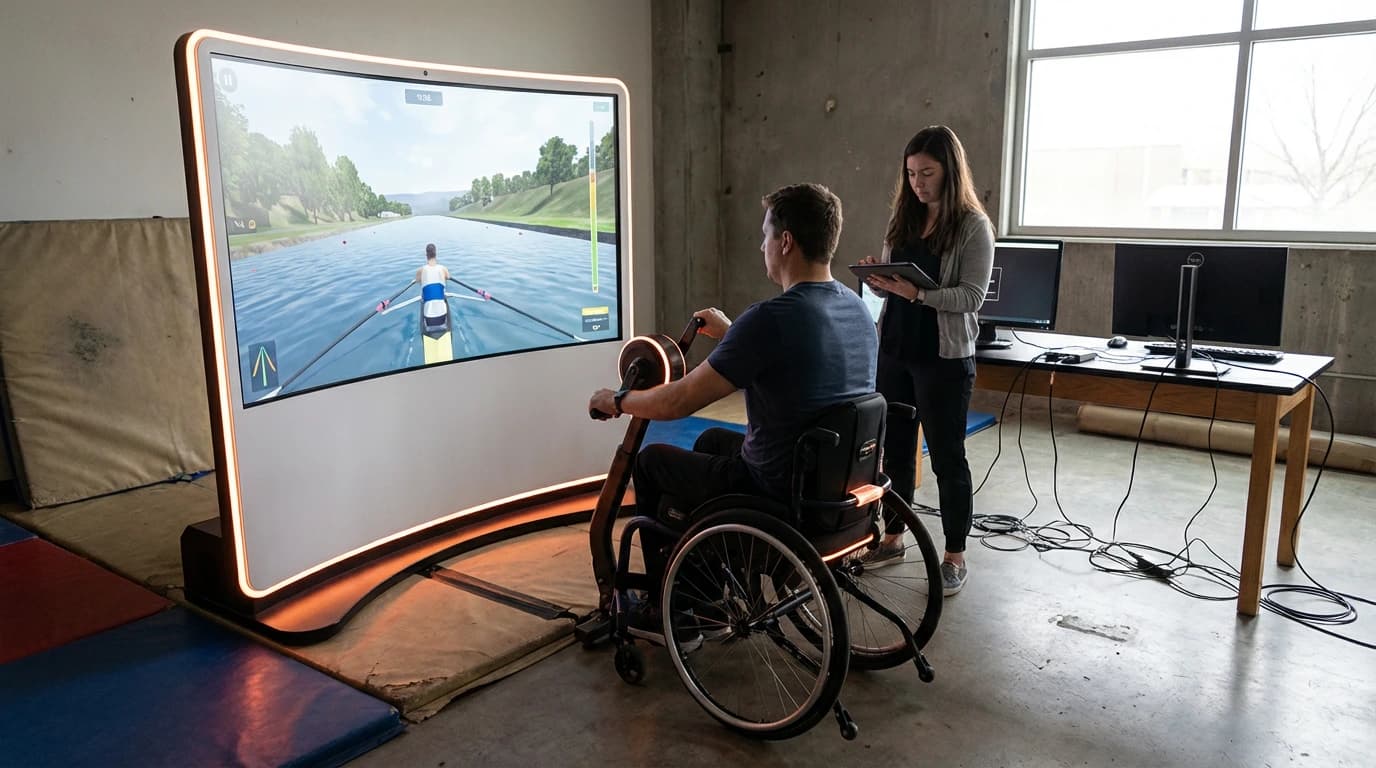
Adaptive exergaming represents a convergence of gaming technology, biomechanical sensing, and inclusive design principles to create interactive fitness experiences for athletes with disabilities. These systems employ specialized input devices—ranging from pressure-sensitive wheelchair platforms to eye-tracking interfaces and modified motion controllers—that translate physical movements into digital gameplay. The underlying architecture typically combines real-time motion capture, force sensors, and adaptive algorithms that calibrate difficulty levels and control schemes to individual capabilities. Unlike conventional fitness gaming that assumes standard mobility, adaptive exergaming platforms are built from the ground up to accommodate diverse physical abilities, using machine learning to recognize and respond to movement patterns specific to wheelchair propulsion, limited range of motion, or alternative control methods.
The traditional barriers facing athletes with disabilities in both competitive sports and recreational fitness have been significant, from limited access to specialized training facilities to a scarcity of engaging, appropriately challenging exercise options. Adaptive exergaming addresses these challenges by democratizing access to structured physical training through home-based or community center deployments. These platforms solve the engagement problem inherent in repetitive therapeutic exercises by embedding movement goals within compelling game narratives and competitive frameworks. Research suggests that gamification elements—including achievement systems, multiplayer competition, and progressive difficulty curves—substantially improve adherence to exercise regimens compared to traditional physical therapy protocols. Furthermore, these systems generate detailed performance metrics that can inform coaching decisions and track progress over time, creating feedback loops that were previously available only in specialized clinical or training environments.
Early deployments of adaptive exergaming systems have appeared in rehabilitation centers, adaptive sports programs, and increasingly in home settings as hardware costs decline and software becomes more sophisticated. Wheelchair basketball players, for instance, can use these platforms to practice propulsion techniques and reaction times through basketball-themed games that mirror competitive scenarios. Similarly, athletes training for adaptive rowing or hand cycling can engage with virtual environments that simulate race conditions while collecting biomechanical data. The technology aligns with broader trends toward personalized digital health interventions and the growing recognition of esports and digital competition as legitimate athletic pursuits. As sensor technology becomes more affordable and AI-driven personalization improves, adaptive exergaming is positioned to expand beyond elite athletic training into mainstream fitness and wellness applications, potentially transforming how individuals with disabilities access regular physical activity and competitive sport opportunities.
Global leader in virtual reality and robotics for human movement research and rehabilitation.
Nonprofit dedicated to improving accessibility in the video game space.
Creates wearable sensors that connect to a gaming app for physical therapy.
Through Copilot and the 'Recall' feature in Windows, Microsoft is integrating persistent memory and agentic capabilities directly into the operating system.
Develops virtual therapy systems specifically for geriatrics and rehabilitation.
Leader in robotic rehabilitation therapy for neurological movement disorders.
Operates virtual clinics providing VR therapy for various conditions.
Manufacturer of VR fitness devices that combine planking with flying simulations.
A robotics company known for programmable spherical robots like Bolt and RVR+ designed for education.
Published forecasts about this technology, graded against what happened in Hindsight.
Applied Gaming
This page is a narrower case of it.
Signals turns a topic into a sourced research record you can inspect and rerun. Your first scan is free, and this one starts with Adaptive Exergaming already loaded, so edit it or scan as is.