Remote Performance Clinics
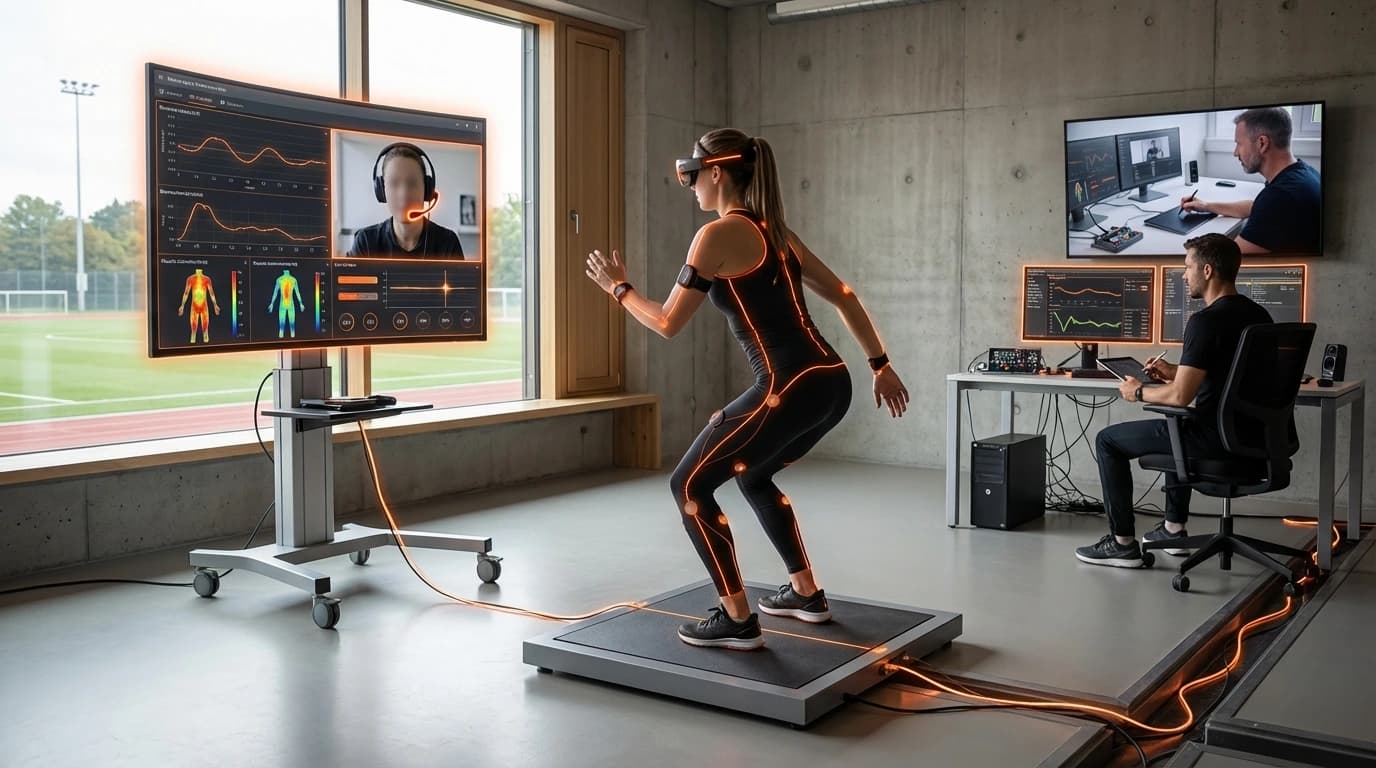
Remote Performance Clinics represent a digital infrastructure that democratizes access to elite-level sports science and coaching expertise by leveraging telecommunications and data analytics. The system operates through a structured pipeline where athletes capture performance data using smartphone cameras, wearable sensors, force plates, or motion-capture suits, then upload this information to cloud-based platforms designed for sports analysis. Coaches and specialists on the receiving end utilize video annotation tools, biomechanical analysis software, and performance dashboards to evaluate technique, identify inefficiencies, and prescribe corrective interventions. The interaction can occur asynchronously, with experts reviewing footage and delivering detailed written or video feedback within 24 to 48 hours, or synchronously through live video consultations that allow real-time coaching cues and immediate adjustments. This technical architecture mirrors telemedicine models but is tailored specifically to the demands of athletic performance, incorporating sport-specific metrics such as joint angles, ground contact times, power output, and movement symmetry.
The traditional model of elite sports coaching has long been constrained by geography and cost, with world-class biomechanists and specialized coaches concentrated in a handful of Olympic training centers, professional team facilities, and university research labs. Athletes outside these ecosystems—whether in remote regions, developing nations, or lower-tier competitive levels—have historically faced significant barriers to accessing cutting-edge performance optimization. Remote Performance Clinics address this inequality by decoupling expertise from physical location, enabling a high school sprinter in rural Montana or a Paralympic hopeful in Southeast Asia to receive the same caliber of technical analysis previously reserved for nationally funded athletes. This model also solves scalability challenges for expert practitioners, allowing a single biomechanist to serve dozens of athletes across multiple time zones without the overhead of travel or facility maintenance. For sports organizations and national federations with limited budgets, these virtual clinics offer a cost-effective pathway to elevate athlete development programs without investing in permanent infrastructure or relocating talent.
Early adopters of remote performance services include endurance sports communities, where cycling coaches have long used uploaded power meter data and video to refine pedaling mechanics, and track and field programs that send throwing or jumping footage for technical breakdowns. The COVID-19 pandemic accelerated adoption across nearly every sport as lockdowns forced innovation in remote training methodologies. Today, several commercial platforms offer subscription-based access to networks of certified coaches and sports scientists, while some national governing bodies have integrated tele-assessment into their talent identification and development pathways. Looking forward, the integration of artificial intelligence for preliminary movement screening, combined with expanding global internet access and increasingly affordable sensor technology, positions Remote Performance Clinics as a cornerstone of the broader trend toward distributed, data-driven athlete development. As the technology matures, the model may evolve to include augmented reality overlays for real-time technique correction and collaborative platforms where multiple specialists contribute to a single athlete's performance plan, further blurring the lines between centralized and decentralized training ecosystems.
Related Organizations

Online marketplace connecting golfers with top coaches for remote video analysis and feedback.

Digital MSK clinic that acquired computer vision tech (wrnch) to offer sensor-free motion tracking for physical therapy.

Video analysis and coaching platform designed specifically for remote feedback and communication.

Digital therapeutics company using computer vision on smartphones to provide real-time feedback on physical therapy exercises.

Long-standing video analysis software for golf and baseball, heavily used for online lessons.
AI personal trainer that uses a console to track movement and provide form correction.

Mobile app that uses AI to analyze running form from video recorded on a smartphone.

University spin-off providing wearable biomechanics feedback for runners and physios.

A global patient engagement platform for physiotherapists that integrates telehealth and exercise tracking tools.
Supporting Evidence
Research this in Signals
Signals turns a topic into a sourced research record you can inspect and rerun. Your first scan is free, and this one starts with Remote Performance Clinics already loaded, so edit it or scan as is.