Dry-Stack Tailings and Filtered Dams
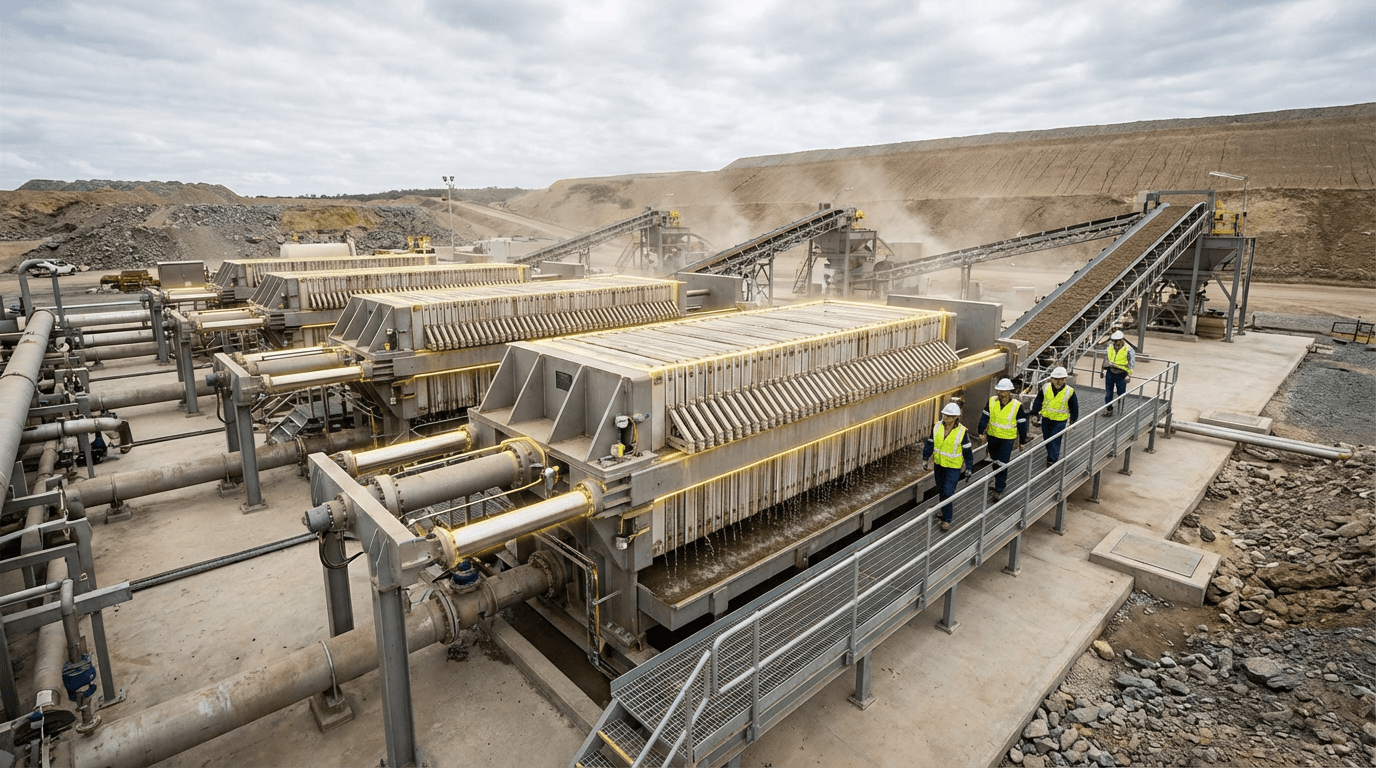
Mining operations generate enormous volumes of tailings—the finely ground rock and process water left after extracting valuable minerals from ore. Traditionally, these tailings are stored as slurries in large impoundment dams, which pose significant environmental and safety risks. Catastrophic tailings dam failures have resulted in loss of life, ecosystem destruction, and billions of dollars in remediation costs. Dry-stack tailings technology addresses these hazards through mechanical dewatering systems that transform wet slurries into dense, paste-like or cake-like materials. The process typically involves high-pressure filter presses, vacuum filters, or thickener systems that extract 80-90% of the water content from tailings. The resulting material has a consistency similar to damp soil and can be transported by conveyor or truck to disposal sites where it is compacted and stacked in engineered facilities. This approach fundamentally changes the physical properties of mine waste, creating a stable mass that can support its own weight and resist erosion.
The mining industry faces mounting pressure from regulators, investors, and communities to eliminate or minimize the use of conventional wet tailings dams. Recent high-profile dam failures have accelerated this shift, with some jurisdictions moving toward outright bans on traditional impoundments. Dry-stack systems address these concerns by drastically reducing the volume of water stored on-site and creating geotechnically stable structures that are far less prone to catastrophic failure. The technology also solves critical water management challenges in water-scarce mining regions, as the recovered process water can be immediately recycled back into mineral processing operations rather than being locked up in tailings ponds. This closed-loop approach can reduce freshwater consumption by 50% or more at some operations. Additionally, dry-stacked tailings occupy a smaller surface footprint than conventional dams and can often be progressively reclaimed during active mining, reducing long-term closure liabilities and enabling earlier return of land to productive use.
Industry analysts note that dry-stack tailings deployment has accelerated significantly over the past decade, particularly in copper, gold, and iron ore operations. Several major mining companies have committed to eliminating conventional tailings dams from new projects, driving adoption of filtered tailings systems despite their higher capital and operating costs compared to traditional impoundments. The technology has proven particularly valuable in seismically active regions, where the risk of earthquake-induced dam failure is elevated, and in jurisdictions with stringent environmental regulations. Research suggests that ongoing innovations in filter press efficiency, automation, and energy consumption are gradually narrowing the cost gap between dry-stack and conventional systems. As climate change intensifies water scarcity in key mining regions and social license to operate becomes increasingly dependent on demonstrable safety improvements, dry-stack tailings technology is positioned to transition from a niche solution to an industry standard, fundamentally reshaping how the extractive sector manages one of its most challenging waste streams.
Related Organizations

Provides the EcoTails™ solution, combining fast filtration with waste rock blending to create stable dry-stack storage.

Metso
Finland · Company
Major mining OEM offering bulk ore sorting solutions as part of their 'Planet Positive' portfolio.
Specializes in solid-liquid separation technology, manufacturing massive filter presses used globally for mine tailings dewatering.

An engineering consultancy known for designing tailings storage facilities, including filtered and dry-stack dams.

Designs and manufactures wastewater purification and filtration plants, including high-pressure filter presses for the mining sector.

Manufactures filter press cloth, plates, and presses specifically for mining and mineral processing applications.

Operates several mines utilizing dry-stack tailings, including La Colorada in Mexico.

Global consultancy providing closure cost estimation and financial liability assessments.

Provides liquid/solid separation equipment including thickeners and vacuum filters used in tailings management.
Supporting Evidence
Research this in Signals
Signals turns a topic into a sourced research record you can inspect and rerun. Your first scan is free, and this one starts with Dry-Stack Tailings and Filtered Dams already loaded, so edit it or scan as is.