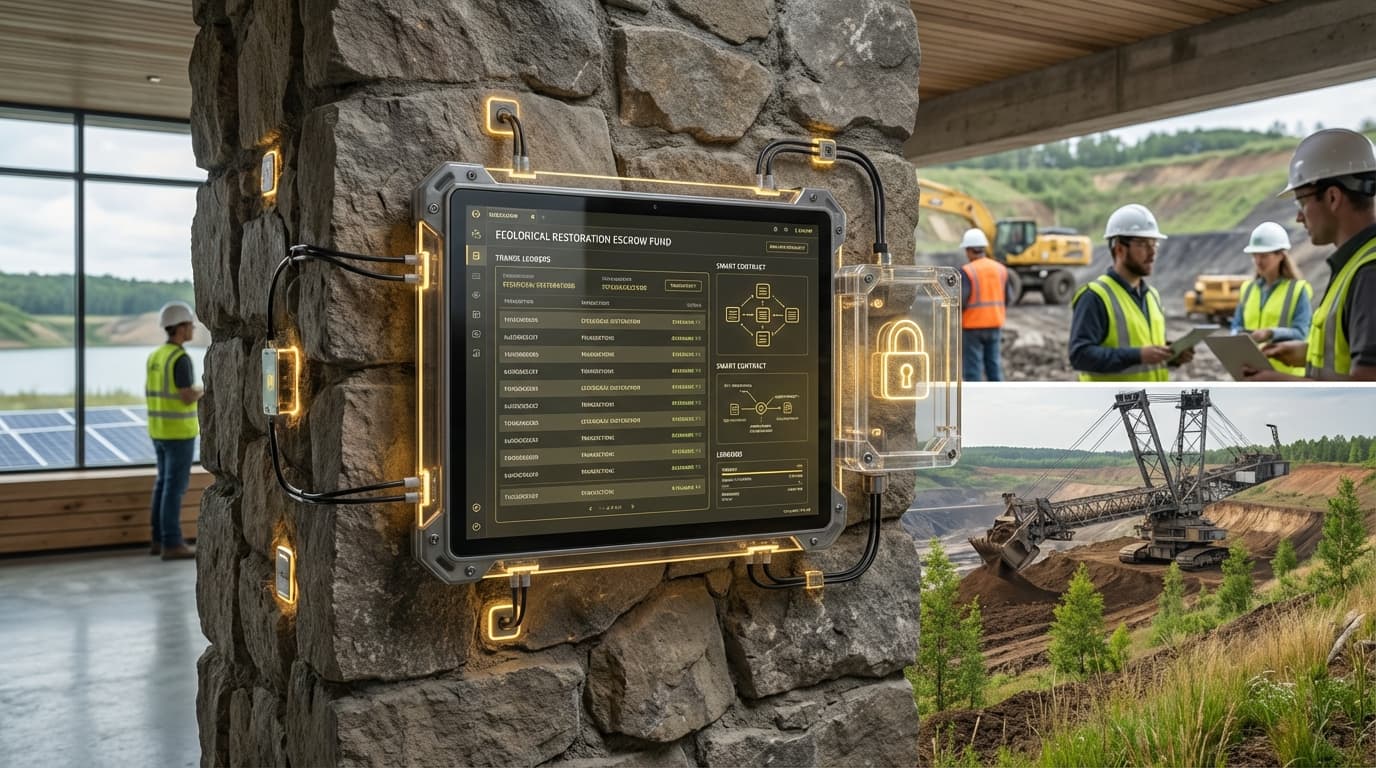
Mine Closure Financial Assurance Systems
The extractive industries face a persistent challenge that has plagued mining operations for generations: ensuring that adequate financial resources remain available for site rehabilitation and environmental remediation long after ore extraction ceases. Traditional bonding mechanisms, which rely on letters of credit, surety bonds, or cash deposits held by government agencies, have proven vulnerable to corporate restructuring, bankruptcy proceedings, and jurisdictional disputes. When mining companies dissolve or transfer assets before completing closure obligations, taxpayers and local communities are left bearing the costs of water treatment, land reclamation, and ongoing environmental monitoring—expenses that can extend for decades or even centuries. Mine closure financial assurance systems address this fundamental trust deficit by leveraging blockchain technology, smart contracts, and cryptographically secured escrow mechanisms to create immutable, transparent records of rehabilitation funding commitments that cannot be easily circumvented or redirected.
These systems operate by establishing digital escrow accounts on distributed ledgers, where mining operators deposit closure funds according to predetermined schedules tied to extraction milestones or production volumes. Smart contracts—self-executing code that automatically enforces agreement terms—govern the release of these funds, ensuring they can only be accessed for approved rehabilitation activities verified by independent auditors or regulatory authorities. The blockchain architecture provides a permanent, tamper-resistant record of all deposits, withdrawals, and fund transfers, creating an audit trail accessible to regulators, community stakeholders, and financial institutions. This transparency fundamentally alters the power dynamics between mining companies, governments, and affected communities, as all parties can verify in real-time that adequate resources exist to address closure liabilities. The technology also enables more sophisticated funding models, such as progressive bonding that adjusts automatically based on changing environmental conditions or commodity prices, and multi-party escrow arrangements where funds can be released only with consensus from designated stakeholders.
Early implementations of blockchain-based financial assurance are emerging in jurisdictions seeking to modernize mining regulations and address legacy contamination from abandoned sites. Research suggests that distributed ledger approaches could reduce administrative costs associated with bond management while providing stronger guarantees against fund diversion during corporate transitions. Industry analysts note that these systems may prove particularly valuable in developing regions where institutional capacity for monitoring compliance remains limited, as the technology creates built-in accountability mechanisms that function independently of local enforcement capabilities. As environmental, social, and governance considerations increasingly influence investment decisions, mine closure financial assurance systems represent a convergence of regulatory innovation and financial technology that could reshape how the extractive sector manages its long-term environmental obligations, potentially establishing new standards for corporate accountability in resource-dependent economies.
Related Organizations

International Council on Mining and Metals, setting global performance expectations.

Publishes the Responsible Mining Index, which assesses companies on closure provision transparency.

Canada · Consortium
Supports governments in developing legal frameworks for mine closure and financial assurance.

International financial institution providing loans and grants to governments.

A digital platform using blockchain to digitize the supply chain for mining and metals, handling trade finance and logistics.

Global consultancy providing closure cost estimation and financial liability assessments.

Global mining company with a focus on sustainable mining plans.

Canadian mining company known for its detailed closure planning and financial transparency.
Supporting Evidence
Research this in Signals
Signals turns a topic into a sourced research record you can inspect and rerun. Your first scan is free, and this one starts with Mine Closure Financial Assurance Systems already loaded, so edit it or scan as is.