Seawater Mineral Recovery
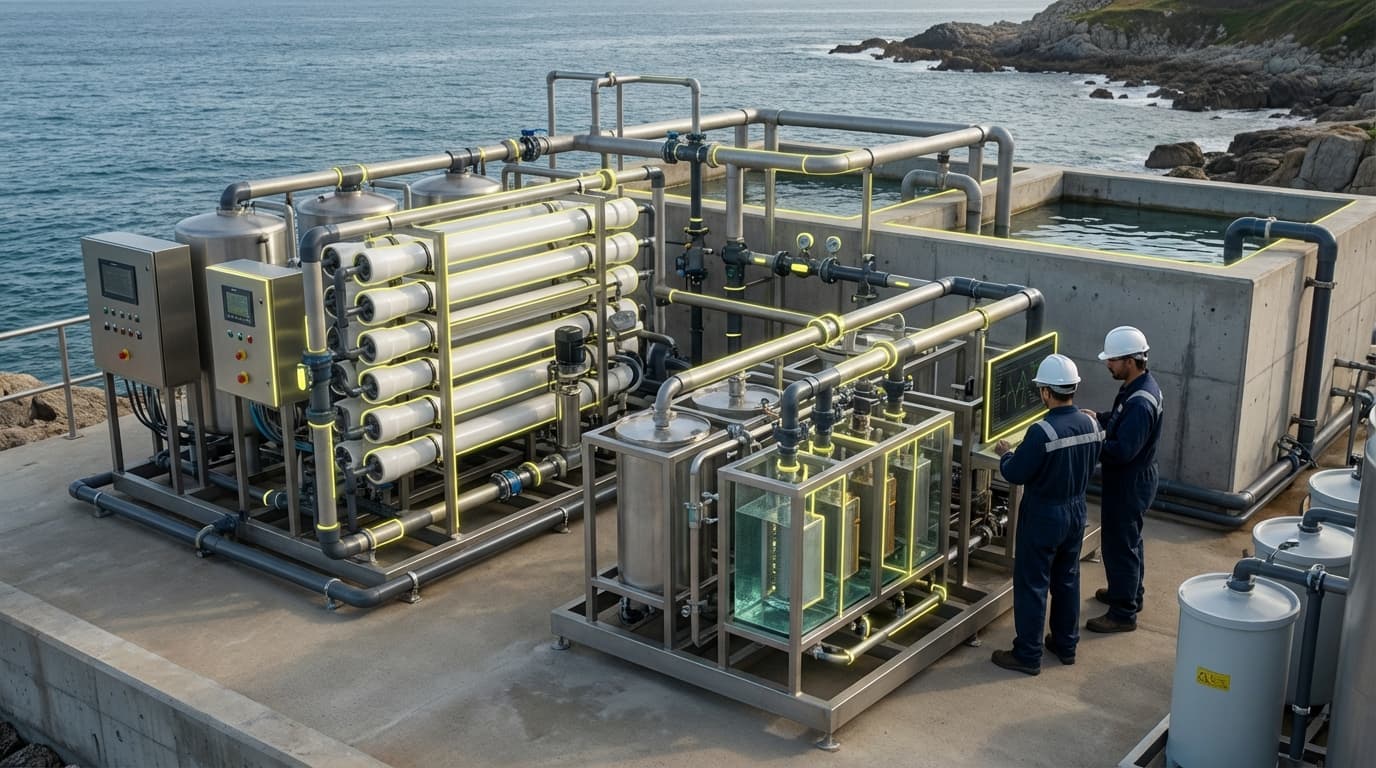
Seawater mineral recovery represents a paradigm shift in resource extraction, leveraging the ocean's vast dissolved mineral content as an alternative to conventional terrestrial mining. The world's oceans contain approximately 35 grams of dissolved salts per liter, including significant quantities of magnesium (1,300 ppm), lithium (0.17 ppm), and uranium (3.3 ppb), among dozens of other elements. While these concentrations are orders of magnitude lower than typical ore deposits, the sheer volume of seawater—roughly 1.4 billion cubic kilometers—creates an effectively inexhaustible resource base. The technical challenge lies in selectively extracting target minerals from this complex chemical matrix. Advanced approaches include ion-selective membranes that exploit differences in ionic size and charge, specialized adsorbent materials engineered with molecular-scale binding sites, and solvent extraction systems that preferentially capture specific elements. Electrochemical methods and biomimetic materials inspired by marine organisms' natural mineral concentration mechanisms are also under development. These technologies must overcome the thermodynamic penalty of separating dilute substances while remaining economically viable against conventional mining operations.
The extractives industry faces mounting pressure from depleting high-grade terrestrial deposits, geopolitical supply chain vulnerabilities, and the environmental footprint of traditional mining. Seawater mineral recovery addresses these challenges by providing access to resources independent of land-based deposits and their associated political complexities. For magnesium, already commercially extracted from seawater since the 1940s, modern processes achieve greater efficiency and lower energy consumption. Lithium extraction from seawater has become particularly compelling as battery demand surges and concerns grow over the water-intensive nature of continental brine operations in regions like South America's lithium triangle. Uranium recovery, while more speculative, could provide nuclear fuel without the radiological risks and waste streams of conventional uranium mining. Integration with existing desalination infrastructure presents a particularly attractive opportunity, as these facilities already process enormous volumes of seawater and concentrate dissolved minerals in their reject brine streams, potentially transforming waste into valuable byproducts.
Research institutions in Japan, China, and the United States have demonstrated pilot-scale systems capable of extracting lithium and uranium from seawater, though commercial viability remains dependent on further cost reductions and efficiency improvements. Desalination plants in the Middle East and elsewhere are beginning to explore mineral recovery as a supplementary revenue stream, with early trials focusing on magnesium and bromine extraction. The technology's trajectory suggests a gradual transition from niche applications to broader adoption as material scarcity intensifies and extraction technologies mature. Industry analysts note that seawater mineral recovery aligns with circular economy principles and could fundamentally reshape global supply chains for critical materials, reducing dependence on geographically concentrated deposits while offering a more distributed, potentially lower-impact extraction model for the coming decades.
Related Organizations

King Abdullah University of Science and Technology has published extensive research on hydrogels and MOFs for atmospheric water harvesting.

Startup developing technology to extract critical minerals from desalination brines and wastewater.

US DOE lab conducting environmental monitoring and materials research relevant to marine energy, including OTEC environmental impacts.
Develops liquid-liquid extraction technology for lithium recovery from brines.

Major chemical company extracting minerals (bromine, magnesium, potash) from the Dead Sea brine.

Japan Atomic Energy Agency (JAEA)
Japan · Government Agency
Japanese agency conducting long-term research on extracting uranium from seawater using polymer adsorbents.

Government research institute developing technologies for lithium extraction from seawater.

Uses nanotechnology to extract lithium from brine water with low energy consumption.

Develops subsea desalination technology and explores mineral recovery from the resulting high-pressure brine.
Supporting Evidence
Research this in Signals
Signals turns a topic into a sourced research record you can inspect and rerun. Your first scan is free, and this one starts with Seawater Mineral Recovery already loaded, so edit it or scan as is.