In-Situ Recovery Injection Systems
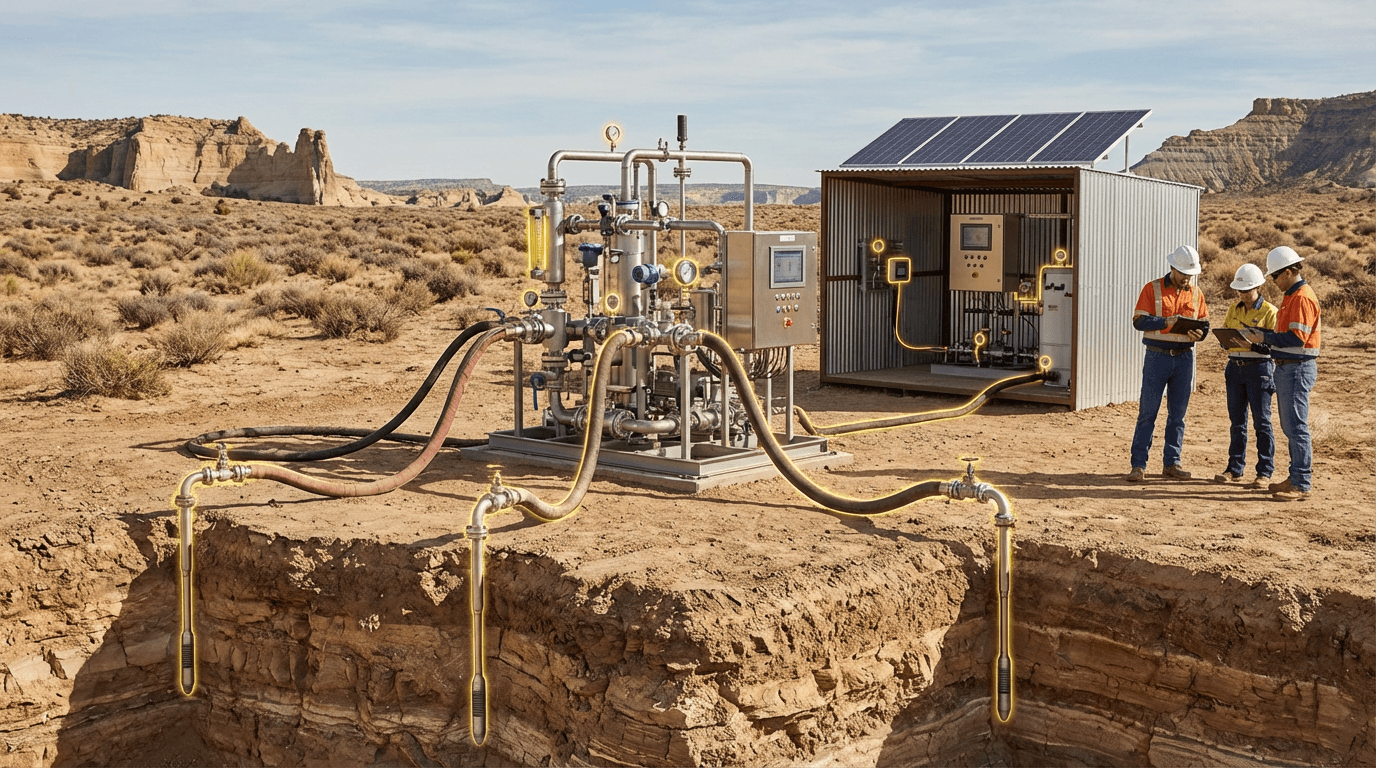
In-situ recovery injection systems represent a fundamental departure from conventional mining methods by extracting valuable minerals without removing ore from the ground. Rather than excavating massive quantities of rock through open-pit or underground mining, ISR technology relies on carefully engineered well fields that inject chemical solutions directly into subsurface ore deposits. The process begins with detailed geological characterization to identify permeable ore bodies suitable for solution mining, followed by the drilling of injection and recovery wells arranged in specific patterns to control fluid flow. Leaching solutions—typically dilute acids, alkaline compounds, or oxidizing agents depending on the target mineral—are pumped through injection wells into the ore zone, where they dissolve the desired metals through chemical reactions. The resulting mineral-rich solution, known as pregnant leach solution, migrates through the ore body and is collected by recovery wells, then pumped to surface processing facilities where the dissolved metals are extracted through precipitation, ion exchange, or solvent extraction techniques. The barren solution can often be reconditioned and recirculated, creating a closed-loop system that minimizes fresh water consumption and chemical usage.
The extractives industry faces mounting pressure to reduce its environmental footprint while meeting growing demand for critical minerals essential to energy transition and advanced manufacturing. Traditional mining operations generate enormous volumes of waste rock and tailings, consume vast quantities of water, and leave behind landscapes scarred by open pits or subsidence. ISR technology addresses these challenges by confining extraction activities to the subsurface, eliminating the need for massive excavations and dramatically reducing the volume of solid waste requiring long-term management. This approach proves particularly valuable in environmentally sensitive regions or areas where conventional mining would be economically or socially unacceptable. The technology also enables extraction from lower-grade deposits that would be uneconomical to mine conventionally, effectively expanding the resource base available to industry. By reducing surface disturbance, ISR operations require smaller land footprints and can often coexist with other land uses, including agriculture and wildlife habitat, making them more compatible with contemporary expectations for responsible resource development.
While ISR has been the dominant method for uranium production in countries like Kazakhstan and the United States for decades, the technology is now expanding into other commodities as operators seek more sustainable extraction pathways. Copper ISR projects are advancing in Arizona and other regions with suitable geology, leveraging decades of operational experience from uranium applications. Research programs are exploring ISR applications for rare earth elements and lithium, minerals critical to electric vehicle batteries and renewable energy systems, though technical challenges around ore body permeability and solution chemistry require continued innovation. The technology's environmental advantages must be balanced against rigorous groundwater protection requirements, as maintaining hydraulic control to prevent solution migration beyond the ore zone remains paramount. Industry analysts note that as regulatory frameworks increasingly favour lower-impact extraction methods and companies face pressure to demonstrate environmental stewardship, ISR is positioned to capture a growing share of global mineral production. The trajectory points toward continued refinement of solution chemistry, improved monitoring technologies for detecting potential excursions, and integration with advanced processing methods that further reduce the environmental intensity of mineral extraction, positioning ISR as a cornerstone technology for sustainable resource development in the coming decades.
Related Organizations


A dynamic and growing mining company focused on operation and development of copper mines.
A US-based uranium mining and exploration company.

Owner and operator of the Beverley and Beverley North Uranium Mines.


A domestic uranium producer focused on In-Situ Recovery.
Uranium mining company with assets in the United States.
Supporting Evidence
Research this in Signals
Signals turns a topic into a sourced research record you can inspect and rerun. Your first scan is free, and this one starts with In-Situ Recovery Injection Systems already loaded, so edit it or scan as is.