Bioleaching and Biomining
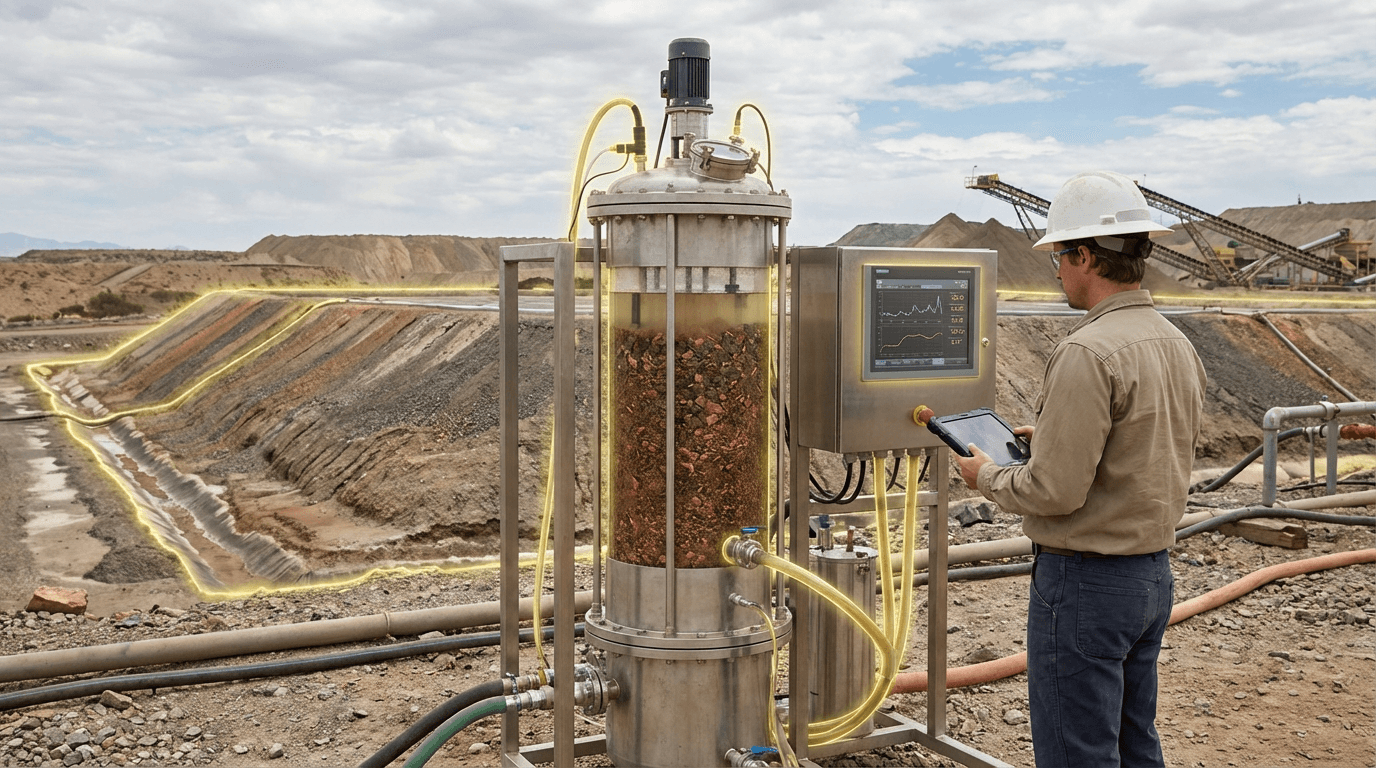
Bioleaching and biomining represent a fundamental shift in how the extractive industry approaches metal recovery, replacing energy-intensive pyrometallurgical processes with biological catalysts. These technologies harness naturally occurring microorganisms—primarily chemolithotrophic bacteria such as Acidithiobacillus ferrooxidans and Acidithiobacillus thiooxidans, along with certain archaea and fungi—to oxidize sulfide minerals and solubilize metals bound within ore matrices. The microorganisms derive energy from the oxidation of iron and sulfur compounds, producing acidic conditions and ferric ions that attack the mineral structure, releasing valuable metals like copper, gold, nickel, cobalt, zinc, and increasingly, rare earth elements into solution where they can be recovered through conventional hydrometallurgical techniques. This biological approach operates at ambient temperatures and pressures, requiring minimal external energy input compared to smelting operations that demand temperatures exceeding 1,000 degrees Celsius.
The mining industry faces mounting pressure to process lower-grade ores as high-grade deposits become depleted, while simultaneously managing vast quantities of tailings and waste rock from historical operations. Traditional extraction methods become economically unviable when ore grades fall below certain thresholds, leaving billions of tons of potentially valuable material untapped. Bioleaching addresses this challenge by enabling profitable extraction from ores containing less than 0.5% copper or trace amounts of precious metals—concentrations that would never justify conventional processing. The technology also offers a pathway to remediate legacy mining sites, transforming environmental liabilities into revenue streams by recovering metals from acid mine drainage and tailings dumps. Furthermore, biomining significantly reduces the chemical footprint of extraction operations, eliminating or minimizing the need for cyanide in gold processing and reducing sulfur dioxide emissions that plague traditional smelting facilities.
Commercial bioleaching operations have been processing copper and gold ores for decades, with major installations in Chile, Peru, Australia, and South Africa demonstrating the technology's industrial viability. Heap leaching configurations, where ore is stacked in large outdoor piles and irrigated with microbial solutions, represent the most widespread application, particularly for copper oxide and secondary sulfide ores. More controlled stirred-tank bioreactors enable faster reaction rates and better process control for higher-value concentrates, while in-situ bioleaching—where microorganisms are introduced directly into underground ore bodies—is gaining attention for its potential to eliminate the need for conventional mining altogether. Research efforts are increasingly focused on expanding biomining to critical materials essential for energy transition technologies, including cobalt for batteries and rare earth elements for permanent magnets. As the industry confronts the dual imperatives of accessing lower-grade resources and reducing environmental impact, bioleaching and biomining are positioned to become standard practice rather than niche applications, fundamentally reshaping the economics and sustainability profile of metal extraction in the coming decades.
Related Organizations

Specializes in bioleaching technology to treat arsenic-laden mine tailings.

Metso
Finland · Company
Major mining OEM offering bulk ore sorting solutions as part of their 'Planet Positive' portfolio.

Synthetic biology company engineering microbes and algae to convert CO2 into feedstock for sustainable aviation fuel and other industrial chemicals.


Major copper producer focusing on leach technologies.

Global resources company with a dedicated closure and legacy asset management function.

Centre for Bioprocess Engineering Research.

A Ginkgo Bioworks spin-off dedicated to using engineered biology to degrade 'forever chemicals' (PFAS) and other pollutants.
Supporting Evidence
Research this in Signals
Signals turns a topic into a sourced research record you can inspect and rerun. Your first scan is free, and this one starts with Bioleaching and Biomining already loaded, so edit it or scan as is.