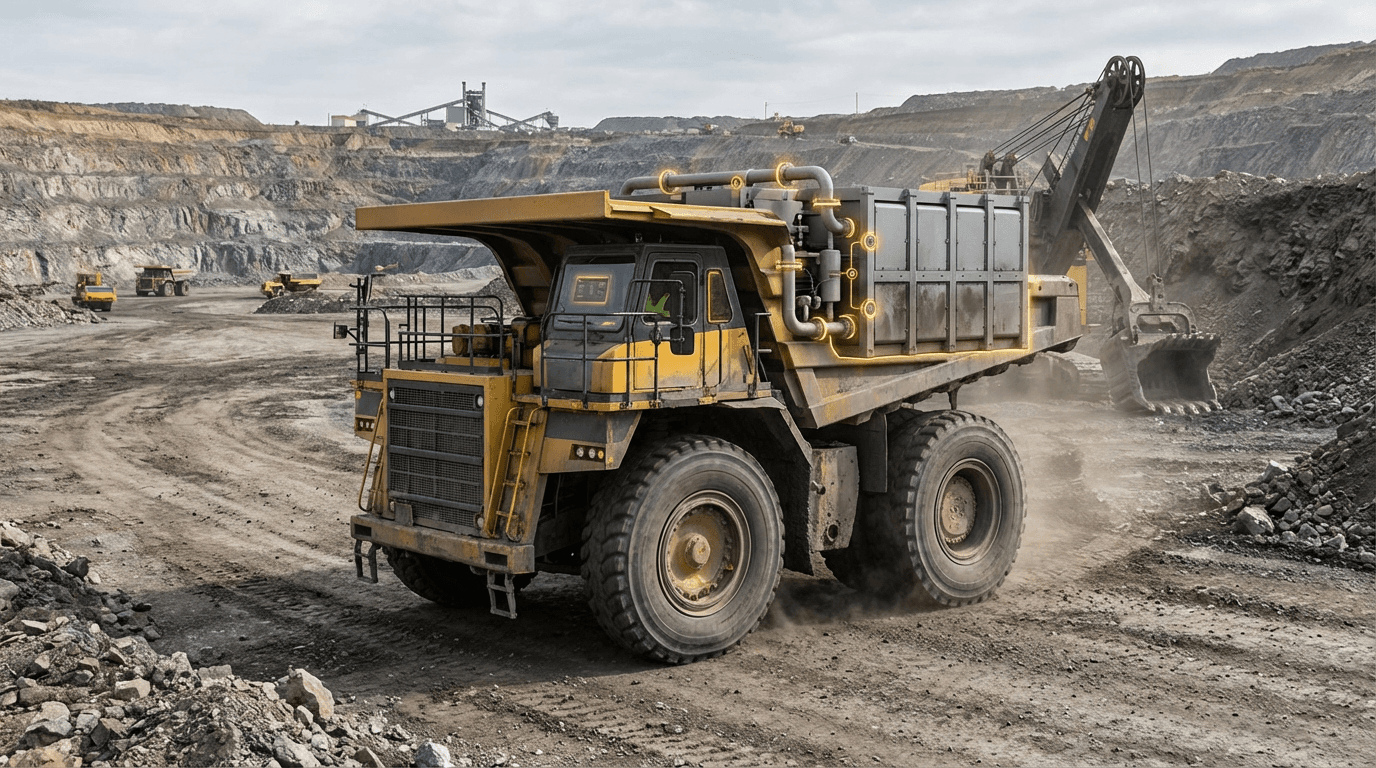
Hydrogen-Powered Mining Fleets
The mining industry faces mounting pressure to reduce its substantial carbon footprint, with diesel-powered heavy machinery representing one of the sector's most significant sources of greenhouse gas emissions. Traditional haul trucks, excavators, and other mining equipment consume enormous quantities of diesel fuel, not only contributing to climate change but also creating hazardous air quality conditions for workers in confined mining environments. Hydrogen-powered mining fleets address this challenge by replacing conventional diesel engines with hydrogen fuel cell electric powertrains that convert hydrogen gas into electricity through an electrochemical process, producing only water vapor as a byproduct. These systems combine hydrogen storage tanks, fuel cell stacks that generate electricity on demand, and electric motors that deliver the high torque and power required for heavy-duty mining operations. The technology is particularly well-suited to mining applications because it can match the performance characteristics of diesel engines while eliminating direct emissions at the point of use.
The transition to hydrogen-powered fleets solves multiple operational challenges beyond emissions reduction. Mining operations often occur in remote locations where air quality regulations are becoming increasingly stringent, and underground mines face particular difficulties with diesel exhaust ventilation, which requires extensive infrastructure and energy consumption. Hydrogen fuel cells eliminate these ventilation costs while improving worker health and safety by removing exposure to diesel particulates and toxic gases. Furthermore, when powered by green hydrogen produced through renewable energy electrolysis, these systems enable mining companies to meet corporate sustainability commitments and respond to growing pressure from investors and customers demanding lower-carbon supply chains. The technology also offers operational advantages including quieter operation, reduced maintenance requirements compared to diesel engines, and the potential for faster refueling times than battery-electric alternatives, which is critical for maintaining productivity in continuous mining operations.
Early deployments indicate growing industry interest in this technology, with several major mining operations initiating pilot programs to test hydrogen-powered haul trucks and other equipment in real-world conditions. These trials are evaluating performance across various mining environments, from open-pit operations to underground facilities, while addressing practical challenges such as hydrogen production, storage, and refueling infrastructure at remote mine sites. The technology aligns with broader industry trends toward electrification and decarbonization, particularly as renewable energy costs decline and hydrogen production technologies mature. Research suggests that as green hydrogen production scales and costs decrease, hydrogen-powered mining fleets could become economically competitive with diesel alternatives while delivering substantial emissions reductions. The development of this technology represents a critical pathway for the extractives sector to achieve net-zero targets, particularly for applications where the energy density and rapid refueling capabilities of hydrogen offer advantages over battery-electric solutions in demanding, high-utilization mining environments.
Related Organizations

Engineering company that developed the nuGen hydrogen fuel cell powertrain for Anglo American's ultra-class haul trucks.

Global mining company with a focus on sustainable mining plans.

Global metals and green energy company developing massive green hydrogen and ammonia projects worldwide through its energy division.

A major equipment manufacturer that has developed its own autonomous haulage solution, recently partnering with Fortescue to develop zero-emission autonomous trucks.

A developer and manufacturer of proton exchange membrane fuel cell products.

Industrial giant using thermoelectric generators via its subsidiary KELK to harvest waste heat in steel and manufacturing plants.

Cummins
United States · Company
Through its Accelera brand, develops fuel cells and hydrogen internal combustion engines for heavy industry.

Provides hydrogen-diesel co-combustion retrofit kits for heavy-duty trucks, applicable to mining logistics.

Multinational utility company heavily investing in decentralized energy and district cooling/heating networks.

Automotive giant using generative design for vehicle lightweighting.
Supporting Evidence
Research this in Signals
Signals turns a topic into a sourced research record you can inspect and rerun. Your first scan is free, and this one starts with Hydrogen-Powered Mining Fleets already loaded, so edit it or scan as is.