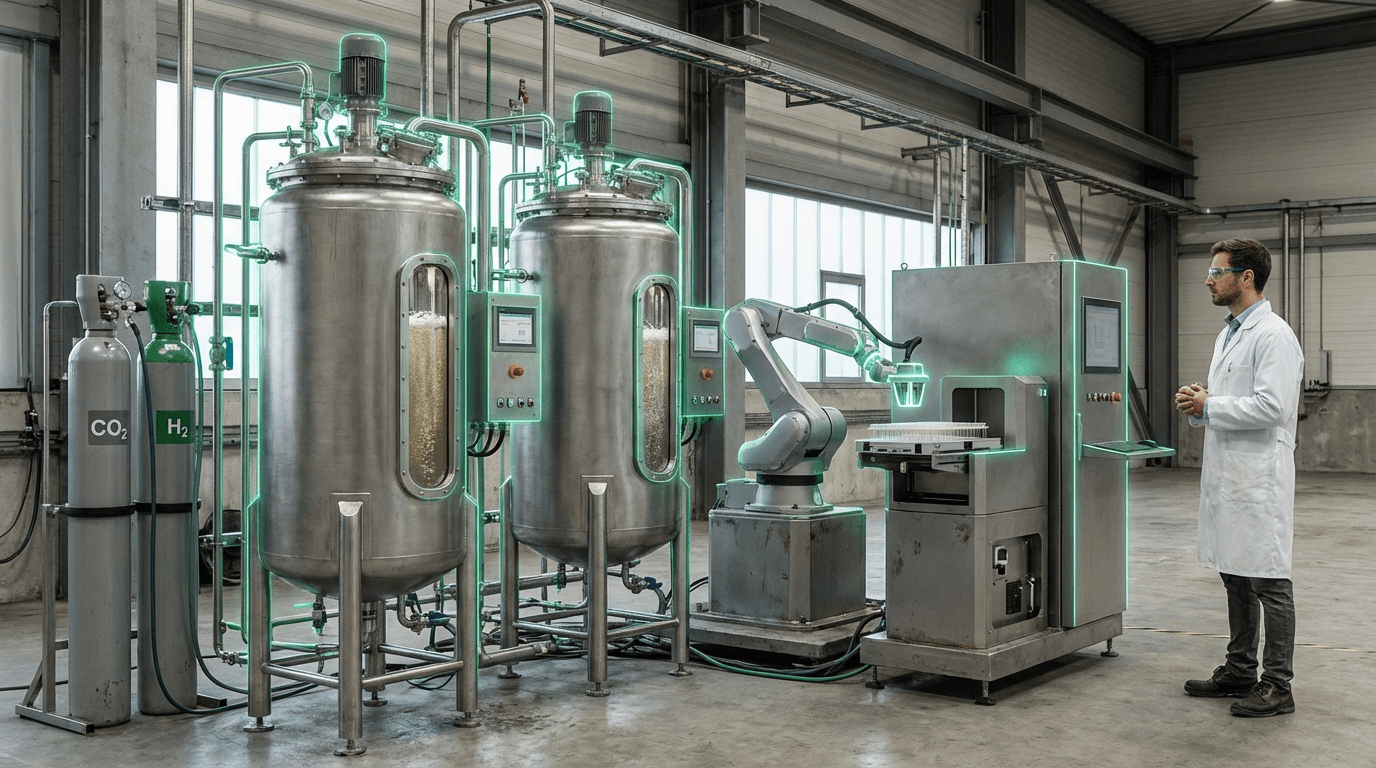
Air-Based Protein Synthesis
Air-based protein synthesis represents a fundamental departure from photosynthesis-dependent agriculture, leveraging industrial gas fermentation to produce edible protein from atmospheric carbon dioxide, renewable electricity, and specialized microorganisms. The process begins with electrolysis, where renewable energy splits water molecules into hydrogen and oxygen. This hydrogen, combined with captured or concentrated CO₂, is fed into closed bioreactors containing hydrogenotrophic bacteria—microbes that metabolize these gases as their sole energy and carbon sources. Through carefully controlled fermentation conditions, these organisms synthesize cellular protein rich in essential amino acids, which is then harvested, dried, and processed into a neutral-tasting flour. This flour can be formulated into protein isolates, blended into plant-based meat alternatives, incorporated into baked goods, or used as high-efficiency animal feed, effectively transforming industrial gases into nutritionally complete food ingredients without requiring farmland, irrigation, or seasonal growing cycles.
The agricultural sector faces mounting pressure from climate volatility, soil degradation, water scarcity, and the inefficiency of converting plant calories into animal protein through livestock. Air-based protein synthesis addresses these challenges by decoupling food production from biological constraints and geographic limitations. Unlike conventional agriculture, which requires specific climates, soil quality, and months of growth cycles, gas fermentation can operate continuously in compact industrial facilities located anywhere with access to electricity and CO₂ sources. This technology offers particular value in regions with limited arable land, extreme climates, or food security vulnerabilities, as production remains unaffected by droughts, floods, or seasonal variations. The process also presents opportunities for circular economy integration, as bioreactors can be co-located with industrial facilities that emit concentrated CO₂ streams—such as bioethanol plants, steel mills, or direct air capture installations—transforming waste gases into valuable protein while reducing net carbon emissions. For the livestock feed industry, microbial protein offers a sustainable alternative to fishmeal and soy imports, potentially reducing pressure on marine ecosystems and deforestation-linked supply chains.
Early-stage companies in this sector have progressed from laboratory demonstrations to pilot-scale production facilities, with regulatory submissions underway in multiple jurisdictions. Research suggests that production costs could become competitive with conventional protein sources as electrolyzer technology matures and renewable electricity prices continue declining. Initial commercial applications are likely to focus on premium markets, space food systems, and specialized nutrition products before expanding into commodity protein markets. Industry analysts note that consumer acceptance will depend heavily on transparent communication about production methods, rigorous safety validation, and successful integration into familiar food formats rather than positioning microbial protein as a standalone ingredient. The technology's trajectory will be shaped by evolving carbon pricing mechanisms that could make carbon-negative protein economically advantageous, advances in synthetic biology that may enhance microbial productivity and nutritional profiles, and partnerships between biotechnology innovators and established food manufacturers who can provide distribution infrastructure and consumer trust. As climate pressures intensify and the limitations of land-based agriculture become more apparent, gas fermentation platforms represent a potential pathway toward resilient, scalable protein production that operates within planetary boundaries while meeting growing global nutritional demands.
Related Organizations

Consumer-facing company creating meat alternatives from air-based protein.

Produces Solein®, a protein made from air and electricity using gas fermentation (a subset of precision fermentation).

Transforms CO2 emissions into protein ingredients for aquaculture and human nutrition.

Produces FeedKind protein using methane-eating bacteria (methanotrophs).

Conducts extensive research on living materials, including fungal mycelium for sensing and responsive surfaces.

Ferments functional proteins using renewable liquid feedstocks derived from renewable energy.

Recycles carbon from industrial off-gases into sustainable fuels and chemicals using biological catalysts.
Supporting Evidence
Research this in Signals
Signals turns a topic into a sourced research record you can inspect and rerun. Your first scan is free, and this one starts with Air-Based Protein Synthesis already loaded, so edit it or scan as is.