





Indoor Plant Factories
This page is broader than it.
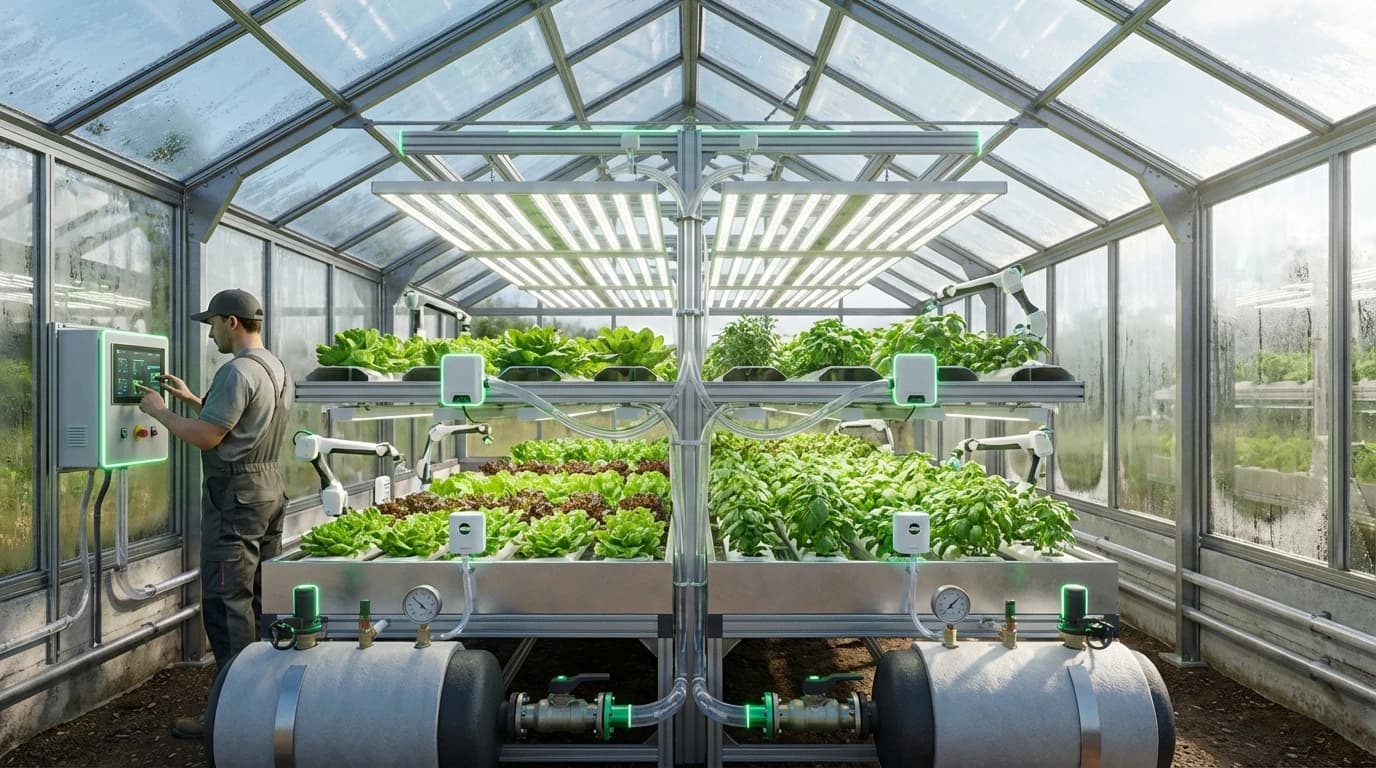
Controlled Environment Agriculture represents a fundamental shift in how crops are cultivated, moving production from open fields into precisely managed indoor or semi-enclosed facilities. These systems employ sophisticated sensor networks, automated climate controls, and data-driven algorithms to regulate every aspect of the growing environment—temperature, humidity, light spectrum, CO₂ concentration, and nutrient delivery. Modern CEA facilities typically utilize glass or polycarbonate structures equipped with automated ventilation systems, LED grow lights that can be tuned to specific wavelengths, and computerized fertigation systems that deliver water and nutrients directly to plant roots. Advanced implementations incorporate machine learning algorithms that continuously optimize growing conditions based on real-time plant health indicators, weather forecasts, and energy costs. By decoupling agricultural production from seasonal cycles and outdoor weather patterns, these systems enable growers to maintain ideal conditions year-round, dramatically accelerating growth rates and extending the viable growing season for crops that would otherwise be limited to specific regions or times of year.
The agricultural industry faces mounting pressure from climate volatility, water scarcity, and the need to feed growing urban populations while reducing the environmental footprint of food production. Traditional field agriculture is increasingly vulnerable to extreme weather events, pest pressures, and unpredictable growing conditions that can devastate entire harvests. Controlled Environment Agriculture addresses these challenges by creating a protective barrier between crops and external environmental stresses, reducing water consumption by up to 90% through recirculating hydroponic or aeroponic systems that capture and reuse irrigation water. The technology also enables significant reductions in pesticide use, as enclosed environments limit pest infiltration and allow for integrated pest management strategies. Perhaps most importantly, CEA facilities can be located in proximity to urban consumption centers, dramatically reducing the distance food travels from farm to table and minimizing post-harvest losses that plague long-distance supply chains. This proximity also enables growers to harvest crops at peak ripeness rather than picking them early for transport, resulting in superior flavor and nutritional content.
Commercial adoption of Controlled Environment Agriculture has accelerated rapidly over the past decade, with large-scale facilities now producing leafy greens, tomatoes, cucumbers, strawberries, and herbs in regions ranging from desert climates to Arctic communities. The Netherlands has emerged as a global leader in high-tech greenhouse production, with operations achieving yields per square meter that far exceed traditional farming while using minimal pesticides. In North America and Asia, vertical farming companies have deployed CEA systems in repurposed warehouses and purpose-built facilities, supplying fresh produce to grocery chains and restaurants within hours of harvest. Research institutions continue to expand the range of crops suitable for controlled environments, with recent trials demonstrating success with root vegetables, medicinal plants, and even certain grain crops. As energy costs decline through renewable integration and LED efficiency improvements continue, the economic viability of CEA strengthens, positioning it as a critical component of resilient regional food systems. The convergence of artificial intelligence, renewable energy, and biological understanding suggests that controlled environment agriculture will play an increasingly central role in feeding urban populations while reducing agriculture's environmental impact and vulnerability to climate disruption.
A vertical farming technology company that uses vertical planes to grow leafy greens with high resource efficiency.
Develops hardware and software for building automation and climate control.
A top-tier university for agricultural research, specifically in greenhouse and vertical farming innovation.
An indoor farming company that operates fully automated vertical farms.
Operates a network of high-tech hydroponic greenhouses located on rooftops in urban centers across America.
An industrial computer vision company connecting plants, people, and facilities through an AI platform called LUNA.
The largest automated greenhouse lettuce producer in New England.
A greenhouse builder known for the Ultra-Clima greenhouse, a semi-closed greenhouse concept.
Offers a smart LED lighting solution that dynamically recreates the full spectrum of the sun's natural light.
Published forecasts about this technology, graded against what happened in Hindsight.
Indoor Plant Factories
This page is broader than it.
Signals turns a topic into a sourced research record you can inspect and rerun. Your first scan is free, and this one starts with Controlled Environment Agriculture already loaded, so edit it or scan as is.