








Indoor Plant Factories
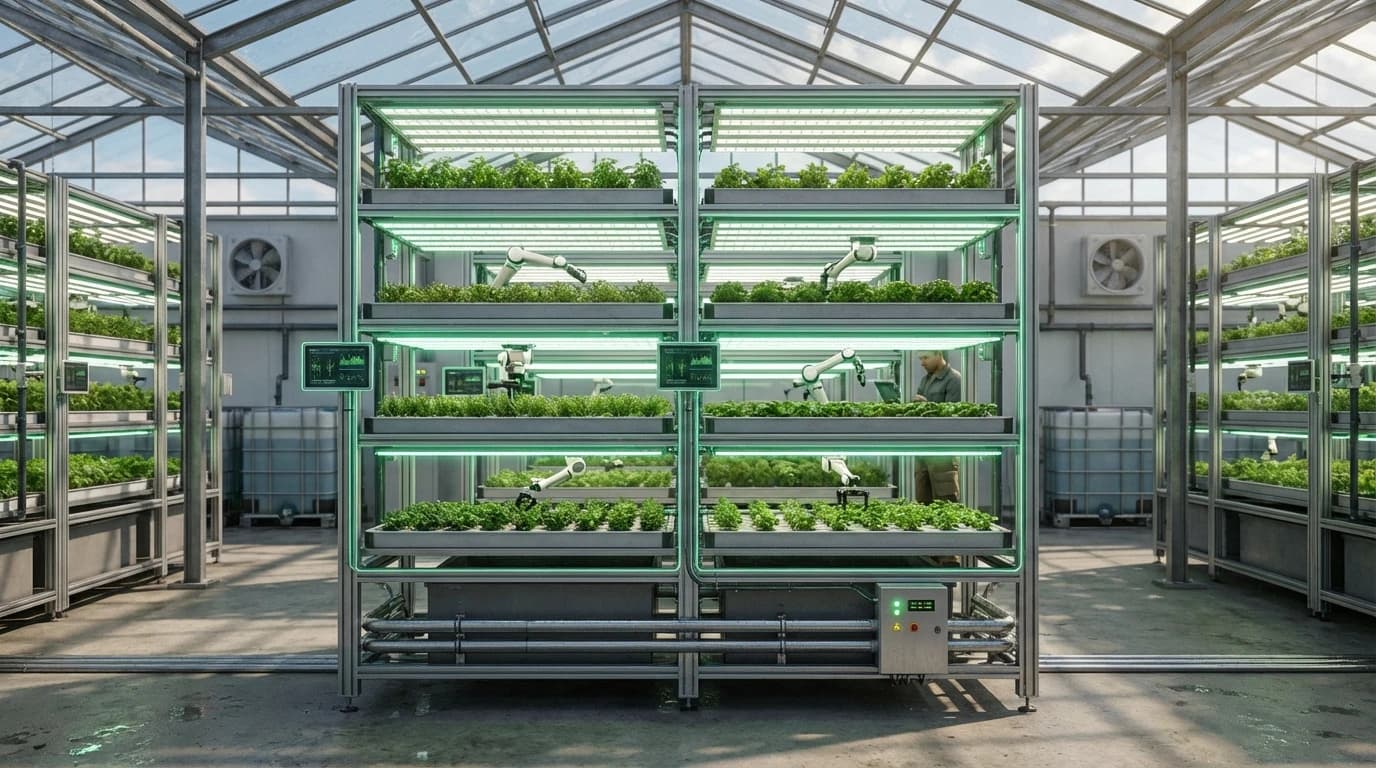
Next-Gen Indoor Farming Rigs
Modular vertical farms with tuned LED spectra and automated climate control for soil-free crop production
Next-generation indoor farming rigs combine multi-channel LED stacks tuned to plant photobiology—including far-red supplementation, pulsed lighting, and dynamic spectra shifts—with high-density aeroponic or hydroponic trays inside sealed vertical farm modules. Embedded micro-controllers orchestrate CO₂ enrichment, humidity, nutrient dosing, and airflow while pairing with digital twins to keep each growth layer within tight set points, maximizing grams per kilowatt-hour and liters of water.
By decoupling production from arable land, these rigs allow retail grocers, CPG brands, and defense organizations to grow leafy greens, berries, and medicinal plants year-round near demand centers. Operators such as Plenty, Infarm, and Bowery report >200x yield per square foot versus field agriculture and can pivot SKUs quickly by reprogramming recipes rather than rebuilding greenhouses.
Future systems will integrate AI vision for automated quality grading, waste-heat recovery into district energy loops, and co-location with renewable microgrids to eliminate Scope 2 emissions. Remaining hurdles include capex intensity, seed genetics optimized for stacked canopies, and the need for skilled technicians to manage complex climate controls. Standardization plus service-based business models are expected to accelerate adoption beyond premium markets.
TRL
8/9Deployed
Impact
4/5
Investment
4/5
Category
Hardware
Related Organizations
A technology company providing vertical farming infrastructure (Growth Towers) to other growers.
Developer
Offers a smart LED lighting solution that dynamically recreates the full spectrum of the sun's natural light.
Developer
Global market leader in energy storage products and services, and digital applications for renewables and storage.
Developer
A Swedish company specializing in intelligent lighting technology for greenhouse and controlled plant growth environments.
Developer
A technology provider developing aeroponic irrigation systems for indoor farming.
Developer
A diverse technology company providing vertical farming hardware, including the RADIX module system and specialized lighting.
Developer
Manufactures the 'Greenery', a self-contained hydroponic farm inside a shipping container, enabling farming anywhere in a city.
Developer
An indoor farming company that operates fully automated vertical farms.
Deployer
A vertical farming technology company that uses vertical planes to grow leafy greens with high resource efficiency.
Deployer
What was expected
Published forecasts about this technology, graded against what happened in Hindsight.
Indoor and Outdoor Plant Factories and Microfarms
This page is a narrower case of it.
Indoor Farms
This page is a narrower case of it.
Supporting Evidence
Evidence data is not available for this technology yet.
Research this in Signals
Scan Next-Gen Indoor Farming Rigs for yourself.
Signals turns a topic into a sourced research record you can inspect and rerun. Your first scan is free, and this one starts with Next-Gen Indoor Farming Rigs already loaded, so edit it or scan as is.