Haptic Epidermal Interfaces
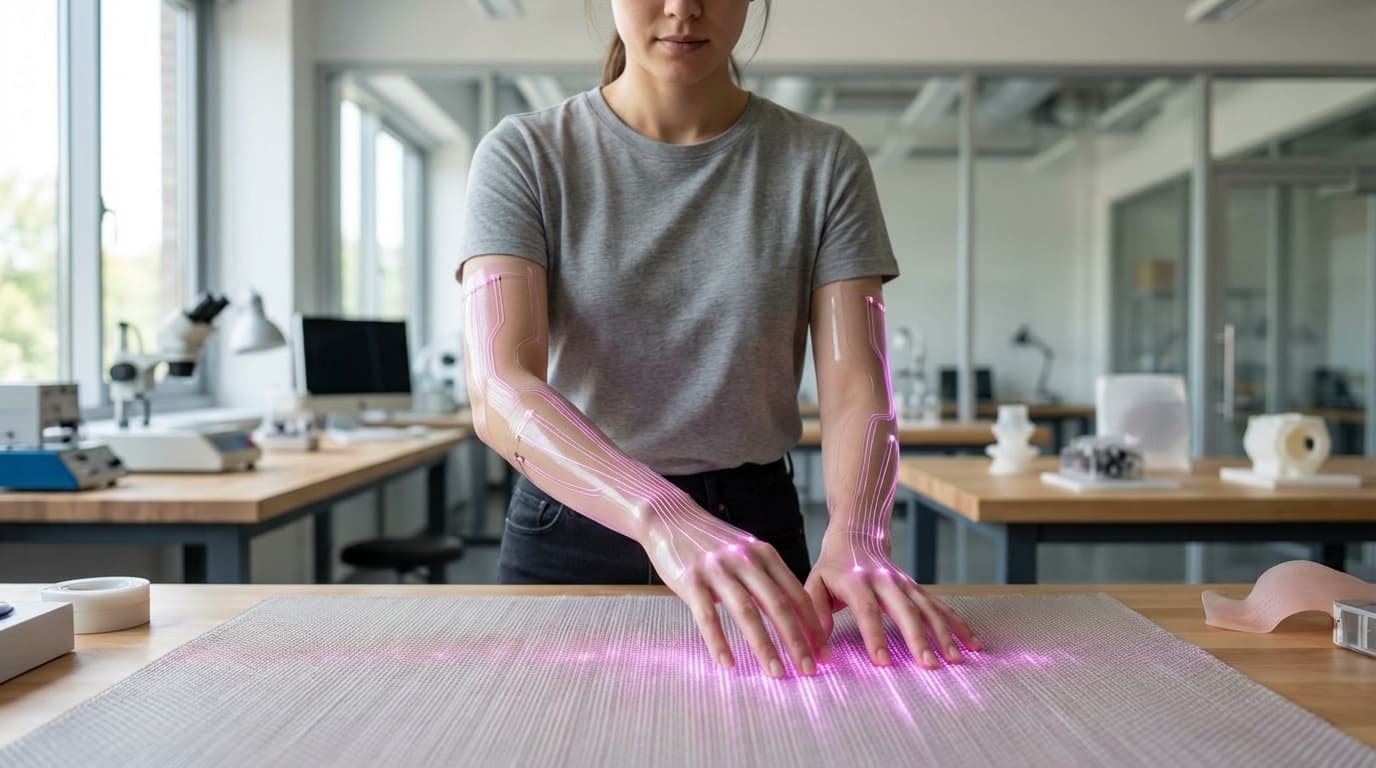
Haptic epidermal interfaces represent a breakthrough in wearable technology, consisting of ultra-thin, flexible electronic systems that adhere directly to human skin like a temporary tattoo. These devices integrate miniaturised sensors and actuators into substrates as thin as a few micrometres, using materials such as elastomeric polymers, conductive nanomaterials, and stretchable circuits that can bend, flex, and move naturally with the skin. The technology works by translating digital signals into mechanical vibrations, pressure variations, or thermal changes that stimulate the skin's mechanoreceptors and thermoreceptors, creating the sensation of touch. Unlike traditional haptic devices that rely on bulky motors or rigid components, these skin-like interfaces distribute tactile feedback across larger surface areas with spatial precision, enabling users to feel textures, shapes, and even the subtle nuances of human touch through digital means.
The development of haptic epidermal interfaces addresses a fundamental limitation in human-computer interaction: the absence of realistic touch feedback in digital experiences. As virtual and augmented reality applications expand across industries—from remote medical procedures to virtual collaboration spaces—the lack of tactile information creates a significant barrier to immersion and effectiveness. These interfaces solve this problem by providing high-fidelity touch sensations that can convey everything from the gentle pressure of a handshake to the texture of a virtual object's surface. This capability is particularly transformative for telepresence applications, where users need to feel physically connected despite geographic separation. The technology also enables new possibilities in accessibility, allowing individuals with visual impairments to receive spatial and textural information through touch, and in healthcare, where remote physical examinations could become more diagnostically valuable.
Research institutions and technology companies have demonstrated working prototypes of haptic epidermal interfaces in laboratory settings, with early applications emerging in virtual reality gaming, remote communication platforms, and prosthetics research. These systems show promise in enhancing social connection in digital spaces, where users could feel the presence of others through subtle touch cues during video calls or collaborative virtual environments. The technology aligns with broader trends toward more natural, embodied forms of human-computer interaction that go beyond visual and auditory channels. As materials science advances and manufacturing processes become more refined, haptic epidermal interfaces are expected to transition from research demonstrations to consumer applications, potentially transforming how we experience digital content and maintain physical connection in an increasingly virtual world. The convergence of this technology with advances in wireless power transfer and biocompatible materials suggests a future where seamless, skin-integrated haptic feedback becomes a standard feature of our digital interactions.
Related Organizations

Research group led by Zhenan Bao focusing on stretchable electronics and electronic skin.

Led by John Rogers, this lab pioneered 'epidermal VR'—wireless, battery-free haptic skin patches.

Research group led by Takao Someya, famous for 'electronic skin'.

Research group specializing in skin-integrated electronics and wireless haptic interfaces, often publishing breakthroughs in thin, flexible VR skins.

Swiss research lab developing soft pneumatic actuators and sensors that can be integrated into thin, wearable skins for haptic feedback.
Rotex
United States · Startup
A company developing electronic tattoo sensors for health monitoring.

Open innovation center by imec and TNO specializing in flexible electronics.

Conducts extensive academic research on sCO2 cycle optimization and component design.

Produces uSkin, a high-density tactile sensor skin for robots that is soft, durable, and capable of 3-axis force sensing.

Empa
Switzerland · Research Lab
Swiss Federal Laboratories for Materials Science and Technology, researching self-healing elastomers.
Supporting Evidence
Research this in Signals
Signals turns a topic into a sourced research record you can inspect and rerun. Your first scan is free, and this one starts with Haptic Epidermal Interfaces already loaded, so edit it or scan as is.