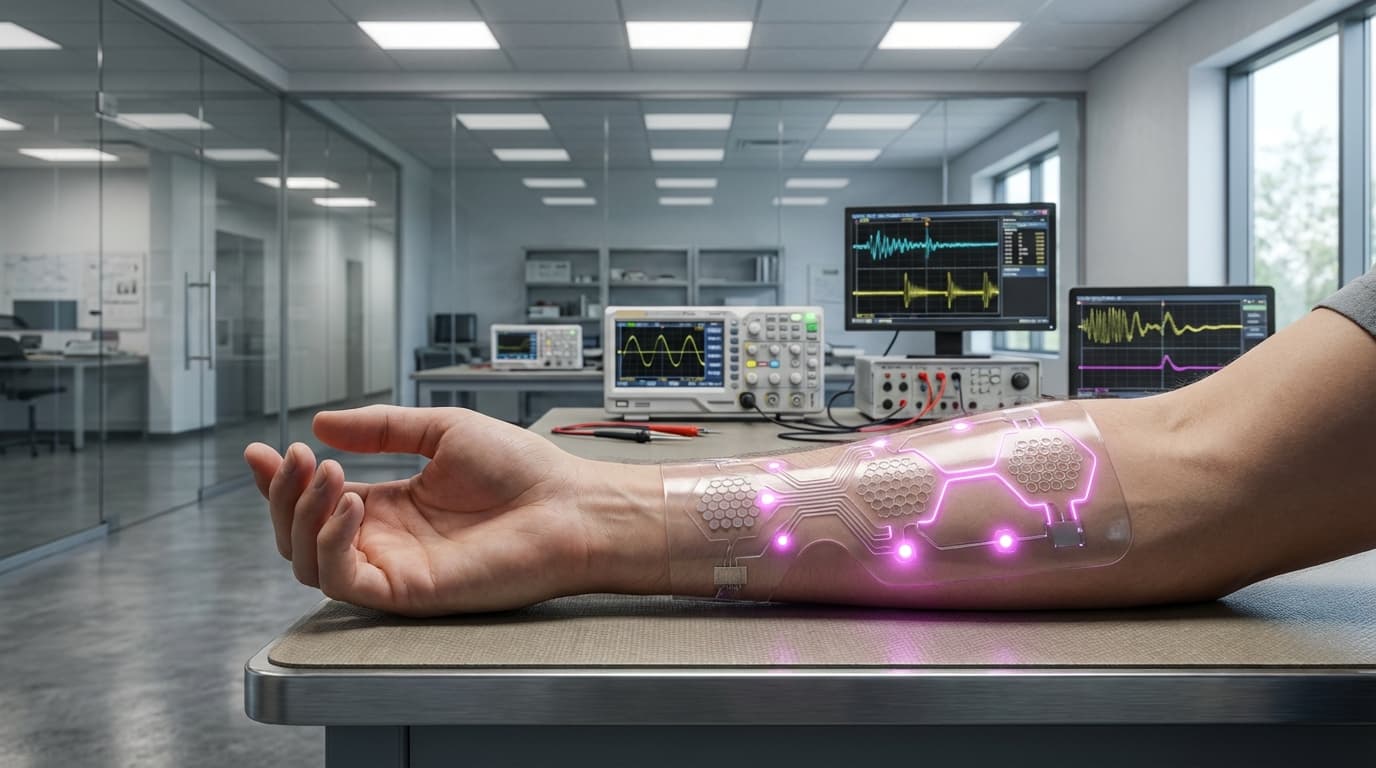
Epidermal Haptic Skins
Epidermal haptic skins represent a breakthrough in human-computer interaction by creating ultra-thin, conformable interfaces that bond directly to the skin's surface. These devices typically measure less than 50 micrometers in thickness—thinner than a human hair—and utilize elastomeric substrates embedded with arrays of micro-actuators, thermal elements, and flexible electronics. The core innovation lies in their mechanical properties: they match the skin's natural elasticity and can stretch, bend, and twist without compromising functionality. Advanced fabrication techniques allow these systems to incorporate piezoelectric actuators for vibrotactile feedback, resistive heating elements for thermal sensations, and even electroactive polymers that can simulate pressure and texture. Unlike traditional haptic devices that rely on bulky motors or rigid components, epidermal skins achieve sensory feedback through distributed networks of miniaturized elements that operate independently or in coordinated patterns, creating spatially precise tactile experiences across the skin's surface.
The technology addresses fundamental limitations in current sensory interfaces, particularly the disconnect between digital experiences and physical sensation. Traditional haptic feedback systems—whether in gaming controllers, smartphones, or virtual reality gloves—create a barrier between the user and the experience through rigid form factors and limited contact areas. Epidermal skins eliminate this separation by becoming a second skin that moves naturally with the body. This enables applications in immersive entertainment where users can feel virtual textures, temperatures, and impacts with unprecedented realism. In therapeutic contexts, these devices show promise for sensory substitution in individuals with impaired sensation, providing alternative pathways for environmental awareness. Research also suggests potential in remote communication, where touch sensations could be transmitted between users, and in medical training, where students could experience realistic tactile feedback during virtual surgical simulations without the constraints of gloves or handheld devices.
Early prototypes have demonstrated the viability of these systems in controlled laboratory settings, with several research institutions exploring different actuation mechanisms and skin-safe adhesives. Current deployments remain primarily experimental, though the technology is advancing toward commercial applications in gaming, virtual reality, and specialized medical contexts. The development trajectory suggests integration with broader trends in wearable computing and sensory augmentation, where the goal is seamless human-machine interfaces that enhance rather than interrupt natural movement and sensation. As manufacturing techniques improve and costs decrease, epidermal haptic skins may transition from research curiosities to practical tools for sensory modulation, offering new dimensions of interaction in both digital and physical environments. The convergence of flexible electronics, biocompatible materials, and miniaturized actuation systems positions this technology as a key enabler of truly immersive sensory experiences that respond to and complement the body's natural capabilities.
Related Organizations

A premier materials science lab at Northwestern University led by John Rogers, pioneering epidermal electronics and soft microfluidics.

Led by Zhenan Bao at Stanford, this group focuses on intrinsically stretchable polymer electronics and electronic skin that mimics human touch.

Develops the Quest Pro and research prototypes (Butterscotch, Starburst) focusing on foveated systems.

Research group specializing in skin-integrated electronics and wireless haptic interfaces, often publishing breakthroughs in thin, flexible VR skins.

Swiss research lab developing soft pneumatic actuators and sensors that can be integrated into thin, wearable skins for haptic feedback.

A research lab at Carnegie Mellon University that explores on-skin interfaces, including chemical haptics and electrical muscle stimulation skins.

Produces uSkin, a high-density tactile sensor skin for robots that is soft, durable, and capable of 3-axis force sensing.

A major supplier of system-critical elastomer components, developing soft dry electrodes and conductive materials for smart wearables and e-skin.
Supporting Evidence
Research this in Signals
Signals turns a topic into a sourced research record you can inspect and rerun. Your first scan is free, and this one starts with Epidermal Haptic Skins already loaded, so edit it or scan as is.