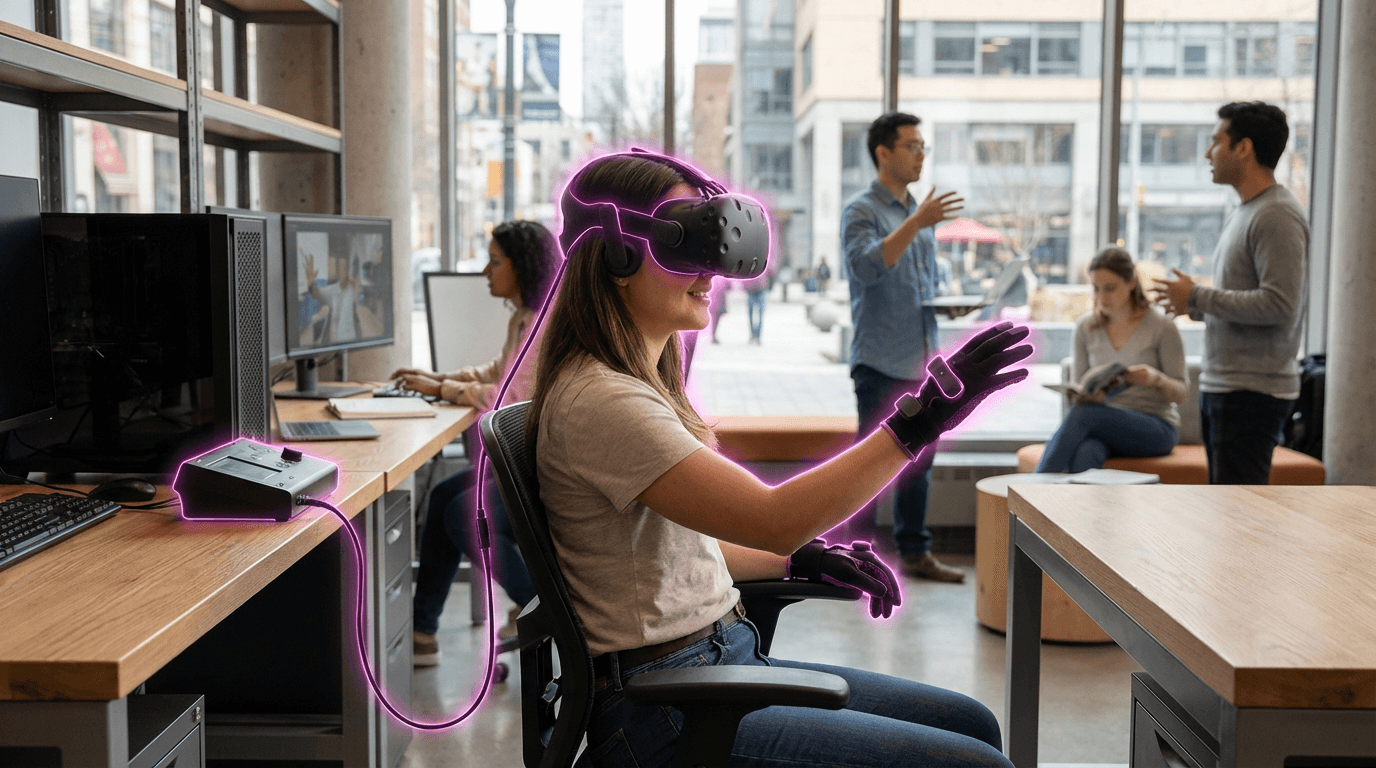
Cross-Cultural Empathy Sims
Cross-cultural empathy simulations represent an innovative application of immersive technologies that address a fundamental challenge in human interaction: the difficulty of truly understanding experiences outside one's own cultural, social, or identity context. These systems leverage virtual reality (VR) and augmented reality (AR) platforms to create experiential learning environments where users can temporarily inhabit perspectives vastly different from their own. The technology combines photorealistic rendering, spatial audio, haptic feedback, and carefully designed narrative scenarios to simulate the lived experiences of individuals from different genders, races, socioeconomic backgrounds, or cultural contexts. Unlike traditional diversity training methods that rely on passive observation or intellectual understanding, these simulations engage users in first-person scenarios that trigger emotional and cognitive responses associated with direct experience. The technical architecture typically includes motion tracking to map user movements onto virtual avatars, biometric sensors to monitor physiological responses, and adaptive narrative systems that respond to user choices and reactions.
The development of cross-cultural empathy simulations addresses critical limitations in conventional approaches to diversity education, cultural competency training, and conflict resolution. Traditional methods often struggle to bridge the gap between intellectual awareness and genuine emotional understanding, resulting in surface-level comprehension that fails to translate into meaningful behavioral change. Research in social psychology suggests that perspective-taking exercises can reduce implicit bias and increase prosocial behavior, but real-world opportunities for such experiences are limited by practical, ethical, and safety constraints. These simulations overcome these barriers by creating controlled, repeatable environments where users can safely explore challenging scenarios—such as experiencing discrimination, navigating cultural misunderstandings, or confronting systemic barriers—without causing harm to real individuals or communities. Organizations across healthcare, law enforcement, education, and corporate sectors have begun exploring these tools as mechanisms for building more inclusive cultures and improving cross-cultural communication skills.
Early deployments of cross-cultural empathy simulations have emerged in medical education programs, where students experience scenarios from patient perspectives to develop better bedside manner and cultural sensitivity. Law enforcement agencies have piloted programs that allow officers to experience interactions from the perspective of community members, particularly those from marginalized groups. Corporate diversity initiatives increasingly incorporate these experiences as part of leadership development and team-building programs. The technology aligns with broader trends toward experiential learning and the recognition that behavioral change requires more than information transfer—it demands emotional engagement and perspective transformation. As VR and AR hardware becomes more accessible and affordable, these simulations are likely to expand beyond institutional settings into educational curricula and public awareness campaigns. However, the field faces ongoing challenges around ensuring authentic representation, avoiding stereotyping, and measuring long-term impact on attitudes and behaviors, requiring close collaboration between technologists, social scientists, and community stakeholders to realize the full potential of these empathy-building tools.
Related Organizations

Academic lab led by Jeremy Bailenson, famous for the 'Becoming Homeless' and 'Coral Reef' empathy studies.

An interdisciplinary group dedicated to understanding the self and the other through 'The Machine to Be Another'.

VR and AI platform for soft skills training where users interact with virtual characters.

Delivers Diversity, Equity, and Inclusion (DEI) training through VR simulations.

An immersive learning platform focused on equity and inclusion.
Vantage Point
United States · Startup
Uses VR for anti-sexual harassment training, placing users in the shoes of victims and bystanders.

Uses a blend of AI and live human interaction within a virtual simulation to train soft skills and leadership.

A global non-profit dedicated to providing privacy and safety standards for the immersive ecosystem (VR/AR).
Supporting Evidence
Research this in Signals
Signals turns a topic into a sourced research record you can inspect and rerun. Your first scan is free, and this one starts with Cross-Cultural Empathy Sims already loaded, so edit it or scan as is.