Empathy Building VR
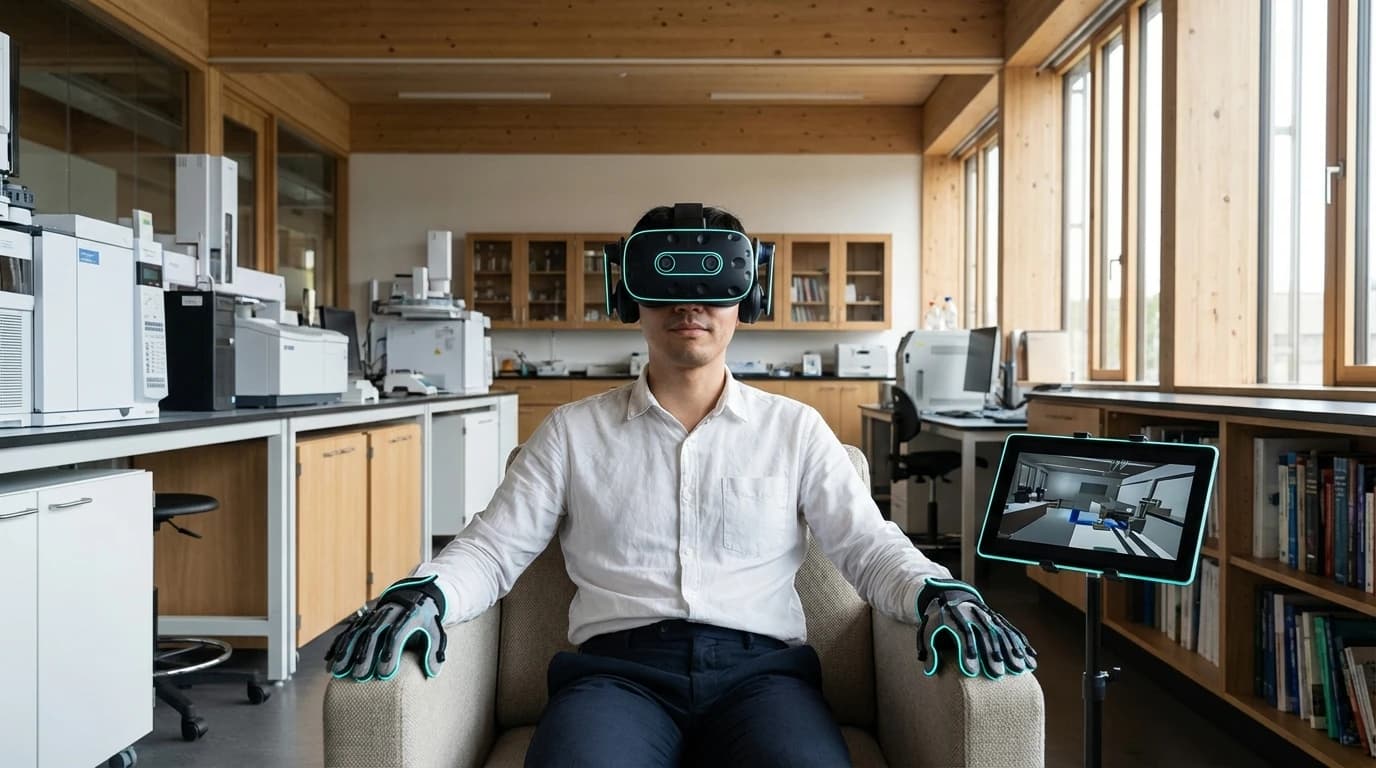
Empathy Building VR represents a sophisticated application of virtual reality technology designed to foster deeper emotional understanding by allowing users to experience life from perspectives fundamentally different from their own. Unlike traditional diversity training or educational materials that rely on passive observation, these immersive simulations place users directly into scenarios where they embody another person's lived experience. The technology leverages advanced VR hardware—including head-mounted displays, spatial audio systems, and haptic feedback devices—to create convincing first-person experiences. Through carefully designed narrative scenarios, users might navigate a workplace while experiencing visual impairments, encounter microaggressions as a member of a marginalised community, or face the daily challenges of living with chronic pain. The technical architecture typically combines 360-degree environments, biometric monitoring to track emotional responses, and branching narratives that respond to user choices, creating experiences that feel authentic rather than didactic.
The emergence of Empathy Building VR addresses a persistent challenge in organisational development and social cohesion: the difficulty of truly understanding experiences outside one's own frame of reference. Traditional diversity and inclusion training often struggles to move beyond intellectual acknowledgment to genuine emotional comprehension, leaving implicit biases largely unexamined. Research in psychology and neuroscience suggests that embodied experiences—where individuals physically inhabit another's perspective—can create more lasting attitude changes than conventional educational approaches. In corporate environments, these simulations are being deployed to address workplace culture issues, reduce discrimination complaints, and build more psychologically safe team dynamics. Educational institutions use the technology to prepare students for diverse professional environments, while civic organisations employ it to bridge social divides and foster community understanding. The technology enables organisations to scale empathy training that would be impossible to deliver through traditional role-playing or testimonial-based methods, reaching larger audiences with consistent, measurable experiences.
Early deployments of Empathy Building VR have appeared across healthcare systems training staff in patient perspectives, law enforcement agencies exploring community relations, and multinational corporations addressing cross-cultural collaboration challenges. Several universities have integrated these experiences into social work and medical curricula, while some municipalities have experimented with public installations designed to build community empathy around housing insecurity or refugee experiences. The technology's effectiveness appears strongest when combined with facilitated reflection sessions, where users process their emotional responses and connect virtual experiences to real-world behaviours. As VR hardware becomes more accessible and affordable, industry observers note growing interest from mid-sized organisations previously unable to invest in specialised training technologies. The field is evolving toward more personalised simulations that adapt to individual users' backgrounds and learning needs, while also incorporating longitudinal assessment tools to measure lasting behavioural change. This trajectory aligns with broader movements toward human-centered workplace design and trauma-informed organisational practices, positioning Empathy Building VR as a key component in creating more compassionate, inclusive environments where psychological safety and mutual understanding form the foundation of collaboration.
Related Organizations
An interdisciplinary group dedicated to understanding the self and the other through 'The Machine to Be Another'.

Academic lab studying the psychological and behavioral effects of VR.

Creates VR experiences for caregivers to embody the perspectives of aging adults with conditions like Alzheimer's.

Delivers Diversity, Equity, and Inclusion (DEI) training through VR simulations.

An immersive learning platform focused on equity and inclusion.

VR and AI platform for soft skills training where users interact with virtual characters.

UNICEF
United States · Nonprofit
United Nations agency responsible for providing humanitarian and developmental aid to children.

Produces cinematic VR training for enterprise and government.

Spatial computing platform for workplace skills, recently acquired by Cornerstone OnDemand.
Supporting Evidence
Research this in Signals
Signals turns a topic into a sourced research record you can inspect and rerun. Your first scan is free, and this one starts with Empathy Building VR already loaded, so edit it or scan as is.