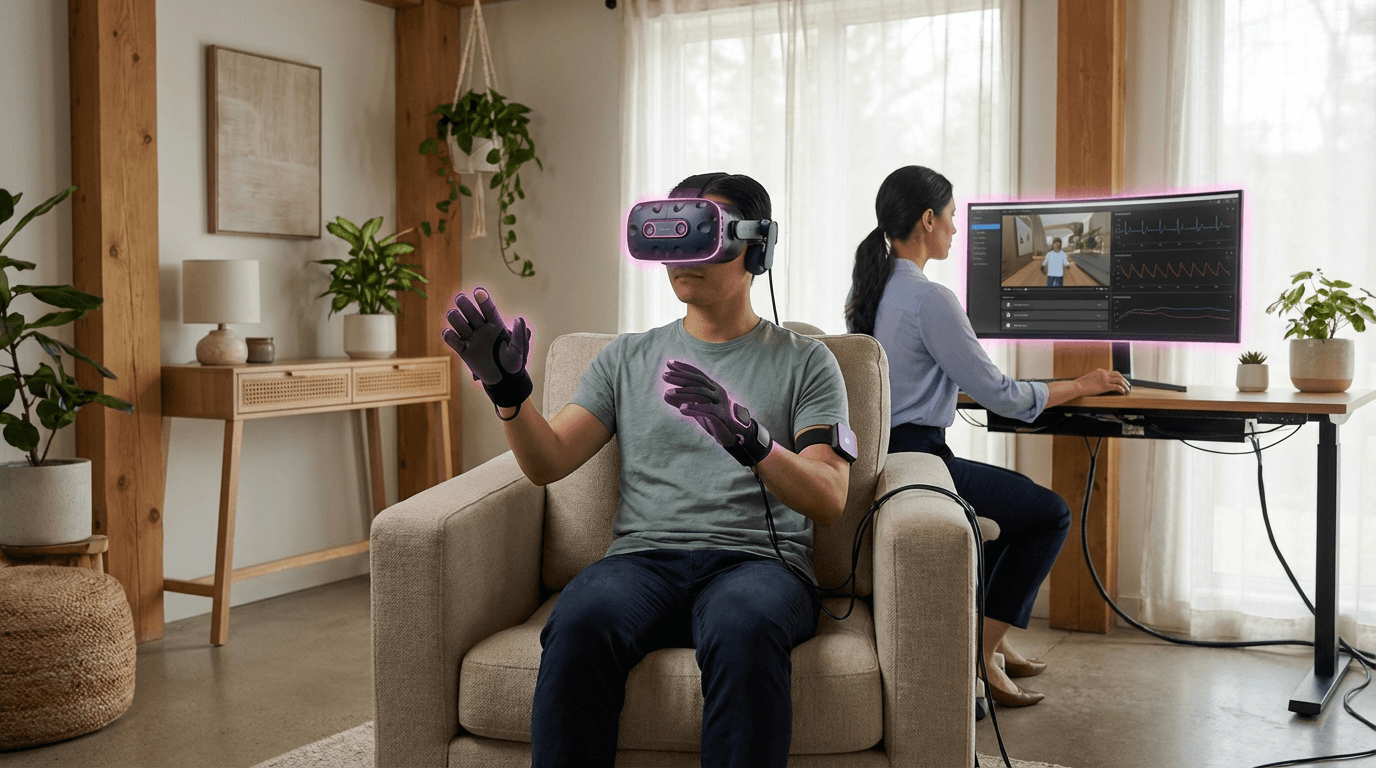
Therapeutic VR Exposure
Therapeutic VR Exposure represents a significant advancement in psychological treatment, leveraging immersive virtual reality technology to create controlled environments for exposure therapy. At its core, this approach uses head-mounted displays, motion tracking, and sophisticated software to generate realistic three-dimensional scenarios that can be precisely calibrated to each patient's therapeutic needs. The system allows clinicians to gradually introduce anxiety-inducing stimuli—whether combat scenarios for veterans with PTSD, heights for those with acrophobia, or social situations for individuals with social anxiety—while maintaining complete control over the intensity, duration, and complexity of the exposure. Unlike traditional exposure therapy, which relies on imagination or real-world situations that can be unpredictable or difficult to access, VR exposure provides a middle ground that feels authentic to the patient's nervous system while remaining entirely within the therapist's control. The technology incorporates biometric monitoring capabilities, tracking physiological responses such as heart rate and skin conductance to help clinicians assess patient reactions in real-time and adjust the therapeutic experience accordingly.
The mental health field has long grappled with the limitations of conventional exposure therapy approaches. Real-world exposure can be logistically challenging, expensive, or even impossible to arrange—recreating a combat zone or orchestrating a fear of flying scenario presents obvious practical barriers. Imagination-based exposure, while accessible, often lacks the visceral impact needed to trigger the emotional processing required for effective treatment. Therapeutic VR Exposure addresses these challenges by offering repeatable, standardised scenarios that can be deployed in any clinical setting. This technology enables therapists to deliver evidence-based exposure therapy more consistently and effectively, reducing the variability that often affects treatment outcomes. Furthermore, the controlled nature of VR environments helps patients feel safer during the therapeutic process, potentially reducing dropout rates and improving engagement with treatment protocols that might otherwise feel overwhelming or inaccessible.
Clinical adoption of therapeutic VR exposure has been growing steadily, with research institutions and mental health facilities increasingly incorporating these systems into their treatment protocols. Early deployments have shown promising results particularly in treating PTSD among military veterans, where VR scenarios can recreate combat environments with remarkable fidelity while allowing for graduated exposure that respects each patient's pace of recovery. The technology is also finding applications in treating specific phobias, social anxiety disorders, and panic disorders, with some healthcare systems beginning to integrate VR exposure as a standard component of their anxiety treatment programmes. As the technology becomes more affordable and user-friendly, industry analysts note a trend toward broader implementation across diverse clinical settings, from university counselling centres to private practices. This expansion aligns with larger movements in digital health and teletherapy, suggesting that immersive therapeutic technologies will become increasingly central to mental health treatment. The continued refinement of haptic feedback systems, artificial intelligence-driven scenario adaptation, and remote therapy capabilities points toward a future where therapeutic VR exposure becomes not just a specialised tool but a foundational element of modern psychological care.
Related Organizations

A leading VR platform for mental health professionals, offering a library of virtual environments for exposure therapy (phobias, anxiety).
BehaVR
United States · Company
Develops VR digital therapeutics for behavioral health; merged with Oxford VR to expand its exposure therapy portfolio (e.g., gameChange).

Home to the 'Bravemind' project, a clinical VR exposure therapy tool for treating PTSD in veterans.

Creators of RelieVRx, an FDA-authorized VR therapeutic for chronic lower back pain.

One of the earliest pioneers in VR exposure therapy, providing systems for treating fear of flying, heights, and public speaking.

Operates virtual clinics providing VR therapy for various conditions.

Developed SparkRx, a digital therapeutic program for adolescent depression based on CBT principles.

Specializes in immersive VR for rehabilitation and psychology, focusing on embodiment to treat implicit bias and domestic violence rehabilitation.

Scandinavian VR/AR production studio creating immersive art installations and theater experiences.

An immersive training platform used in healthcare for soft skills and stress inoculation (exposure to high-pressure medical scenarios).
Supporting Evidence
Research this in Signals
Signals turns a topic into a sourced research record you can inspect and rerun. Your first scan is free, and this one starts with Therapeutic VR Exposure already loaded, so edit it or scan as is.