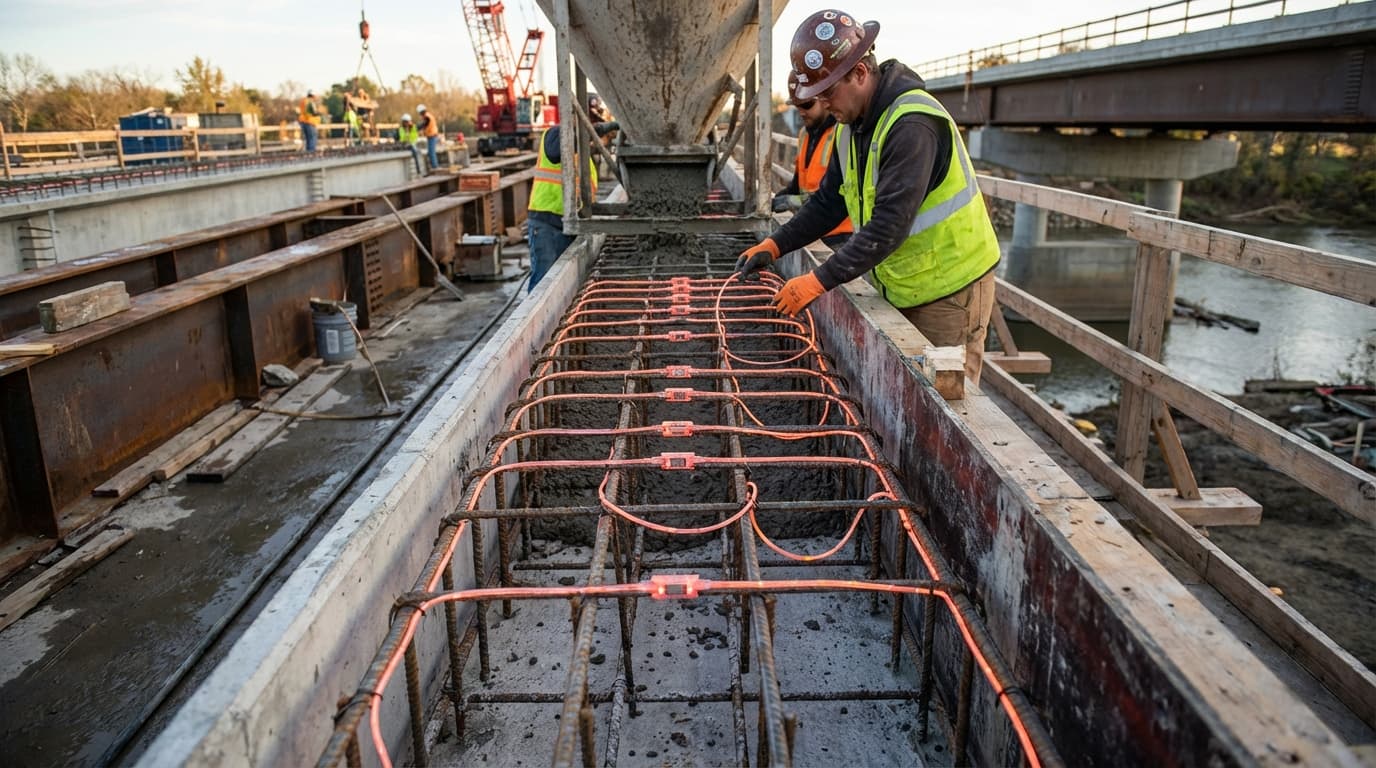
Embedded Structural Sensing (Fiber + MEMS)
Embedded structural sensing represents a fundamental shift in how the built environment monitors its own integrity, combining fiber optic technology and microelectromechanical systems (MEMS) to create structures that can continuously report on their internal condition. At its core, this approach integrates sensors directly into construction materials during the building process—fiber optic cables woven into concrete reinforcement, MEMS accelerometers cast into structural elements, and distributed sensing networks that become permanent fixtures within bridges, buildings, and critical infrastructure. Fiber optic sensing works by detecting minute changes in light patterns caused by strain, temperature variations, or vibration along the length of the cable, enabling continuous monitoring across hundreds or even thousands of measurement points from a single fiber. MEMS accelerometers, meanwhile, provide precise vibration and dynamic response data at specific locations, capturing how structures react to loads, wind, seismic activity, and traffic. Together, these sensing modalities create a comprehensive picture of structural behavior from the moment concrete begins curing through decades of operational life.
The construction industry has long grappled with uncertainty about what happens inside structural elements after they are built. Traditional inspection methods rely on periodic visual assessments, ultrasonic testing, or destructive sampling—approaches that are costly, disruptive, and often detect problems only after significant deterioration has occurred. Embedded sensing addresses these limitations by providing real-time visibility into structural performance, enabling engineers to verify that concrete has cured properly, identify areas of unexpected stress concentration, and detect the early stages of fatigue or material degradation before they compromise safety. This continuous monitoring capability is particularly valuable for critical infrastructure such as bridges, tunnels, and high-rise buildings, where failure can have catastrophic consequences. Beyond safety, embedded sensors support more efficient construction processes by providing objective data on when formwork can be safely removed or when a structure has achieved sufficient strength to proceed to the next construction phase, potentially accelerating project timelines and reducing costs.
Early deployments of embedded structural sensing have primarily focused on high-value infrastructure projects where the cost of sensor integration is justified by the criticality of the asset and the expense of traditional monitoring approaches. Research institutions and transportation agencies have installed these systems in bridge structures to track long-term performance under traffic loads and environmental conditions, while commercial building projects have begun incorporating sensing networks to support commissioning and ongoing facility management. Industry analysts note that as sensor costs decline and wireless data transmission becomes more reliable, embedded sensing is likely to expand beyond flagship projects into broader construction applications. This technology aligns with the growing emphasis on digital twins and smart infrastructure, where physical structures are paired with digital models that continuously update based on real sensor data. The trajectory suggests a future where embedded sensing becomes standard practice for major construction projects, fundamentally changing how we understand structural performance and enabling a shift from reactive maintenance to predictive, data-driven infrastructure management that extends asset lifespans and improves public safety.
Related Organizations

University of Cambridge research center focused on sensors, data analysis, and smart city infrastructure.

Develops AI-powered wireless sensors for concrete monitoring, optimizing curing times and structural integrity.

Global leader in smart concrete testing technologies, producing wireless sensors embedded in concrete to monitor temperature and strength.

Provides high-definition fiber optic sensing solutions for structural testing and monitoring, capable of measuring strain with extremely high spatial resolution.

Offers a concrete monitoring solution using thermocouples and wireless transmitters to track curing in real-time.

Provides wireless SenSpot sensors for long-term structural health monitoring of bridges and buildings.

A Roctest company specializing in fiber optic sensors (SOFO) for civil engineering monitoring.

Provider of long-range wireless data acquisition solutions for industrial monitoring.

Construction giant that acquired 'Concrete Sensors' to integrate IoT structural monitoring into their portfolio.

Develops fiber optic sensors for monitoring temperature, pressure, and strain in harsh environments.
Supporting Evidence
Research this in Signals
Signals turns a topic into a sourced research record you can inspect and rerun. Your first scan is free, and this one starts with Embedded Structural Sensing (Fiber + MEMS) already loaded, so edit it or scan as is.