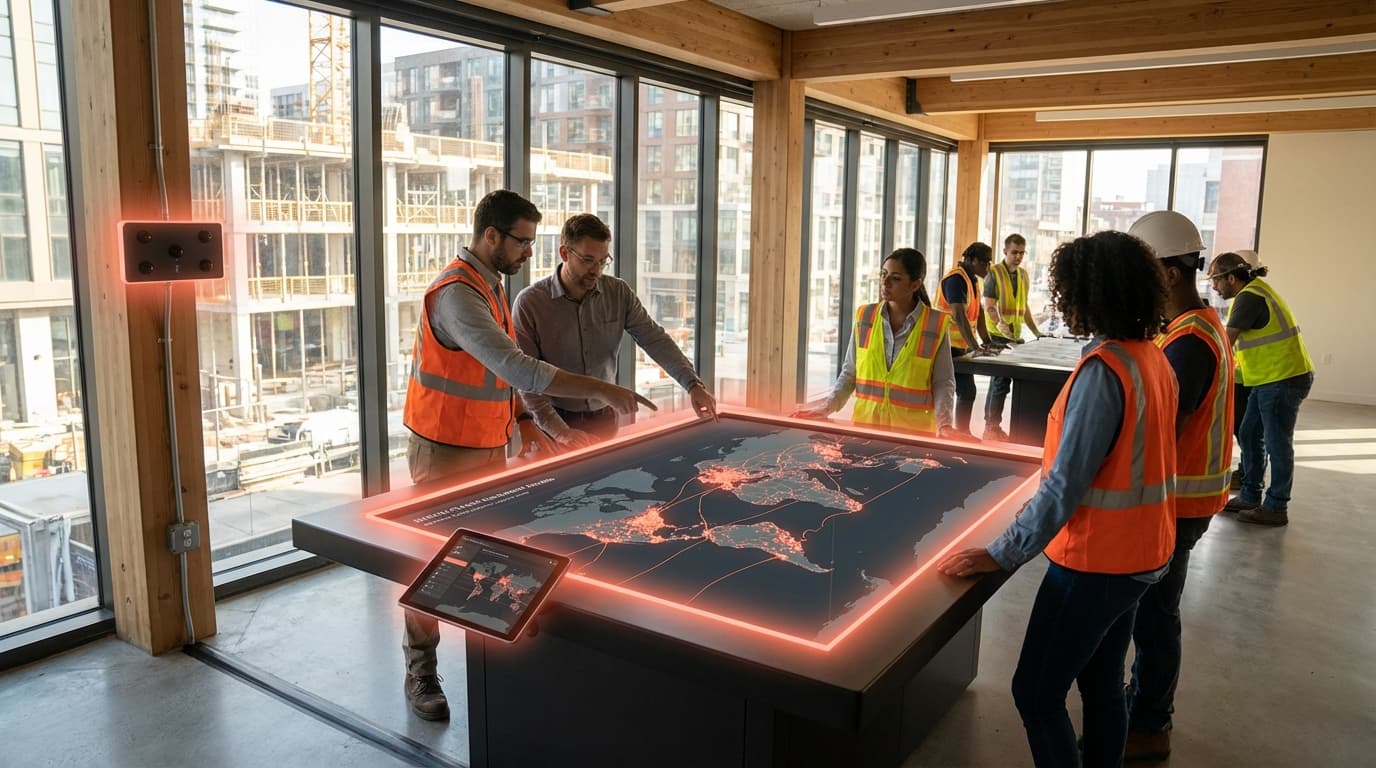
Climate Displacement & Construction Labor Migration
Climate change is fundamentally reshaping global labor markets, with the construction industry experiencing particularly acute effects as environmental degradation, extreme weather events, and resource scarcity force millions to relocate in search of livelihood opportunities. This phenomenon represents the intersection of environmental crisis and economic necessity, where workers from climate-vulnerable regions—particularly in South Asia, Sub-Saharan Africa, and Central America—increasingly migrate toward construction booms in more stable economies. The mechanisms driving this movement are complex: rising sea levels submerge coastal communities, prolonged droughts devastate agricultural economies, and intensifying storms destroy local infrastructure, collectively pushing workers toward cities and nations with active building sectors. Simultaneously, geopolitical conflicts compound these environmental pressures, creating mixed flows of climate refugees and economic migrants who often find employment in construction due to the sector's relatively low barriers to entry and persistent labor shortages in receiving countries.
The construction industry's reliance on migrant labor creates a paradoxical situation where economic opportunity coexists with significant exploitation risks. In Gulf states, where migrant workers constitute the overwhelming majority of construction labor forces, the kafala sponsorship system has historically tied workers to specific employers, limiting mobility and creating conditions vulnerable to wage theft, passport confiscation, and unsafe working conditions. Southeast Asian construction hubs face similar challenges, where informal recruitment networks and lack of credential recognition leave workers without legal protections or recourse. North American markets, while generally offering stronger labor protections, still struggle with undocumented workers facing substandard conditions and wage suppression. The absence of internationally recognized frameworks for validating construction skills and certifications further marginalizes displaced workers, forcing experienced tradespeople into unskilled labor categories. These systemic vulnerabilities are exacerbated by the temporary and project-based nature of construction work, which discourages long-term investment in worker welfare and integration.
Addressing these challenges requires comprehensive ethical frameworks that balance economic imperatives with human rights protections. Several jurisdictions have begun implementing portable benefit systems that follow workers across projects and employers, while bilateral labor agreements between sending and receiving nations increasingly include provisions for skills recognition and minimum standards. Industry initiatives in some markets now emphasize direct hiring mechanisms that bypass exploitative recruitment agencies, and technology platforms are emerging to verify credentials and facilitate transparent wage payments. The trajectory of climate displacement suggests that construction labor migration will intensify in coming decades, making the development of robust protections not merely an ethical imperative but an economic necessity for maintaining industry stability. Forward-thinking approaches recognize that pathways to permanent residency and family reunification can transform temporary migration into sustainable workforce development, benefiting both workers and receiving economies while acknowledging the reality that many climate-displaced individuals will be unable to return to their regions of origin.
Related Organizations

The Global Union Federation grouping free and democratic unions with members in the Building, Building Materials, Wood, Forestry and Allied sectors.

A UN agency that sets international labor standards and produces the 'Guidelines for a just transition towards environmentally sustainable economies'.

A think tank that shapes policy, advances practice, and strengthens accountability to make respect for human rights part of everyday business.

The leading inter-governmental organization in the field of migration.

An international NGO that tracks the human rights impacts (positive and negative) of over 10,000 companies worldwide.

A philanthropic foundation launching initiatives to decarbonize the built environment, specifically targeting embodied carbon in Europe.

A civil society organization that promotes workers' rights in global supply chains.

International non-governmental organization that conducts research and advocacy on human rights.

A multi-stakeholder business-led initiative aiming to reduce modern slavery particularly forced labour, labour trafficking and other hidden third party exploitation of workers.
Supporting Evidence
Research this in Signals
Signals turns a topic into a sourced research record you can inspect and rerun. Your first scan is free, and this one starts with Climate Displacement & Construction Labor Migration already loaded, so edit it or scan as is.